

Description
What the KSC75 Is
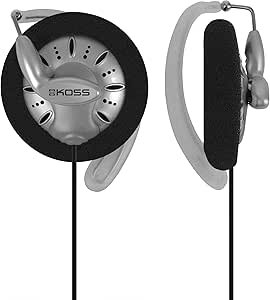
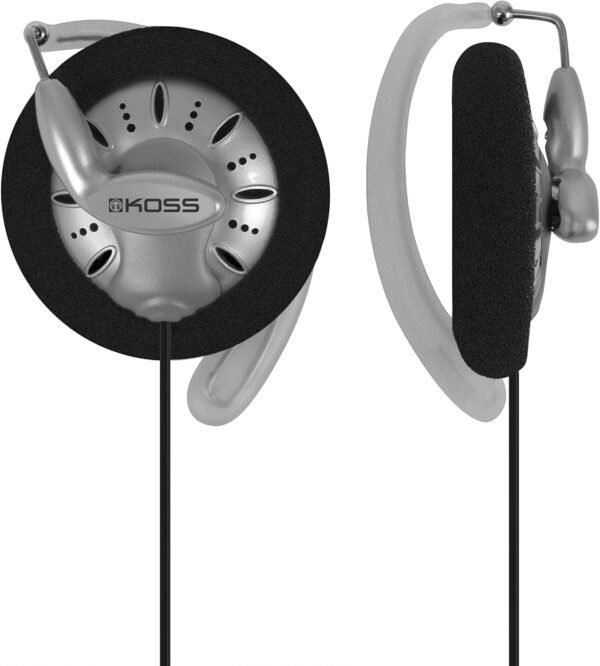
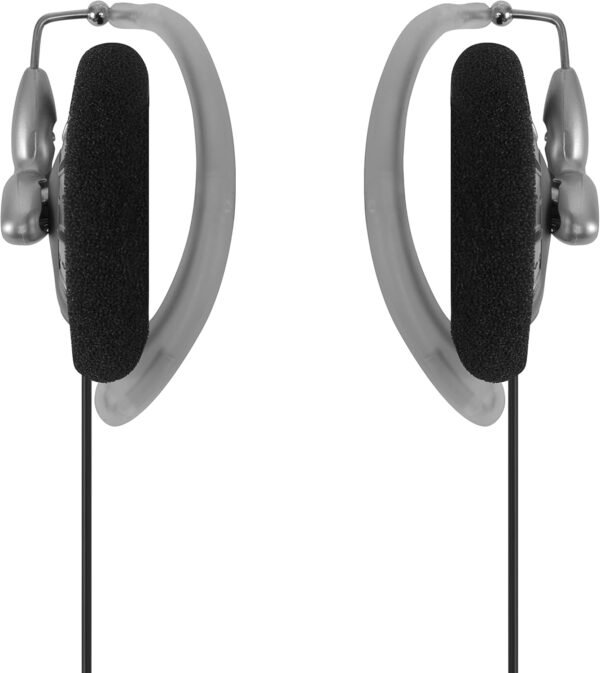
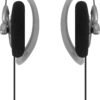
The Koss KSC75 is a clip-on headphone: two small open-backed drivers held against the ears by flexible clips that hook over the top of each ear, with no headband connecting them. The design is unusual now and was already unusual when the model was introduced. Koss has kept it on sale since January 2005, and it has accumulated roughly 8,555 ratings at 4.3 stars in that time.
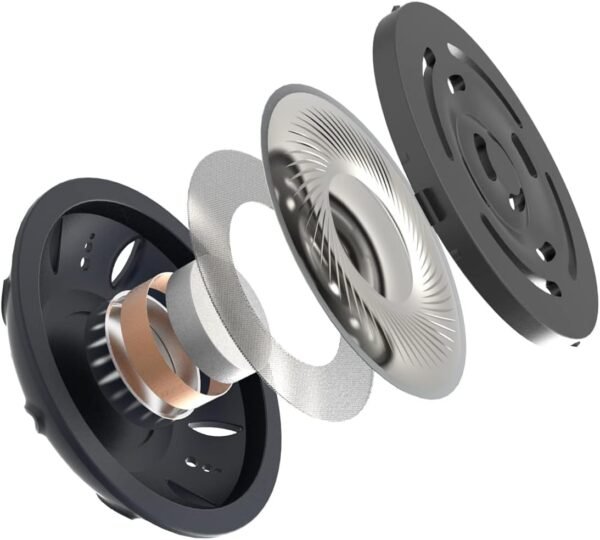
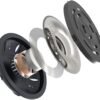
Two things explain the persistence. The first is weight: at 1.52 ounces the KSC75 is lighter than most in-ear earphones with their cables, and the clip distributes what little there is over the ear rather than pressing on the canal or the skull. The second is the driver, which Koss specifies as titanium-coated and driven by neodymium iron boron magnets. Buyers who want a full-size open-back headphone should compare the Grado SR60x, which uses a similar acoustic principle in a conventional frame.
Open Back Without a Headband
The KSC75 is an open design, meaning sound passes freely through the back of each driver. That produces a more spacious presentation than a sealed earphone and avoids the pressure sensation some people get from in-ear designs, and it means outside sound is fully audible.
For a runner, a cyclist or anyone walking near traffic, that is a safety feature rather than a shortcoming. Hearing an approaching car is the single most important thing a headphone can do for someone moving through a city, and open designs are the only ones that allow it without processing. It also means the KSC75 is useless on an aeroplane, in an open-plan office or anywhere quiet is required, and everyone nearby will hear what is playing. The on-ear headphones category covers the closed alternatives.
Fit and the Clip Mechanism
The pivoting earplates are the mechanism that makes the design work. Ears vary enormously in shape and angle, and a fixed clip would sit correctly on very few heads. Allowing the driver plate to pivot relative to the clip lets the driver find the right angle against the ear regardless of how the clip sits.
The clips themselves are plastic and are the part most likely to fail over years of bending, which is worth knowing given that this is a product people often keep for a very long time. Koss also lists the KSC75 with a National Stock Number, meaning it has been catalogued for United States government supply, which is an unusual credential for a consumer headphone and suggests it has been bought in institutional quantities.
Sound and What Drives Them
Koss publishes a frequency response of 15 Hz to 25 kHz and a sensitivity of 101 dB. The sensitivity figure is the more useful one: 101 dB is high, which means the headphones reach a given volume from very little power. A phone, a laptop or a cheap portable player will drive them without difficulty, and no amplifier is required.
The titanium coating on the driver diaphragm is there to increase stiffness. A stiffer diaphragm behaves more like a rigid piston at higher frequencies before it starts to flex and distort, which is the usual justification for coating a plastic film with metal. Whether that translates into a specific audible improvement is not something a specification can settle, but it is a real engineering choice rather than a decorative one. Listeners looking for a closed alternative at a similar price should compare the Sony MDR-ZX110AP.
The Cable and Practical Use
The cord is four feet long with an L-shaped 3.5 mm plug, and Koss describes it as a straight dual entry design, meaning separate cables run to each earpiece from a Y split rather than one cable crossing behind the neck. Four feet is longer than most portable headphones supply, which suits a desk or a jacket pocket but leaves slack when the source is in a trouser pocket.
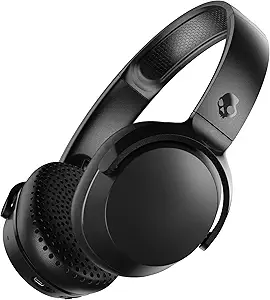
There is no microphone, no inline remote, no folding mechanism and no case. The KSC75 is a headphone and nothing else. For anyone whose phone has no headphone socket, an adapter is required, which is a real consideration for a product this inexpensive since the adapter can cost a meaningful fraction of the headphone. Buyers who want built-in call handling should look at the Skullcandy Riff Wireless 2 or the wireless options in the over-ear headphones category.
Highlights
- Extremely light at 1.52 ounces, with no headband pressure at all.
- Pivoting earplates that adapt to different ear angles.
- Open design that keeps the wearer aware of traffic and surroundings.
- 101 dB sensitivity, so a phone or laptop drives them easily.
- Titanium-coated drivers with neodymium iron boron magnets.
- Twenty years on the market with roughly 8,555 ratings behind it.
Things To Consider
The listing data is chaotic. The wireless communication technology field says Bluetooth on a wired headphone with no electronics. The cable feature field contains an entire paragraph of marketing copy rather than a specification. The UPC field holds seventeen different barcodes concatenated together. The frequency response field gives a bare 15 Hz while a separate field correctly gives the full range. There is also a control type of “Media Control” on a product with no controls, and a language field reading English.
- No isolation whatsoever, and everyone nearby hears what is playing.
- No microphone, remote, case or folding mechanism.
- The plastic clips are the likely failure point over years of use.
- Most current phones need a 3.5 mm adapter.
- The clip fit is divisive, and glasses wearers in particular should try before committing.
- Multiple specification fields are corrupted, including seventeen concatenated barcodes.
Who Should Buy It and Who Should Skip It
The KSC75 suits a runner or cyclist who needs to hear traffic, a listener who finds in-ear tips uncomfortable, and anyone who wants a cheap, light headphone to keep permanently in a bag. It is also a long-standing recommendation among people who care about sound at very low prices, and the twenty year production run and the institutional stock listing both suggest the design does something right.
Skip it if you need isolation, if you take calls on your headphones, or if you listen in shared spaces where leakage would annoy people. Skip it too if your phone lacks a headphone socket and you resent adapters. Anyone who wants the same open presentation with a conventional headband and better build should be looking a tier up, where full-size open-back designs start.