Description
Where the Audeze LCD-2 Classic Closed-Back Fits
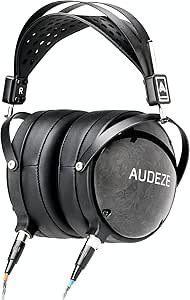
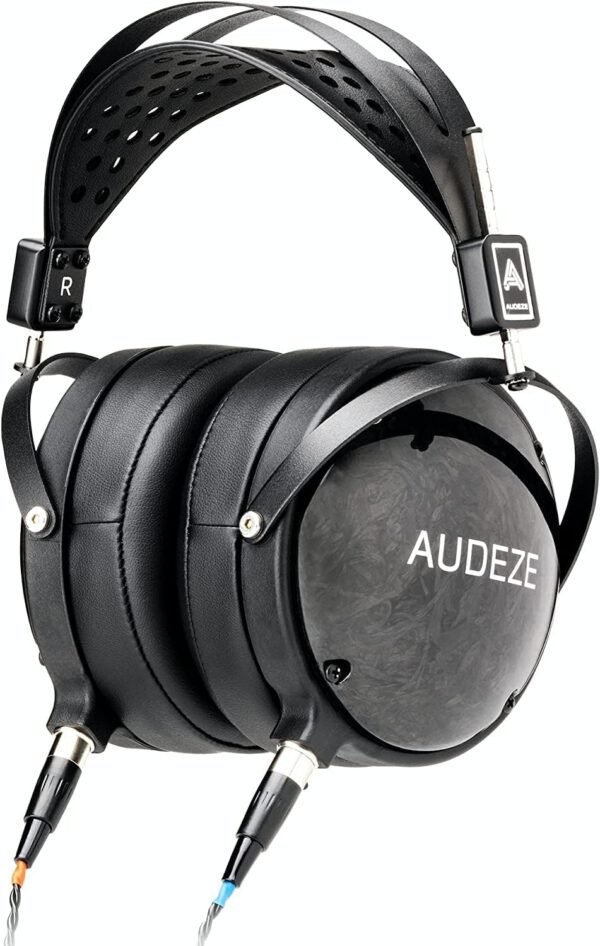
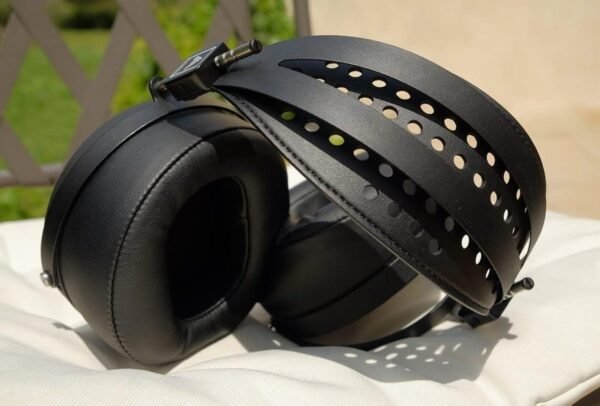
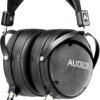
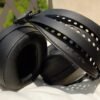
The Audeze LCD-2 Classic Closed-Back is a full size planar magnetic headphone built on one of the better known chassis in the category. The open back LCD-2 has been a reference point for planar listening for years, and this version keeps the driver technology and the general architecture while enclosing the rear of the cup. That single change alters the product substantially, and it is the reason someone would choose this over the open version rather than a matter of preference.
The listing specifies a closed back style, a planar magnetic driver, a 3.5 mm jack, a detachable cable, and a protective case in the box. It gives a frequency range of 10 Hz to 50 kHz and lists the specific use as studio. That combination points at a clear audience: someone tracking or editing in a room where an open headphone would leak into a microphone, or someone who needs to listen at length in a shared space. Listeners who do not have either constraint should think carefully, because the open version of the same chassis is the more natural choice when leakage is not a problem. The over ear headphones category shows how many designs make the opposite trade.
What Planar Magnetic Means Here
A planar magnetic driver replaces the cone and voice coil of a conventional dynamic driver with a thin flat diaphragm carrying a conductive trace, suspended in a field created by magnet arrays on one or both sides. The force is applied across the whole diaphragm surface rather than at a single point, which is the technical argument for the approach. Audeze lists the driver size as 100 millimeters, written in the specification table in scientific notation as 1E+2 millimeters, which is a formatting artifact rather than a different number.
Two practical consequences follow. The first is weight. Magnet arrays are heavy, and planar headphones are almost always heavier than dynamic ones, which makes the headband and pad design load bearing rather than cosmetic. The second is drive requirement. Planar drivers are generally low impedance but not especially sensitive, which means they draw current and often want more than a phone can comfortably supply. The listing quotes a sensitivity value of 127.259 with no unit attached, a figure that does not correspond to any conventional sensitivity specification and should not be used for planning. Anyone matching an amplifier should work from Audeze published figures, and the amplifiers category covers the desktop units this class of headphone typically expects.
Closed Back Design, Cable, and Accessories
Closing the rear of a planar cup is harder than closing a dynamic one, because the driver radiates from both faces and the rear energy has to be absorbed rather than simply trapped. Done poorly, the result is a resonant cup with an uneven low end. Done well, the result is isolation without the boxiness that gives closed headphones their reputation. The listing does not describe the internal damping approach, so this page does not make a claim about which outcome applies. What can be said from the listing is that the design targets isolation and studio use, and that Audeze quotes a frequency range of 10 Hz to 50 kHz.
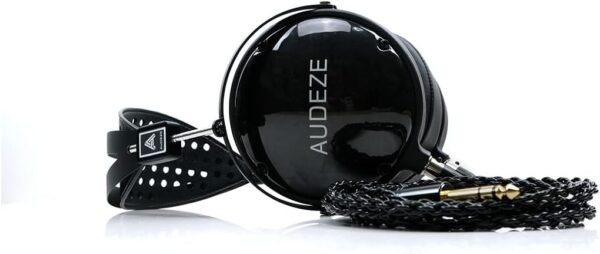
The cable is detachable, which is the most important serviceability feature a headphone can have at this level. Cables fail first, and a detachable cable turns a repair into a purchase rather than a return. A fabric carrying case in black is listed among the included components. The listing gives an item weight of 6.64 pounds, which is a package weight rather than a headphone weight, since no wearable headphone weighs that much. The actual headphone weight is not given in the imported data and should be checked before buying if head comfort is a concern, because planar headphones vary widely on this point. Listeners cross shopping other reference designs can look at the Beyerdynamic T1 3rd Gen stereo headphones, which take a dynamic driver approach to a similar audience.
Highlights
- Planar magnetic driver listed at 100 millimeters, in a closed back full size chassis.
- Detachable cable terminating in a 3.5 mm jack, which makes replacement straightforward.
- Frequency range quoted at 10 Hz to 50 kHz on the listing.
- Fabric protective case included among the listed components.
- Closed back construction aimed at studio work where leakage into microphones is a problem.
Things To Consider
Several fields on this listing do not describe the product. The recommended uses field reads Running and Exercising, which is an implausible recommendation for a heavy closed back planar headphone with a cable and no water resistance. The age range description reads Adult and Kid, which no manufacturer of a reference studio headphone would specify. The sensitivity value of 127.259 carries no unit and does not match any standard sensitivity notation. The item weight of 6.64 pounds is a shipping weight presented as a product weight. The compatible devices entry is a generic sentence rather than a specification. Taken together, this listing should be read for the driver technology, the cup style, and the cable arrangement, and not much else.
The genuine limitations are the ones inherent to the design. Planar headphones of this size are heavy, and long sessions depend entirely on how well the weight is distributed. Closed backs isolate but they also change how the sound stage is presented compared to an open design, and listeners moving from an open LCD-2 should expect a different presentation rather than the same headphone with the leakage removed. The drive requirement means a phone or a laptop headphone jack is unlikely to be sufficient, which adds an amplifier to the real cost of ownership. And the review sample on this listing is very small, at six ratings, so the star average carries almost no statistical weight and should not be treated as evidence of anything. High volume wireless models such as the Sennheiser ACCENTUM Plus wireless headphones accumulate thousands of ratings, which is a reminder of how differently a niche studio product and a mass market one are sampled.
Who Should Buy It and Who Should Not
This headphone suits a studio user who needs planar detail with isolation, an engineer tracking in the same room as a microphone, or a listener in a shared household who cannot use an open back design. It also suits an owner who already has a capable desktop amplifier and wants a closed option that fits into an existing Audeze workflow with a familiar chassis and a replaceable cable.
It is the wrong choice for a portable listener, for anyone running headphones directly from a phone, and for anyone who wants a lightweight headphone for all day wear. It is also unnecessary for someone who listens alone in a quiet room, where an open back design usually delivers a more natural presentation for the same money. Buyers in that situation should compare against open and semi open alternatives, and lighter designs such as the Koss KSC75 portable on ear headphones and the Sennheiser HD 400S headphones show how differently the same listening job can be approached.