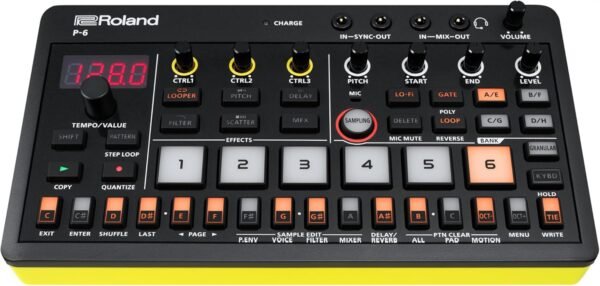

Description
What the Roland P-6 Is
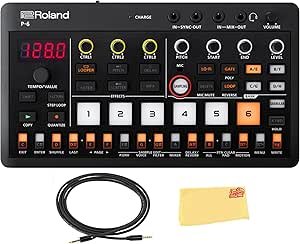
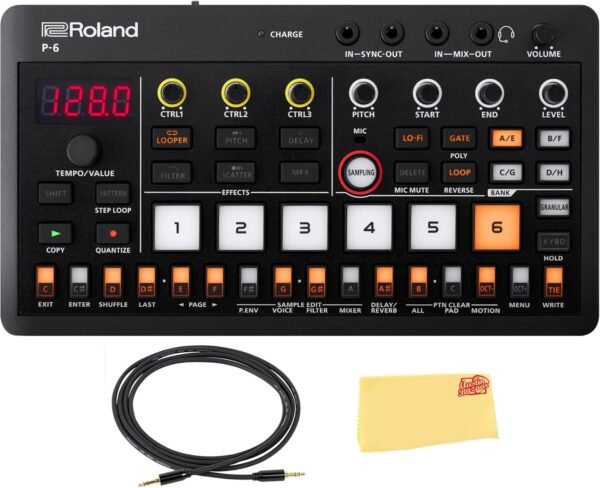
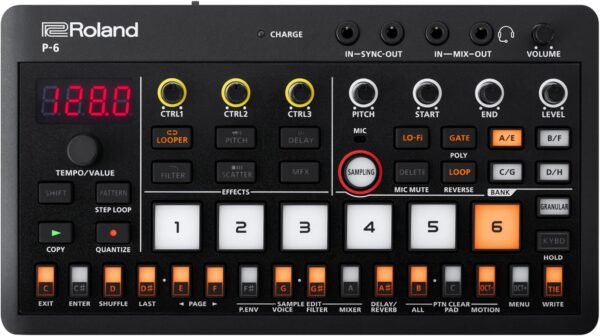
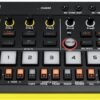
The Roland P-6 is a battery powered sampler from the AIRA Compact family, a range of small instruments designed to be used on a table, on a train, or alongside other units in the same series. Roland describes an onboard microphone, USB-C connectivity, granular sound design tools, a 64 step sequencer, and a set of effects operated from physical controls, with companion software called P-6 SampleTool for transferring and editing samples.
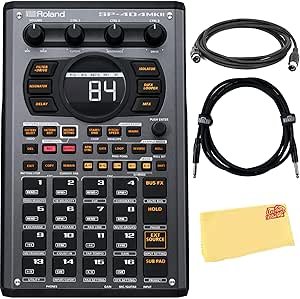
The onboard microphone is the feature that defines how the instrument is meant to be used. A sampler with a built in microphone invites capturing sound from the immediate environment rather than importing files, which is a different creative workflow from loading a library. Combined with a stated battery life of roughly three hours, it describes an instrument intended to be taken somewhere and used there. Producers who want a larger, more established sampler for desk work should compare the Roland SP-404MKII creative sampler, and the wider audio samplers category covers both approaches.
Sampling Limits and Granular Processing
Roland publishes the constraints clearly, which is useful because they define what the instrument can and cannot do. The maximum sampling capacity is 48 samples. Maximum sample time is 5.9 seconds in mono at 44.1 kHz. Polyphony is 16 voices for standard sample playback and 4 voices for granular playback. There are 64 user patterns and the step sequencer runs 64 steps. Import format is WAV linear PCM.
Those numbers describe an instrument for short sounds, not for long loops or full arrangements. Under six seconds per sample rules out sampling a whole bar of a track at slow tempos, and it points the instrument at hits, phrases, textures, and found sounds. The granular tools are what expand that limitation into a feature. Granular processing chops a sample into very short grains and replays them at controllable rates and densities, which means a short recording can be stretched into a sustained texture that bears no resemblance to its length. A four voice granular limit is modest but appropriate for a device this size. Musicians building a rhythm section around it can look at a dedicated drum machine such as the Akai Professional XR20 drum machine.
Connections, Power, and Effects
The connector list is short and deliberate. MIDI in and out are provided on stereo miniature jacks rather than full size DIN sockets, which is standard practice on compact instruments and requires the appropriate adapter cables. USB-C carries both audio and MIDI, so the unit can act as an audio interface and a controller for a computer over one cable. Power comes from either an internal lithium ion battery or USB bus power, with battery life given as approximately three hours.
Effects comprise a multi effect section with 20 types plus a send section offering delay and reverb. That is a sensible split for a performance instrument: the multi effect shapes an individual sound while the sends add space to the mix as a whole. The listing gives the weight as 10.7 ounces. Two different dimension sets appear on the listing, with the description giving 7.44 by 4.17 by 1.46 inches and the specification field giving 3.19 by 7.44 by 1.46 inches, so the depth is stated two different ways. Players linking several compact units together will find the AIRA Compact range designed for exactly that, and utility devices such as the Boss RC-202 loop station occupy neighboring ground on a tabletop setup.
Highlights
- Onboard microphone for capturing sound directly, with no computer required.
- 48 sample capacity with a 64 step sequencer and 64 user patterns.
- Granular sound design tools alongside conventional sample playback.
- 20 multi effect types plus delay and reverb sends.
- USB-C carrying audio and MIDI, with roughly three hours of battery operation.
Things To Consider
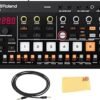
This listing is a third party bundle rather than the plain product. The title describes the P-6 packaged with an audio cable and a polishing cloth from a reseller, and the included components field confirms both. That is worth knowing for two reasons. The bundle contents add little of value to a sampler, and bundle listings sometimes carry different return and warranty handling than a direct manufacturer listing. Anyone who wants the unit alone should check whether a plain listing is available.
The hard limits are real and should be understood before buying. A maximum sample length of 5.9 seconds in mono is short. Forty eight samples is a small library by the standards of desktop samplers. Four voice granular polyphony constrains how thick a granular texture can become. Three hours of battery life is enough for a session but not for a day. MIDI on miniature jacks requires adapters that are easy to lose. None of these are faults, they are the consequences of the size, but a buyer expecting a full production workstation in this form factor will be disappointed.
The listing also shows only 4 ratings at a 5.0 star average, with a first availability date in late 2024. A five star average across four ratings tells a buyer nothing at all, and there is no ownership record here worth weighing. Anyone relying on customer feedback to make this decision has almost nothing to work with, and should look instead at the published specifications, which are unusually complete for this catalog.
Who Should Buy It and Who Should Not
The P-6 suits a producer or performer who wants to capture sound in the world and manipulate it immediately, values a battery powered instrument that works without a computer, and is already using or considering other units in the AIRA Compact range. The granular tools make it more interesting than its size suggests, and the sequencer means ideas can be developed rather than just recorded.
It is the wrong instrument for someone who needs long samples, a large library, or a full arrangement environment, and it is the wrong first purchase for a producer who works entirely in software and would get more from a controller. Those buyers should look at larger tabletop instruments in the drum machines category, or at a synthesizer such as the Behringer 2600 analog synthesizer if sound generation rather than sound capture is the goal.