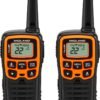


Description
Midland T51VP3 X-TALKER: a license free FRS pair for families and worksites
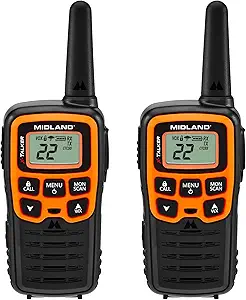
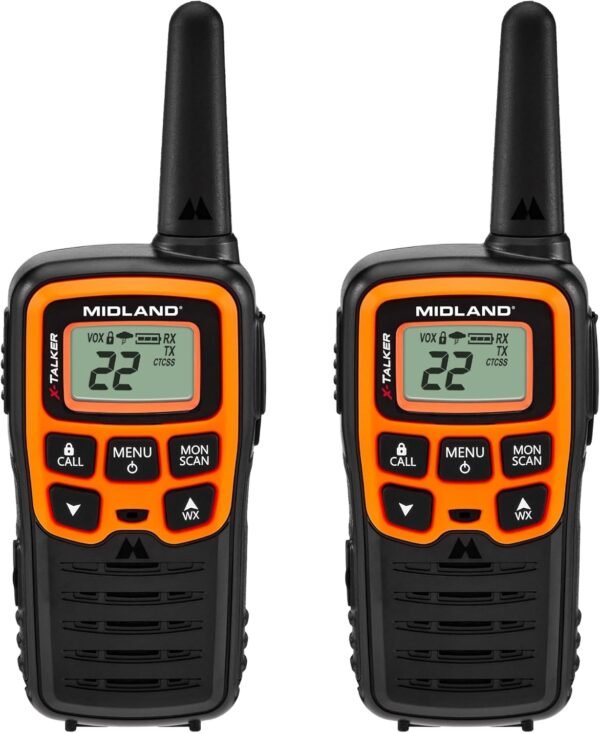
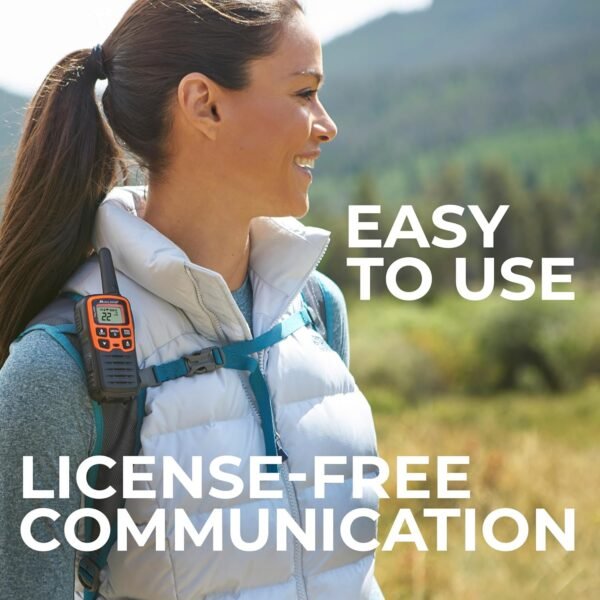
The Midland T51VP3 is a pair of handheld FRS radios sold under the X-TALKER name. FRS, the Family Radio Service, is the license free band in the United States that these radios operate on, which is the practical reason a product like this exists: two people can be talking within a minute of unpacking, with no license, no subscription and no cellular coverage required. The listing describes a compact handheld measuring 2.2 by 1.3 by 6.1 inches at 5.9 ounces, with an LCD display and a stated three year warranty.
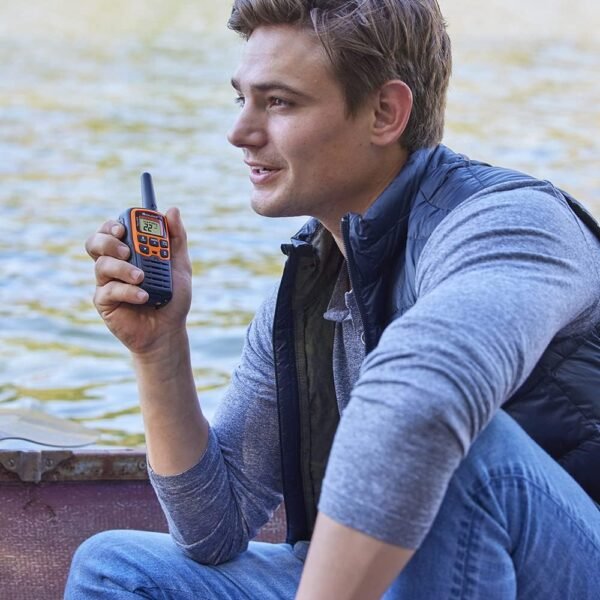
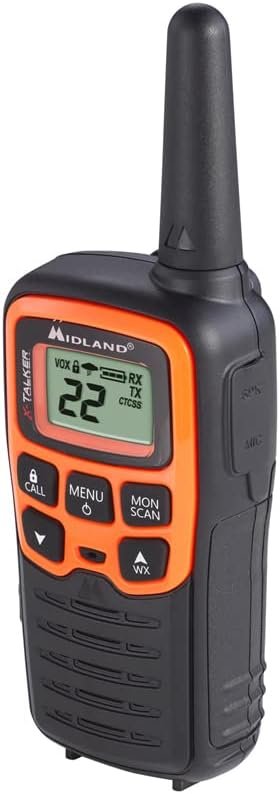
Midland lists the main features as NOAA weather scan with alerts, eVOX hands free operation and 38 privacy codes. Each of those addresses a different real world problem. The weather receiver pulls National Weather Service broadcasts and can alert automatically when a warning is issued, which is a genuine safety function on a campsite or a boat. The eVOX system keys the transmitter when it detects speech, so a rider, skier or worker with full hands can talk without pressing anything. The privacy codes are not encryption, and it is important to be clear about that: they are sub audible tones that keep your radio quiet unless the other party sends the matching tone. Anyone else on the same channel can still hear the conversation.
Range, and how to read range claims
Range is the specification most often misunderstood in this category. FRS radios transmit at a power ceiling set by regulation, and the distances quoted in this segment are calculated for unobstructed line of sight, typically hilltop to hilltop with nothing in between. Real distances in a neighborhood, a forest, a shopping center or a steel framed building are a fraction of that figure. A realistic expectation for handhelds of this class is a few blocks in a built up area and considerably more across open water or open ground.
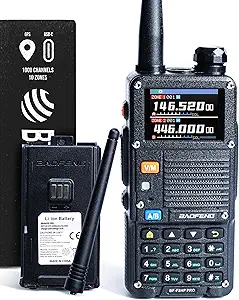
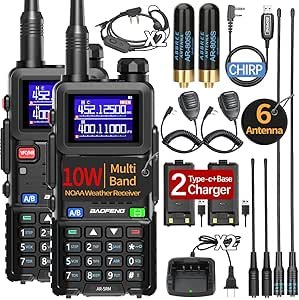
Buyers who need dependable range over difficult terrain generally move to amateur radio equipment, which trades convenience and legality for capability: a licensed handheld such as the BAOFENG BF-F8HP Pro or the Baofeng 5RM offers higher power output and external antenna options, but transmitting on amateur frequencies requires a license. The FRS radios here require none, and that legal simplicity is the whole appeal for a family purchase.
Power, display and daily handling
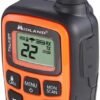
The listing gives an LCD display, which on radios of this type shows channel, privacy code, battery state and whether weather alert monitoring is active. The battery entry in the imported data reads one AAA battery required and included, which does not match a handheld radio of this size; radios in this class normally take three AAA cells per unit, so treat the count in the listing as unreliable and check the manual before buying batteries. This is worth flagging rather than guessing at, because battery type determines whether rechargeable cells can be used and how long a set lasts on a trip.
The physical data is also contradictory. The same table gives Item Weight as 5.9 ounces and, in separate fields, Height as 1 inch, Width as 2 inches and Weight as 2 pounds. Those cannot all describe the same object. The 5.9 ounce and 2.2 by 1.3 by 6.1 inch figures are the internally consistent set and match a pocket handheld; the two pound entry almost certainly belongs to a shipping weight or to a different record entirely.
Highlights
- License free FRS operation, usable straight out of the package in the United States.
- NOAA weather scan with automatic alerting for severe weather.
- eVOX hands free transmission for use while riding, climbing or working.
- 38 privacy codes to reduce unwanted traffic on a shared channel.
- LCD display showing channel, code and battery status.
- Compact handheld listed at 2.2 by 1.3 by 6.1 inches and 5.9 ounces.
- Three year warranty stated in the listing.
Things To Consider
The privacy code feature is the most commonly misread item on any FRS radio, and it deserves repeating: these codes filter what you hear, not what others can hear. Nothing transmitted on FRS is private, and no conversation on these radios should be treated as confidential. For a family keeping track of each other at a theme park that is irrelevant, but for anyone considering these for business use it is a real limitation.
Battery life is the second practical constraint. Small handhelds running on AAA cells have limited endurance, particularly when the weather alert receiver is left monitoring in the background, which keeps part of the radio powered continuously. Anyone planning multi day use away from power should carry spare cells, and should confirm the cell count first given the inconsistency in the listing data noted above.
Feature depth is limited compared with more expensive radios. There is no mention of a rechargeable battery pack, a charging cradle, water resistance or a headset jack in the data supplied, so none of those should be assumed present. The absence of any stated water resistance rating in particular matters for boating, skiing and hiking, which are exactly the activities this category is marketed toward. There is also no repeater capability, which is what would extend range beyond line of sight.
Finally, this is a 2015 design. The listing shows it as not discontinued and ranking well within portable FRS radios, which suggests it continues to sell steadily, but buyers should not expect features that arrived in the category later, such as USB C charging.
Who it suits
The T51VP3 suits families at parks, campsites and ski resorts, neighbors coordinating during a power outage, event staff working within sight of each other, and anyone who wants a NOAA weather receiver in a pocket. Its low weight and license free operation make it easy to hand to a child or a volunteer with no training beyond which button to press.
It is not suitable for confidential communication, for long range use across hills or dense buildings, or for professional operations that need repeater access and rugged sealing. Those buyers should look at licensed equipment in the two way radios category. Listeners who want to monitor public safety and aviation traffic rather than talk on it should look instead at the radio scanners category, where a receiver such as the Uniden Bearcat BC125AT covers a far wider slice of the spectrum without transmitting at all.