



Description
Sony SA-RS3S: rear speakers that only make sense with the right soundbar
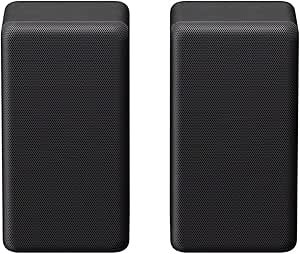
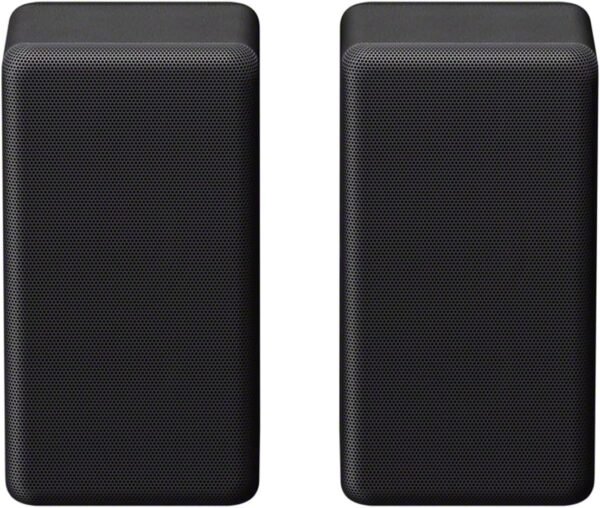
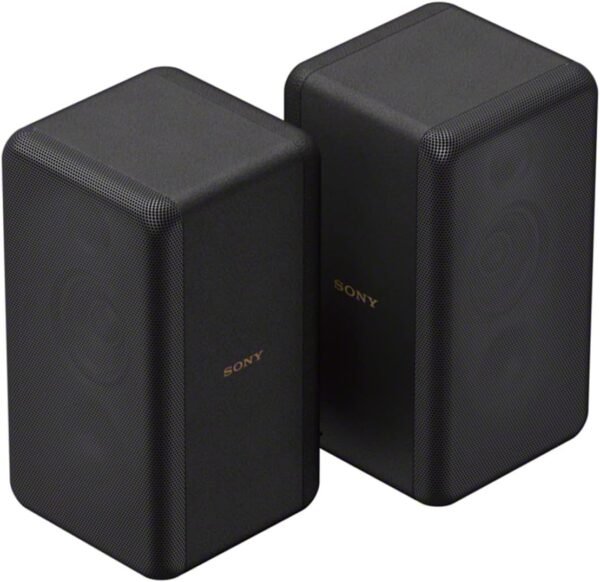
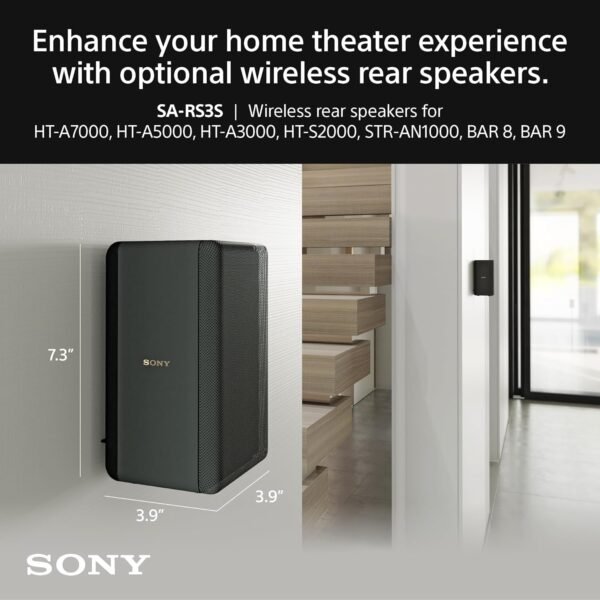
The Sony SA-RS3S is a pair of wireless rear speakers sold as an add on rather than as a standalone product. Sony lists compatibility explicitly with the BRAVIA Theater bars, including the BAR 8 and BAR 9, with the HT-A7000, HT-A5000, HT-A3000 and HT-S2000 soundbars, and with the STR-AN1000 AV receiver. That list is the single most important thing on the page. These speakers do not work as generic surround speakers, they do not connect to a receiver from another manufacturer, and they have no inputs of their own. If the soundbar in the room is not on that list, this is not a purchase to consider.
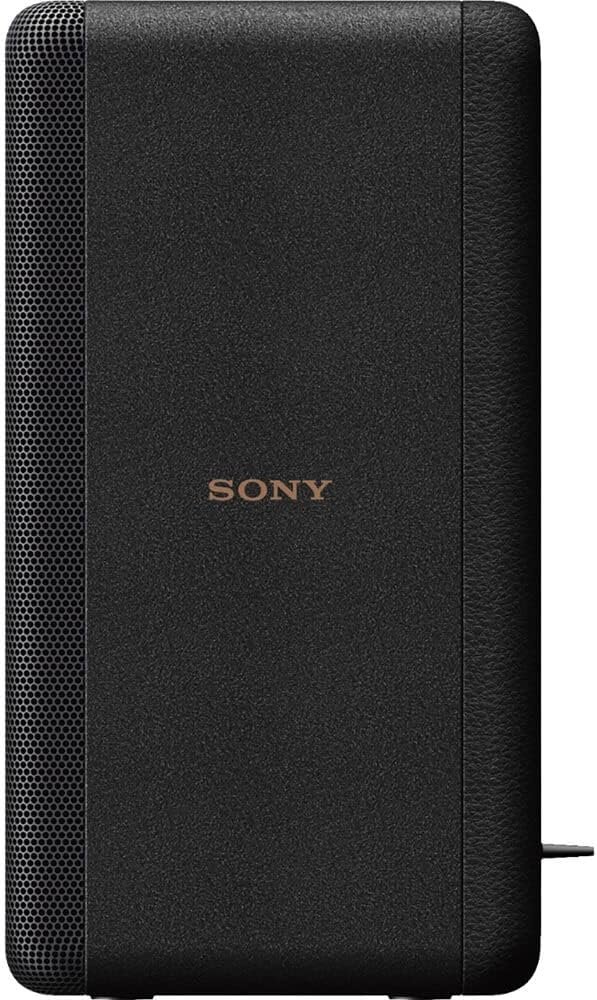
For an owner of a compatible bar, the proposition is straightforward. Sony describes the speakers as connecting automatically out of the box, which removes the pairing step that usually accompanies wireless surround. The listing describes two way speakers with an omnidirectional block design intended to visually match the bars they support, and they are wall mount capable. The cabinets are small, listed at 3.9 inches deep and wide and 7.3 inches high.
What rear channels actually add
A soundbar with height processing can place effects above and around the listener with some success, but it cannot put a discrete sound behind the head. Rear speakers do exactly that, and the difference is larger than any amount of virtual processing. A helicopter crossing from front to back, ambient rain behind the seating position and directional dialogue in a crowd scene all depend on having actual drivers behind the listener.
This is why a bar such as the Sony BAR 9, sold on its own without rears, leaves an obvious upgrade path. It is also why a complete package like the Sony HT-S40R, which ships with its rear speakers in the same box, is a fairer comparison for anyone starting from nothing. The choice between adding rears later and buying a full system up front comes down to how much of the budget goes into the front stage.
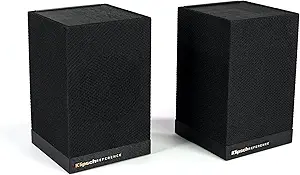
Buyers who want rear channels for a system built on separates rather than a bar should look at passive surround speakers such as the Klipsch Surround 3 pair, which connect to any receiver with speaker terminals and carry none of the compatibility restrictions that apply here.
Power, placement and mounting
Wireless in this context means the audio signal arrives without a cable, not that the speakers are free of cables entirely. Power source is listed as AC, so each speaker needs a mains outlet at the back of the room. That is the practical constraint that decides whether this upgrade is possible in a given living room, and it should be checked before ordering. The listed maximum range of 10 meters between bar and speakers is generous for a domestic room but worth confirming in a long space.
Wall mounting is supported, which helps in rooms where there is no furniture behind the seating. Placing rear speakers slightly above ear level and behind or beside the listening position is the usual recommendation, and the small cabinet makes that easy to achieve without dominating a wall. The listing gives an impedance of 6 ohms and a signal to noise ratio of 70 dB.
Highlights
- Automatic connection to compatible Sony bars and the STR-AN1000 receiver with no manual pairing described.
- Two way speaker design in a compact block cabinet, listed at 3.9 by 3.9 by 7.3 inches.
- Wall mount capable for rooms without furniture behind the seating.
- Sold as a pair, with a unit count of two in the listing.
- Wireless audio link with a stated range of 10 meters.
- Impedance listed at 6 ohms with a 70 dB signal to noise ratio.
- Limited warranty stated, with the design intended to visually match the Sony bar range.
Things To Consider
Compatibility is the deciding factor and it is absolute. There is no line input, no Bluetooth pairing to a phone and no way to use these with a third party system. A buyer who changes soundbar brand later loses the use of these speakers entirely, which is a real cost of buying into a closed ecosystem.
The imported specification data contains several entries that cannot be correct. Speaker Size and Woofer Diameter are both given as 5 inches, which is physically impossible in a cabinet listed at 3.9 inches wide. Item Weight reads 1 pound, which is implausible for a two way powered speaker with a mains supply. A Number of Batteries field states that a lithium ion battery is required, which contradicts the AC power source listed in the same table. Connectivity Protocol reads Bluetooth, while Sony uses a proprietary wireless link for its rear speakers, and Bluetooth is not how these connect to a bar. None of those figures should be relied on.
Two mains outlets at the rear of the room are a genuine installation constraint, and running power discreetly to a rear wall is often more work than running a speaker cable would have been. Renters in particular should check this before buying.
Finally, expectations should match the cabinet size. Small rear speakers reproduce surround effects and ambience well, but they are not full range, and a system built this way still relies on the bar and a subwoofer for everything below the midrange. Compare against the alternative approach taken by the Sony HT-X8500, which puts all its effort into a single bar with a built in subwoofer and no rears at all.
Who it suits
The SA-RS3S suits an existing owner of a compatible Sony bar who wants genuine rear channels without running speaker cable, who has mains power available at the back of the room, and who values the automatic setup and matching appearance. For that specific buyer it is close to the easiest surround upgrade available.
It suits nobody else. Owners of other brands, buyers building a system from separates, and anyone without rear outlets should look elsewhere. Start with the full packages in the surround sound systems category, and compare bars that include rears in the box in the sound bars category before committing to an add on that is locked to one manufacturer.