
Description
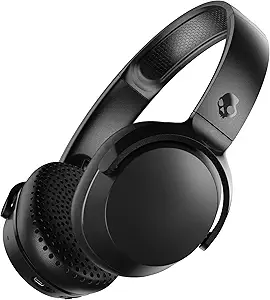
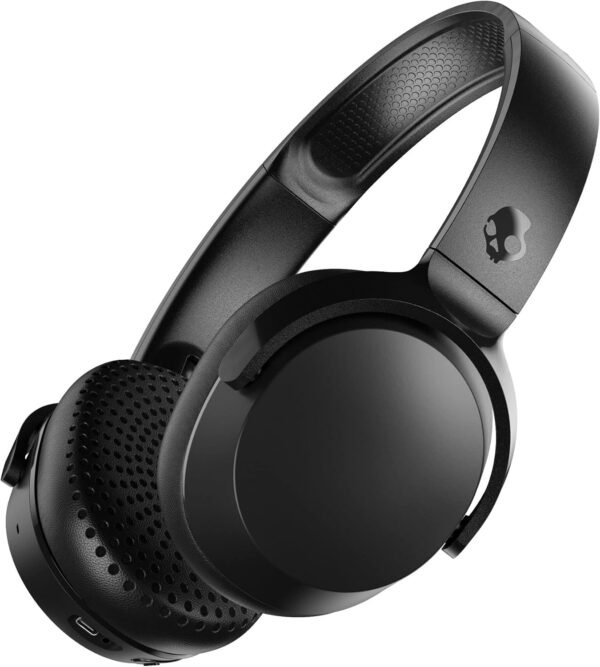
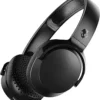
Skullcandy Riff Wireless 2: a light on ear headphone with a long battery quote
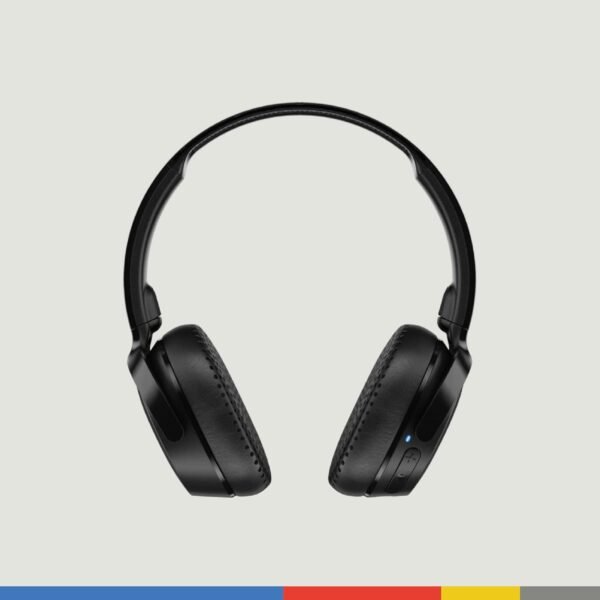
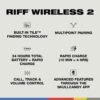
The Skullcandy Riff Wireless 2 is a foldable on ear Bluetooth headphone with a stated battery life of up to 34 hours. Skullcandy lists 40 millimeter drivers, Bluetooth 5.2 with a 10 meter range, a plastic construction, a weight of 5.4 ounces and a folded footprint described by dimensions of 7.28 by 5.51 by 3.11 inches. A 3.5 millimeter backup auxiliary cable is included, and a microphone is built in for calls.
On ear headphones sit on the ear rather than enclosing it. That makes them lighter and less hot than an over ear design, and it makes them fold smaller, but it also means they seal less completely against outside noise. Skullcandy lists the noise control here as sound isolation, which is the passive kind produced by the pads themselves rather than active cancellation. There is no cancellation circuitry in this product, and that omission is what allows the long battery quote.
Multipoint pairing and the wired backup
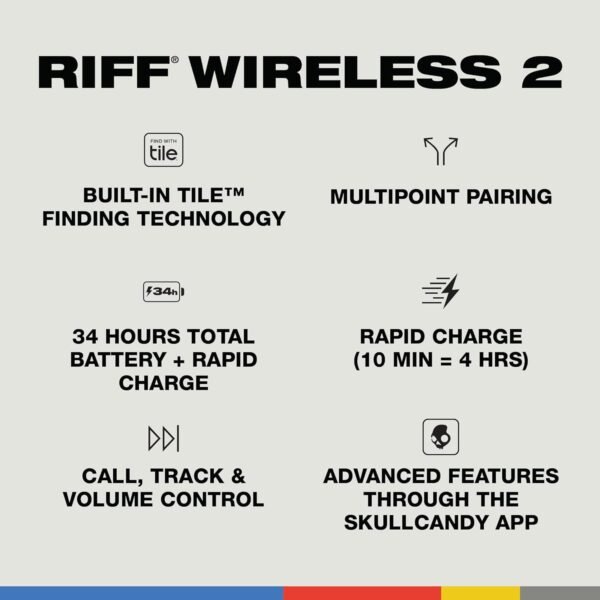
The most useful feature in this listing is multipoint pairing. Skullcandy describes connecting to two devices simultaneously, so that a call arriving on a phone interrupts a video playing on a laptop and the headphone switches over automatically. Anyone who works with a computer and a phone side by side saves a repairing step every time that happens, and multipoint is still not universal at this level of the market.
The included auxiliary cable matters more than it might appear. A wireless headphone with a wired fallback keeps working when the battery is empty, connects to airline entertainment systems that offer only a socket, and can be used with equipment that has no Bluetooth at all. It also removes latency entirely, which occasionally matters for video editing or instrument practice. Headphones without that option become useless the moment the charge runs out.
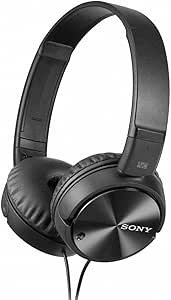
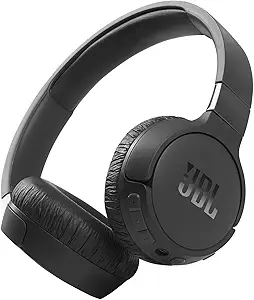
Buyers comparing on ear designs should look at the Koss KSC75 for a purely wired take on the same form factor, and at the JBL Tune 660NC for an on ear model that does include active noise cancellation, which is the direct tradeoff against battery life.
Battery, charging and daily handling
Thirty four hours is a strong figure and it is achievable precisely because there is no cancellation drawing current. The listing also describes quick charging, with a ten minute charge yielding several additional hours of playback. In practice a headphone with this endurance is charged weekly rather than nightly, which changes the ownership experience more than a small difference in sound would.
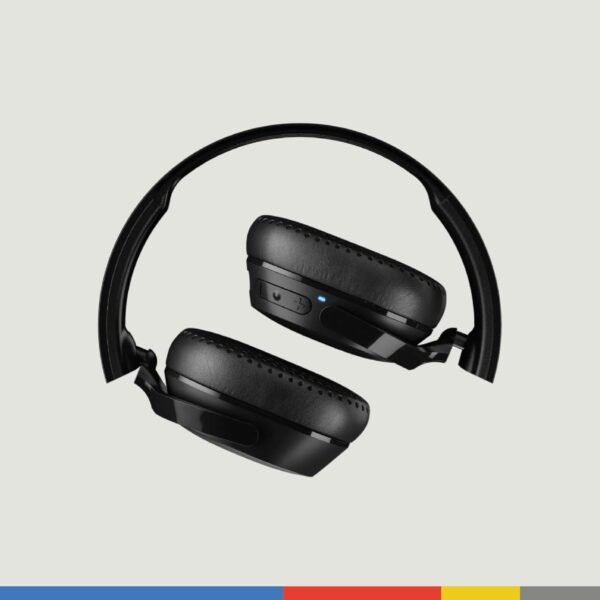
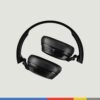
Folding is the other daily convenience. A headphone that collapses into a bag without a case is more likely to be carried, and at 5.4 ounces this one is light enough to wear for extended periods without neck fatigue. The plastic construction is what keeps the weight down, and it is a reasonable choice at this level of the market.
The 40 millimeter driver size deserves a note, since it is the same diameter used in many full size over ear headphones. In an on ear enclosure that driver sits closer to the ear with a smaller air volume behind it, which changes the low frequency behavior compared with the same driver in a larger cup. Diameter alone therefore says less about the result than the enclosure and tuning around it, and buyers should not read a 40 millimeter figure as evidence that an on ear model will sound like an over ear one. What it does indicate is that this is a full size driver rather than the small transducer used in earbuds.
Highlights
- Quoted battery life of up to 34 hours, with quick charging for short top ups.
- Multipoint pairing to two devices at once with automatic call switching.
- 40 millimeter drivers in an on ear design.
- Foldable and light at a listed 5.4 ounces.
- 3.5 millimeter backup cable included for wired use.
- Bluetooth 5.2 with a 10 meter range and a built in microphone.
- Large feedback base of nearly 10,000 ratings at a 4.4 star average.
Things To Consider
There is no active noise cancellation. On a plane, a train or in a busy office, an on ear headphone with passive isolation only will let a great deal of the environment through, and listeners often respond by raising the volume, which is worse for hearing than cancellation would be. Anyone buying primarily for noisy commuting should accept that limitation or choose a different product.
The listing states the headphones are not water resistant and gives no ingress rating, while simultaneously listing gym, sports and workout use among the recommended applications. Those two statements sit awkwardly together. Sweat is the most common cause of failure in headphones used for exercise, and without a rating there is nothing to rely on, so treat gym use as a risk the buyer accepts.
On ear comfort is highly individual. Because the pads press against the ear rather than surrounding it, clamping force is felt directly on cartilage, and people who wear glasses often find on ear designs uncomfortable over long periods. There is no way to predict this from a specification sheet, and it is the single most common reason on ear headphones get returned.
The imported data has its usual defects. A batteries field claims three lithium polymer batteries are required for a single pair of headphones, and Compatible Devices lists only laptops despite the product name naming both iPhone and Android. Control Method reads Touch, which does not match the physical control style used on headphones in this range. None of these should be taken at face value. Buyers wanting a much larger sound with heavy bass from the same manufacturer should look at the over ear Skullcandy Crusher Evo instead, while those who want a simple wired budget option can compare the Sony MDR-ZX110NC.
Who it suits
The Riff Wireless 2 suits students, home workers and casual commuters who want long battery life, light weight and the ability to stay connected to a laptop and a phone at the same time, without paying for noise cancellation. The included cable makes it a sensible travel companion for anyone who forgets to charge things.
It is the wrong headphone for frequent flyers, for gym use where a water resistance rating would be reassuring, and for anyone who finds on ear pads uncomfortable. Those buyers should compare the sealed and cancelling options in the over ear headphones category, or look through the rest of the on ear headphones category for a design with a different pad and clamp arrangement.