
Description
What the Truthear Zero RED Is
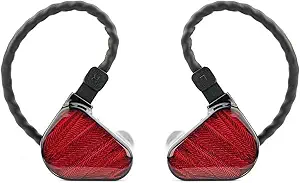
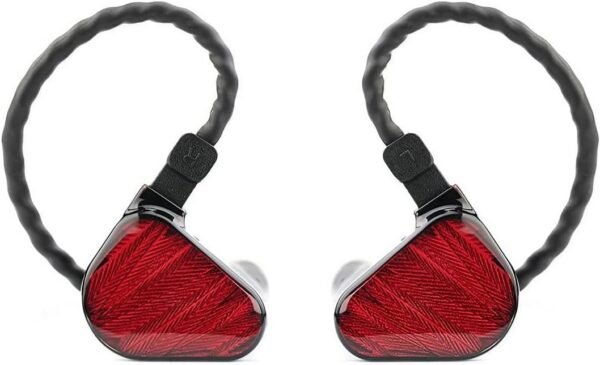
The Truthear Zero RED is a wired in ear monitor developed in collaboration with the reviewer known as Crinacle, using a dual dynamic driver arrangement. The listing describes a 3D printed cavity, a detachable copper plated silver cable, a 3.5 mm connection, and a quoted frequency range of 20 Hz to 40.5 kHz measured to the IEC61094 standard in a free field.
Collaboration products of this kind occupy a specific niche. The tuning is designed to a target curve the collaborator advocates, which means the buyer is choosing a defined sonic philosophy rather than a manufacturer house sound. That is useful information if you know the target and meaningless if you do not. What is more concretely useful is the driver arrangement: two dynamic drivers rather than a dynamic and a balanced armature hybrid. Listeners comparing hybrid designs can look at the TRUTHEAR HEXA hybrid earbuds from the same brand, and the wider field is in the earbud headphones category.
Dual Dynamic Drivers
A dual dynamic configuration uses two moving coil drivers, typically with a larger one handling low frequencies and a smaller one handling the rest. The advantage over a single driver is division of labor: a driver making large excursions to produce bass introduces distortion into whatever else it is reproducing at the same time, and separating the tasks reduces that interaction. The advantage over a dynamic and balanced armature hybrid is coherence, since two drivers of the same type behave similarly in time and phase, which makes the crossover between them easier to manage.
The trade is size and complexity. Two dynamic drivers need more internal volume than one, which is part of why the shell is 3D printed: additive manufacturing allows internal chambers and acoustic paths that could not be molded conventionally. The listing gives an audio driver size of 10 millimeters, which describes only one of the two drivers, since a dual driver design necessarily uses different sizes. The material field describes a liquid crystal diaphragm with a polyurethane suspension, which is a diaphragm specification rather than a housing material.
Cable, Connection, and Everyday Use
The detachable cable is a significant practical feature. Cables fail before earphones do, and a detachable connection turns a broken cable into a purchase rather than the end of the product. It also allows replacement with a different termination for anyone using a balanced output. The listing describes the supplied cable as copper plated silver, which is a conductor construction claim rather than a performance claim, and this page does not assert that it changes what a listener hears.
The connection is a standard 3.5 mm plug, which works with computers, dedicated players, and any phone that still has a headphone jack. Most current phones do not, so a buyer should expect to need a dongle adapter or a dedicated source. The listing states no water resistance and gives the noise control as none, meaning any isolation comes purely from the ear tip seal. Buyers wanting a wired earphone that connects to a modern phone directly should compare the SoundMAGIC E80D USB-C headphones, which carry their own converter.
Highlights
- Dual dynamic driver arrangement, avoiding the timing differences of a mixed driver hybrid.
- 3D printed shell allowing internal acoustic chambers that molding cannot produce.
- Detachable cable, making the most common failure point a replaceable part.
- Standard 3.5 mm connection compatible with computers, players, and jack equipped phones.
- Frequency range quoted at 20 Hz to 40.5 kHz under a stated measurement standard.
Things To Consider
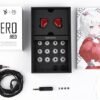
One entry on this listing is worth quoting because of what it reveals about the data quality across this catalog. The customer package type field reads, in full, a bracketed note describing the packaging as inferred to be a rigid or cushioned case. That is not a specification. It is an automated system marking its own guess, and it was published as though it were product data. Anywhere that appears, the surrounding fields should be treated with the same skepticism.
Several others are wrong outright. The control type reads Touch Control and the control method reads Touch, on a wired earphone with no controls of any kind. The wireless communication technology field reads Wired. The frequency response field reads 40500 Hz alone, which is one endpoint of the range presented as a response figure. The carrying case weight reads 7 ounces and the carrying case material reads plastic or similar, another hedged guess. The recommended uses field reads Miscellaneous. The item weight of 8.1 ounces describes the package rather than the earphones.
What the listing does not provide is more consequential than what it gets wrong. There is no impedance figure and no sensitivity figure, and those two together determine whether a phone dongle can drive these to a satisfying level or whether an amplifier is needed. There is no confirmation of the connector standard at the earpiece, which decides whether replacement cables are widely available. And a wide frequency range figure, even with a measurement standard attached, says nothing about how level the response is between the endpoints, which is the part that actually determines how the earphone sounds. The listing shows a 4.3 star average across 1,041 ratings, a substantial ownership record worth reading through.
Who Should Buy It and Who Should Not
The Zero RED suits a listener who wants a wired in ear monitor tuned to a defined target, values a detachable cable and a coherent dual dynamic design, and has a source with a headphone jack or is willing to use a dongle. It also suits gamers who want low latency, since a wired connection has none of the delay a wireless link introduces.
It is the wrong purchase for anyone who wants wireless convenience, for anyone who needs active noise cancellation, and for a buyer who needs impedance and sensitivity figures before deciding what will drive them. Those buyers should look at true wireless options such as the Moondrop Space Travel true wireless earbuds, or at a full size design from the over ear headphones category if size is not a constraint.