
Description
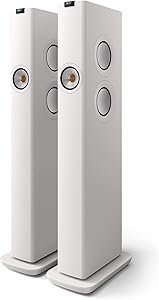
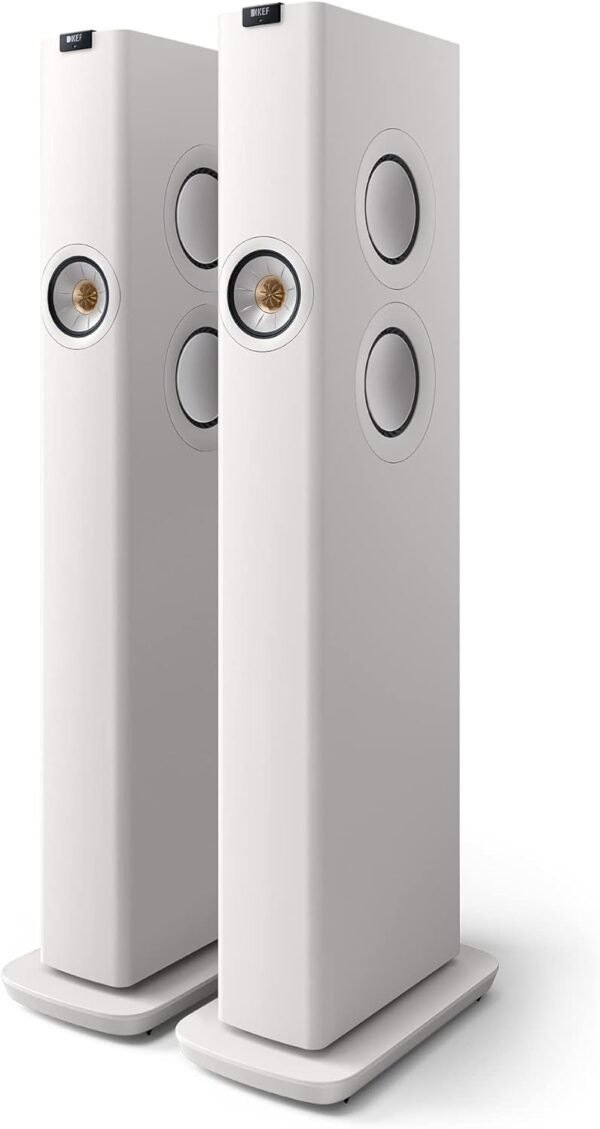
KEF LS60 Wireless: a complete stereo system in two slim towers
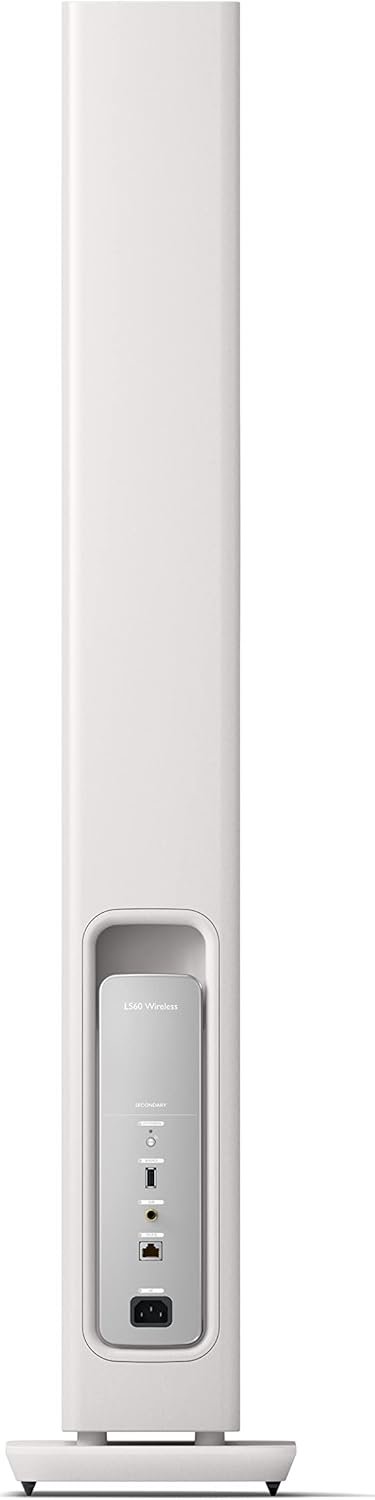
The KEF LS60 Wireless is an active floorstanding system that replaces an entire hi fi chain. KEF built it to mark 60 years of the company and describes it as an all in one speaker system that streams from any source and connects to home audio devices with audiophile grade power. In practice that means there is no separate amplifier, no separate streamer and no separate digital to analog converter to buy. The pair arrives with power cables, an interconnect cable between the two towers, a remote and a quick start guide, and the listing credits the industrial design to Michael Young working with the KEF product design team.
This is aimed at a specific buyer: someone who wants serious two channel sound in a living room and does not want a rack of components or a wall of cables. The listed configuration is 2.0, so a subwoofer is not part of the package. Buyers who want that extra octave usually pair a system like this with a sealed subwoofer such as the KEF KC92, which comes from the same manufacturer and is designed to sit alongside KEF speakers.
Drivers, streaming and control
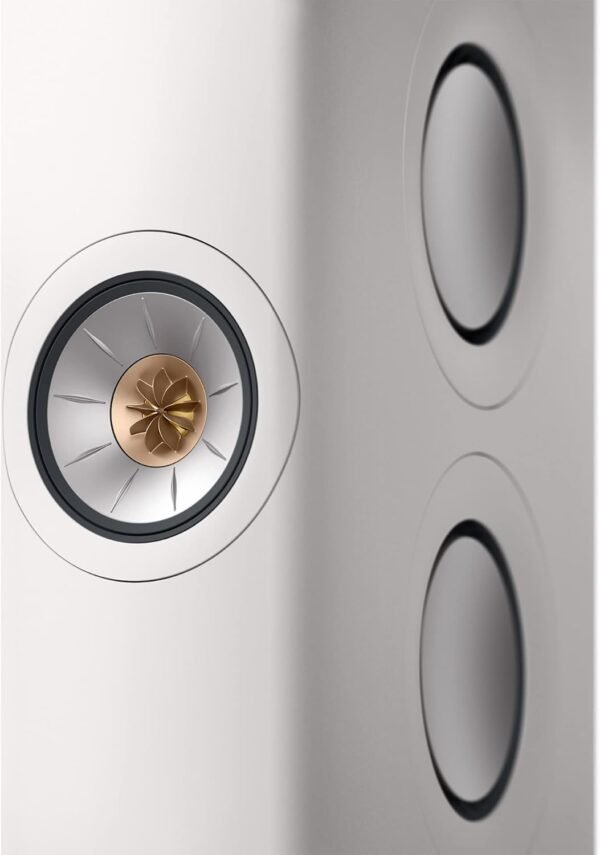
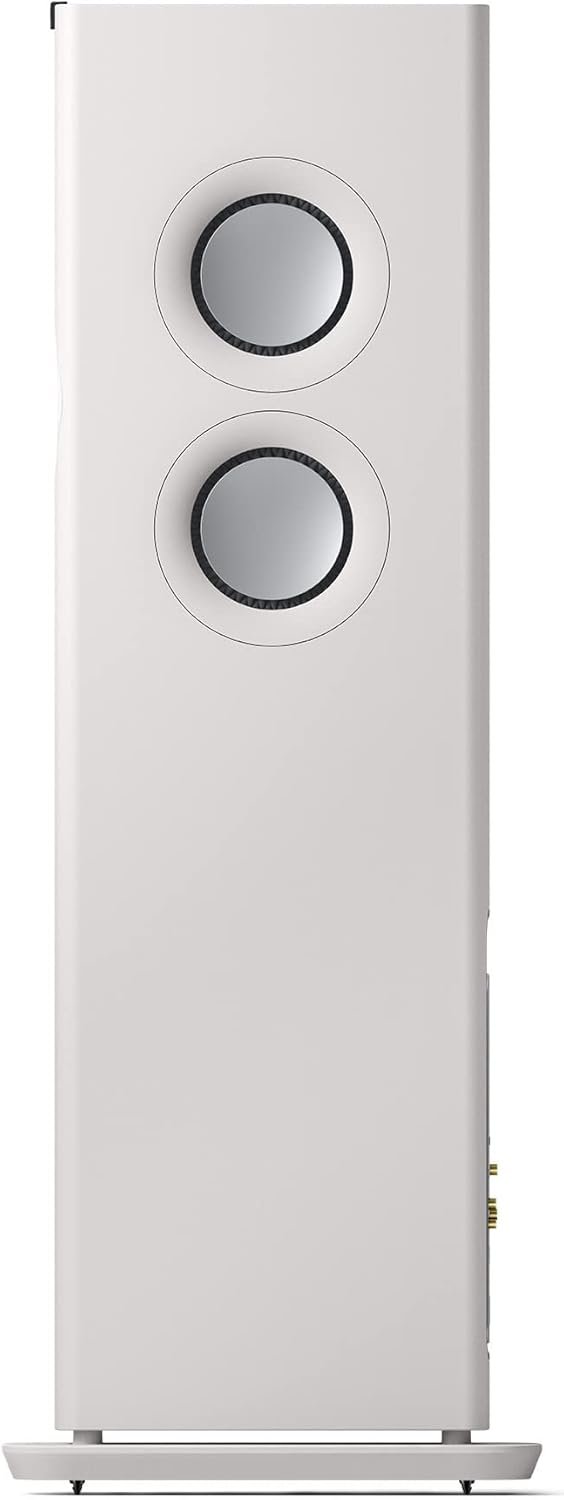
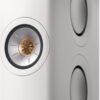
KEF specifies a 6.5 inch woofer and a 25.4 millimeter tweeter, with the audio driver type given as dynamic. The tower shape and the corded electric power source tell you the amplification lives inside each cabinet, which is why the system needs a wall outlet at both left and right positions rather than a single amplifier location.
Streaming coverage is the strongest part of the specification. The listing names Spotify Connect, Amazon Music, Apple AirPlay 2, Google Chromecast and TIDAL Connect, with wireless communication given as Bluetooth, AirPlay and Wi-Fi. That combination matters because each of those protocols hands control to a different app ecosystem. An iPhone household leans on AirPlay 2, an Android household on Chromecast, and a subscriber to either streaming service can push audio directly from the service app without the phone acting as a relay. Control method is listed as remote, with controller type covering both physical buttons and app control.
Compatible devices in the listing run to smartphone, tablet, MP3 player, desktop, television, projector and laptop, and the recommended uses include gaming consoles and televisions. Anyone whose current setup is a passive pair of speakers driven by a receiver is buying a different architecture here. If the goal is simply to add wireless streaming to speakers you already own, a small receiver like the Audioengine B1 solves that at a fraction of the outlay.
Where the listing data contradicts itself
The imported specification sheet needs reading with care. Product dimensions are given as 15.5 inches deep by 40.94 inches wide by 42.9 inches high, which describes a box wider than it is tall. That does not match a slim floorstanding tower, and the figures are far more consistent with a shipping carton holding a pair than with a single speaker. The item weight of 139 pounds points the same way, since that is a plausible packed weight for two active towers and their accessories rather than the weight of one cabinet.
Two more fields are worth naming rather than repeating as fact. Audio latency appears as 1.5E plus 02 milliseconds, which is scientific notation for 150 milliseconds and reads as a Bluetooth figure rather than something that applies to a wired or Wi-Fi source. Number of circuits is listed as 3, a field with no clear meaning for a two channel active loudspeaker. The listing also states Is Waterproof as false, which is unnecessary for an indoor floorstander and simply reflects a template applied across the whole speaker category. None of these entries should be treated as performance claims.
Highlights
- Active all in one stereo system with amplification, streaming and conversion inside the cabinets.
- 6.5 inch woofer and 25.4 millimeter tweeter per tower, listed as dynamic driver types.
- Streaming support named for Spotify Connect, Amazon Music, Apple AirPlay 2, Google Chromecast and TIDAL Connect.
- Wi-Fi, Bluetooth and AirPlay connectivity, with app control alongside a supplied remote.
- Ships as a pair with power cables, an interconnect cable, a remote and a quick start guide.
- Two year manufacturer warranty listed.
- Mineral White finish on this version, with a 2.0 channel configuration.
Things To Consider
The most important limitation is structural rather than sonic. An active system concentrates the amplifier, the converter and the streaming board inside the speaker. That removes cables and matching guesswork, but it also means the electronics cannot be upgraded independently and a fault in the amplifier section takes the speaker out of service with it. Passive floorstanders such as the Klipsch R-620F keep those parts separate, which is the traditional argument for a component system.
Both towers need mains power, so the room has to support an outlet at each speaker position. The listing shows a wired interconnect cable between the two cabinets as well, meaning the word wireless in the product name refers to source connectivity rather than to a cable free installation. Plan the placement accordingly.
There is also no subwoofer output described in this listing and no surround processing, because the system is explicitly 2.0. Movie watchers who want rear channels and a center will find a home theater package a better structural match. Finally, the listing gives no frequency response, no amplifier power figure and no maximum sound pressure level, so there is no manufacturer stated number here to compare against a rival. Anyone building a traditional system around a turntable will still need a phono stage, since none is described; a deck like the Pro-Ject Debut Carbon EVO assumes that stage exists somewhere in the chain.
Who it suits
The LS60 Wireless is for a listener who wants a single purchase to cover streaming, amplification and speakers, who values a narrow footprint in a shared living space, and who lives inside one or more of the named streaming ecosystems. It suits stereo music listening far more than multichannel film watching.
It is a poor fit for anyone who enjoys swapping amplifiers and sources, for rooms where running mains power to both speaker positions is impractical, and for buyers whose priority is home theater surround. Those needs are better served by a passive pair plus separates. For alternatives on either side of that choice, look through the floorstanding speakers category, or the wireless audio receivers and adapters category if the aim is to add streaming to speakers already in the room. A classic passive design such as the Wharfedale Linton shows how differently the same budget can be spent.