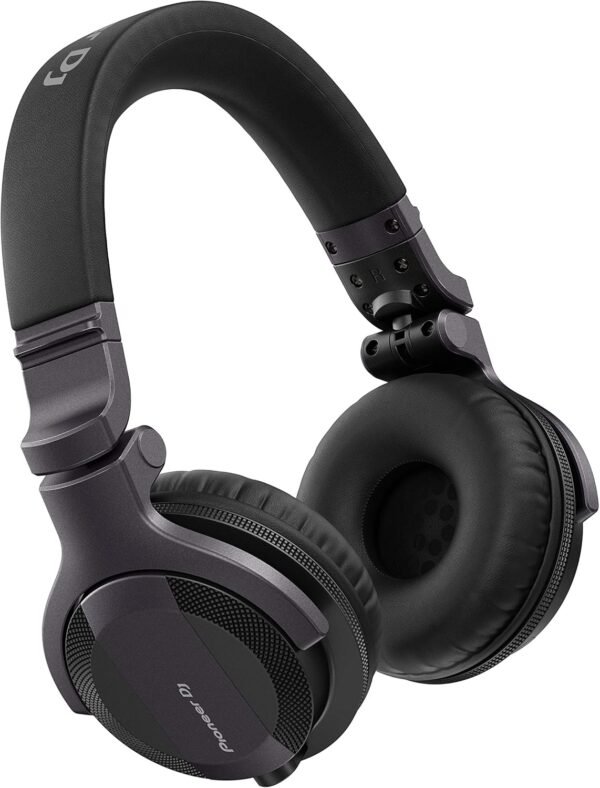
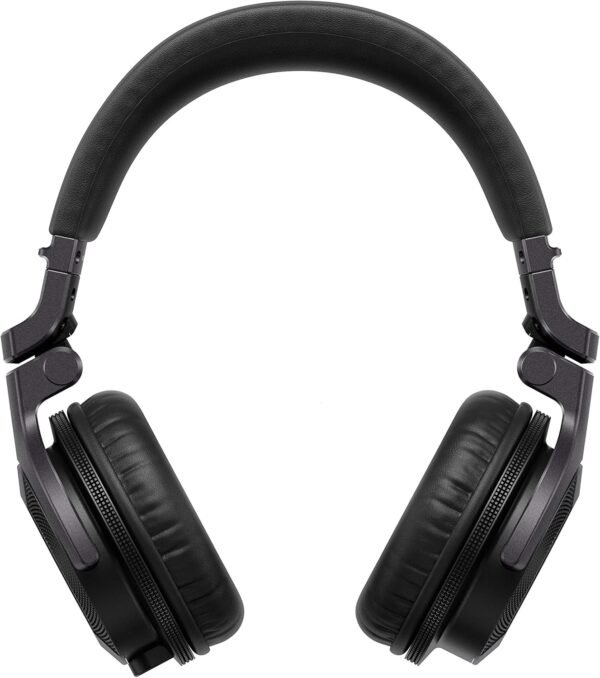
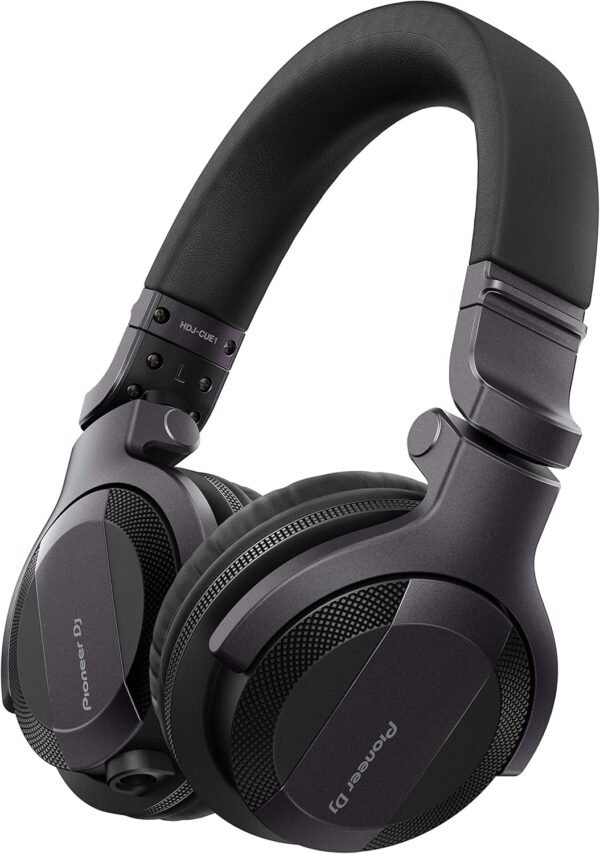
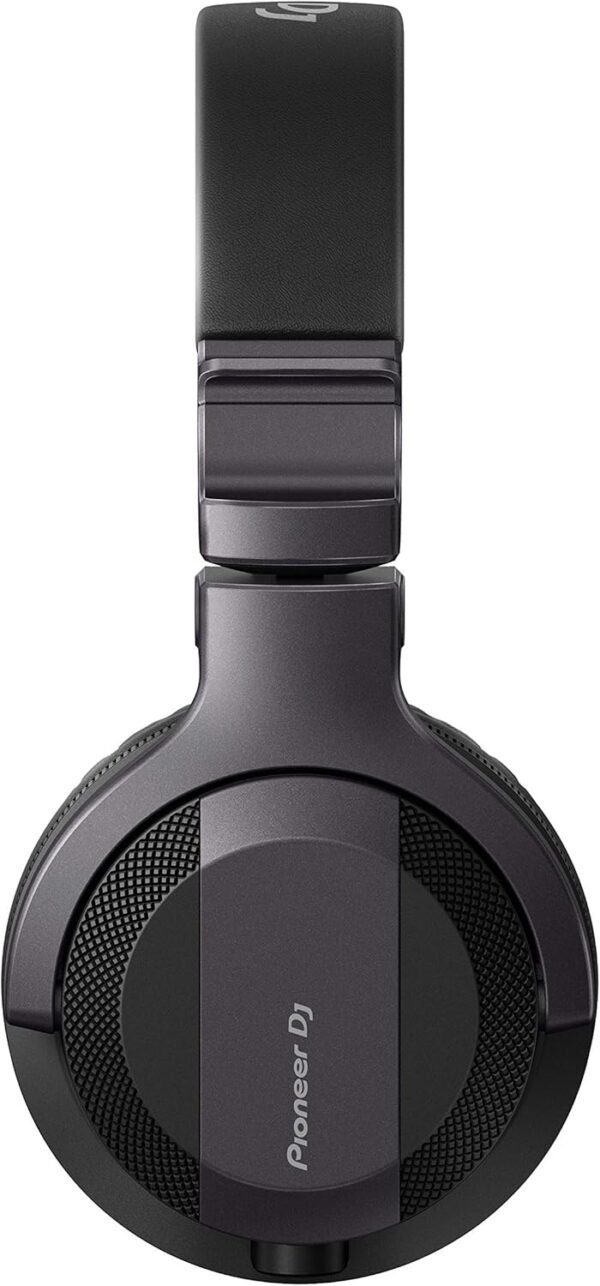
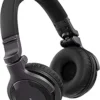
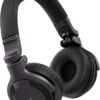
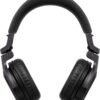
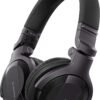
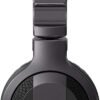
Description
Where the HDJ-CUE1 Sits in the Pioneer DJ Range
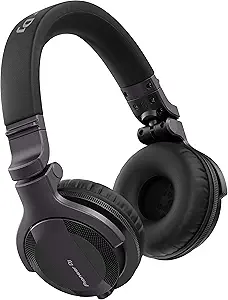
The Pioneer DJ HDJ-CUE1 is the entry point to the company DJ headphone line. Pioneer DJ is explicit about the positioning in its own description: the series is based on the same design lineage as the professional models but sits at the accessible end of the range, and it is described as meeting many of the benchmarks set by the professional headphone series in functionality and quality. The stated sound tuning is adopted from the professional HDJ-X5 model, with emphasis on hearing the low frequencies in the bass and kick drum clearly enough to beat match with confidence.
That last point is what separates a DJ headphone from a listening headphone. The job is not to sound pleasant but to make the kick and the bass line unambiguous in a loud room, so that the transition lands. Everything else in the design follows from that: the cups rotate, the cable is long, and the isolation is passive. Buyers who want a headphone tuned for accuracy rather than for cueing should look at the over ear headphones category, where studio monitoring designs make a different set of compromises.
Build, Rotation, and Fit
The listing describes a durable build with reinforced metal sliders, padded ear cups, and a flexible headband, with the material field reading Metal. Metal sliders matter more on a DJ headphone than on most designs, because the headband adjustment is manipulated constantly rather than set once, and it is the first thing to break on a cheaply built pair. The listing gives the weight as 7.6 ounces, which is moderate for a full size closed design, and the earpiece shape is described as an over ear cup.
Rotating ear cups are the other defining feature. One ear monitoring, where the DJ listens to the cue in one ear while the other ear hears the room, only works if a cup can swivel out of the way and stay there. Pioneer DJ also mentions optional accessories in different colors, so the visual appearance can be changed without buying a new headphone. The listing gives the cable length as 1.8 meters terminating in a 3.5 mm jack, and lists a cable among the included components.
Sound Specification and What It Actually Says
Two frequency figures appear on this listing. The frequency range is quoted as 5 Hz to 30,000 Hz, and a separate frequency response field reads 30000 Hz on its own, which is half of a range rather than a response specification. A range that wide is common in marketing material for headphones and says very little about how a headphone sounds, since it does not describe how level or controlled the response is between those endpoints. The sensitivity value is given as 104 with no unit attached, which is presumably decibels per milliwatt but is not stated as such.
The noise control field reads Sound Isolation, which is accurate and worth understanding: this headphone blocks noise by physically covering the ear, not by electronic cancellation. In a DJ booth that is the correct choice, since active cancellation introduces processing and a dependence on battery power that has no place in a monitoring chain. Anyone who actually wants electronic cancellation should look at a different product entirely, such as the Soundcore Space One active noise cancelling headphones. For a wired monitoring alternative at a smaller size, the ARTTI T10 Pro in ear monitor takes the opposite approach to isolation.
Highlights
- Sound tuning described by Pioneer DJ as adopted from the professional HDJ-X5 model.
- Rotating ear cups that support one ear monitoring in a booth.
- Reinforced metal sliders on the headband, the part that takes the most handling.
- Wired 3.5 mm connection with a 1.8 meter cable listed among the included components.
- Listed weight of 7.6 ounces, with a 4.6 star average across 1,568 ratings on the listing.
Things To Consider
This listing is filed on the site under earbud headphones, which does not match the product. The HDJ-CUE1 is a full size over ear headphone, and the listing itself gives the earpiece shape as an over ear cup. The categorization is a data problem rather than a product problem, but it is worth knowing if you arrived here expecting an in ear design.
The specification block contradicts itself in several places. Connectivity technology reads Wired while wireless communication technology reads RF and a Bluetooth version field reads 5, which describes the separate wireless model in this family rather than this one. The cable feature field reads Without Cable while the included components field lists a cable and the cable length field gives 1.8 meters. A carrying case weight of 215 grams appears with no case in the components list. The manufacturer description also refers readers to wireless models of the HDJ-CUE1 without naming the wireless variant properly, which makes the passage read as though the product references itself.
The genuine limitations are worth stating clearly. This is a wired headphone with no battery, no application, and no noise cancellation, which is the correct design for DJ work but a downgrade for a commuter. Closed cups that isolate well also trap heat, which is a real consideration over a long set. And an entry level model derived from a professional line will not match the professional line in materials or in replaceable parts availability, so buyers should treat the shared tuning claim as being about voicing rather than about build.
Who Should Buy It and Who Should Not
The HDJ-CUE1 is aimed at someone learning to DJ, or an established DJ who needs a second pair that can be handed around without worry. The rotating cups, the durable slider hardware, and the cueing focused tuning are all pointed at that user, and the large rating count on the listing suggests it sells in volume to exactly that audience.
It is the wrong choice for a commuter who wants noise cancellation, for anyone who needs a wireless connection, and for a mixing engineer who needs a flat response rather than a bass forward one. Buyers in those situations should compare a wireless model such as the Sennheiser ACCENTUM Plus wireless headphones, or a compact in ear option from the earbud headphones category if portability matters most.