



Description
Moondrop Space Travel: a budget true wireless set from an in ear monitor brand
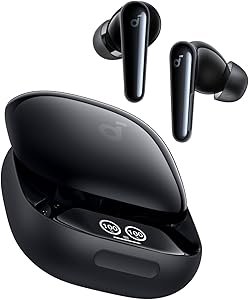
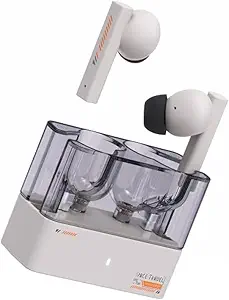
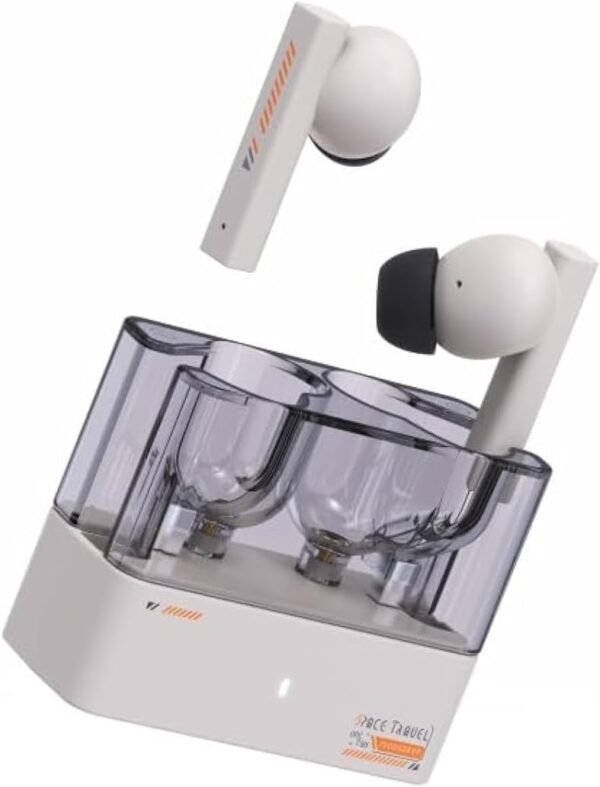
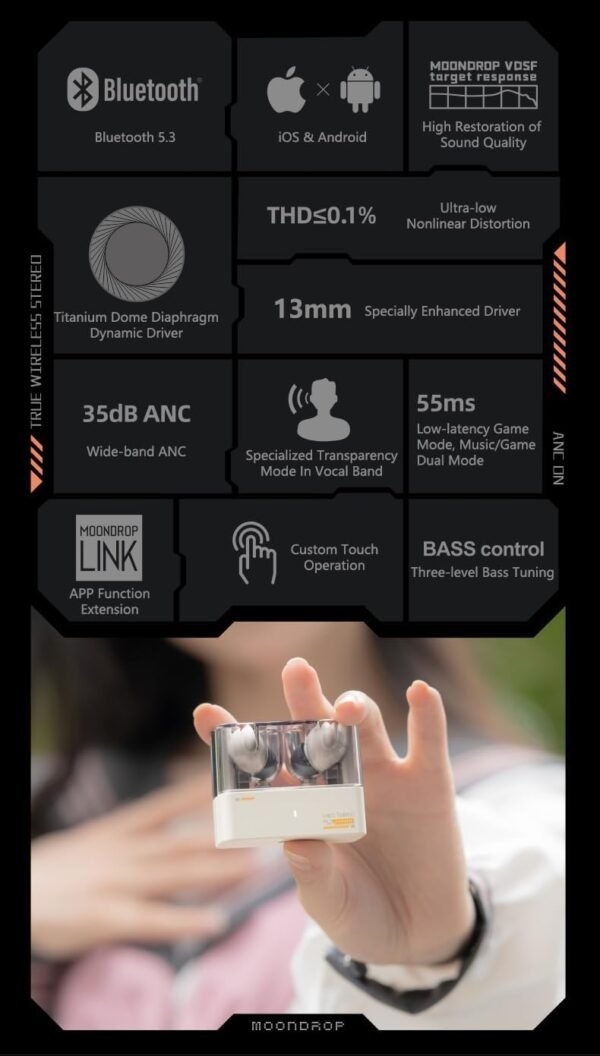
The Moondrop Space Travel is a true wireless earbud that comes from a manufacturer better known for wired in ear monitors aimed at enthusiasts. That background shapes the product. Moondrop lists a 13 millimeter dynamic driver, a frequency range of 20 Hz to 20,000 Hz, Bluetooth 5.3 with a 10 meter range, active noise cancellation and touch based media control. The listing describes the earpiece shape as rounded and includes a charging case in the box.
A 13 millimeter driver is large for a true wireless earbud, where 6 to 10 millimeters is more typical. Larger drivers move more air and generally make low frequency reproduction easier, though the acoustic design and the seal in the ear matter more than diameter alone. Moondrop pairs that driver with a shallow fitting shell, which suits smaller ears and reduces the pressure some people feel from deep insertion designs, at the cost of some isolation compared with a deeper seal.
Noise cancellation, latency and app control
Active noise cancellation at this level of the market is a genuine feature rather than a token one, but expectations should be set correctly. Cancellation works best on steady low frequency noise such as an engine, a train or ventilation, and much less well on speech and sudden sounds. In a set at this price it reduces the constant background rather than producing silence.
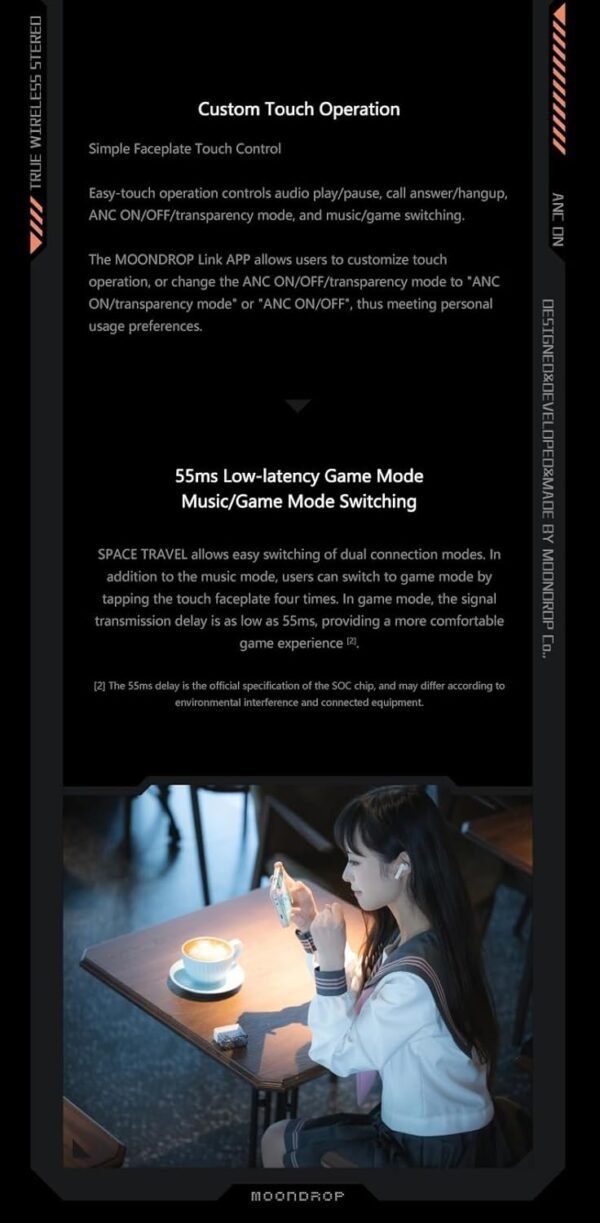
The listing gives an audio latency figure of 55 milliseconds, which is unusually specific and useful. Standard Bluetooth latency can run past 150 milliseconds, which is enough to visibly separate a gunshot from its muzzle flash in a game. A 55 millisecond figure, achieved through a dedicated low latency mode, brings that gap down to the point where most players stop noticing it. Video watching is comfortable at either figure because players and streaming apps compensate automatically, so latency mostly matters for gaming.
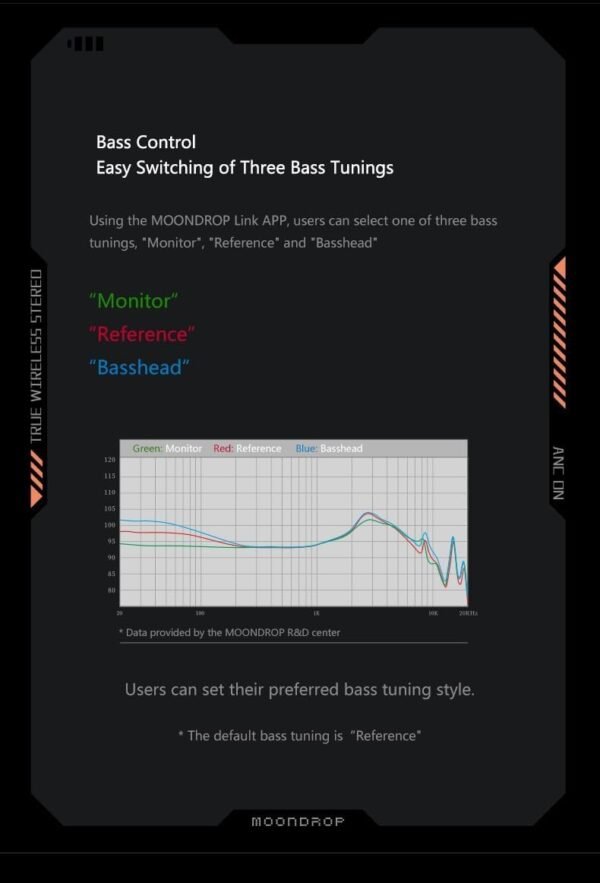
App control adds equalization presets, described as covering balanced, reference and bass focused profiles. Enthusiast manufacturers tend to tune toward neutral by default, and an app that allows a bass lift without third party software is a practical addition for buyers who want more low end than a reference tuning provides. Automatic switching between mono and stereo modes lets a single bud be used alone for calls, with the second rejoining when taken out of the case.
Battery figures worth checking
Battery life is listed at 4 hours per earbud, with a charging time of 1 hour for the buds and 1.5 hours for the case. Four hours is short by current standards, where 6 to 8 hours is common, and it is the specification most likely to disappoint a buyer coming from a longer lasting set. Active noise cancellation consumes power continuously, so real world endurance with cancellation running will sit at or below that figure rather than above it.
The listing does not state total playtime including the case, which is the number most manufacturers advertise, so there is no way to calculate how many recharges the case provides. Anyone who needs a full working day of listening without returning to the case should compare this carefully against sets that publish both figures, such as the EarFun Air or the TOZO NC3, both of which quote much longer combined figures.
Highlights
- 13 millimeter dynamic driver, large for a true wireless design.
- Bluetooth 5.3 with a listed 10 meter range.
- Active noise cancellation with a low latency mode measured at 55 milliseconds.
- App based equalization with balanced, reference and bass focused profiles.
- Shallow fitting shell suited to smaller ears.
- Automatic switching between single earbud and stereo use.
- Frequency range stated as 20 Hz to 20,000 Hz, with a 4.4 star average across more than 1,300 ratings.
Things To Consider
The four hour battery figure is the clearest limitation and it should drive the decision more than any other specification here. Commuters with a short journey will never notice it. Anyone who listens for a full working day, takes long flights or uses earbuds through a gym session and the trip home will be returning them to the case regularly.
There is no ingress protection rating anywhere in the listing. No IPX number means no stated resistance to sweat or rain, and that is a meaningful omission for a product many buyers will use while exercising. Treat them as indoor and dry weather earbuds unless the manufacturer documentation says otherwise. Buyers who need a rated seal should look at models that publish one, since the rating is the only thing that distinguishes a claim from a guess.
The imported specification data has its usual quirks. Item Weight reads 3.53 ounces, which is far too heavy for a pair of earbuds and clearly describes the packaged product rather than what goes in the ears. An Is Autographed field appears again, which is a template artifact. Neither affects the product, but both are reminders to read the numbers rather than trust them.
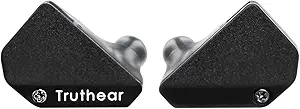
Finally, a shallow fit is a tradeoff rather than an improvement. It is more comfortable for many people and easier to wear for hours, but it seals less completely, which reduces passive isolation and can lighten the perceived bass. Listeners who want a deep seal and maximum isolation should consider wired in ear monitors such as the TRUTHEAR HEXA or the Meze Audio Alba, which remove the battery question entirely.
Who it suits
The Space Travel suits a buyer who wants active noise cancellation and app based tuning at a low price, who has smaller ears or dislikes deep fitting earbuds, and whose listening happens in sessions of a few hours rather than all day. The low latency mode makes it a reasonable choice for mobile gaming, which is not true of every set at this price.
It is not the right purchase for long haul travel, for workouts where sweat resistance matters, or for anyone who wants all day battery life from a single charge. Those buyers should compare the longer lasting and water rated options in the earbud headphones category, or consider the open ear headphones category if comfort over long periods matters more than isolation.