Description
What the TOZO NC3 Sets Out To Do
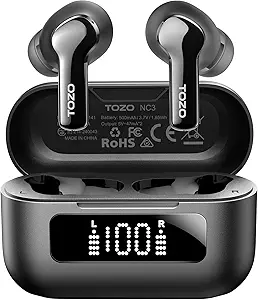
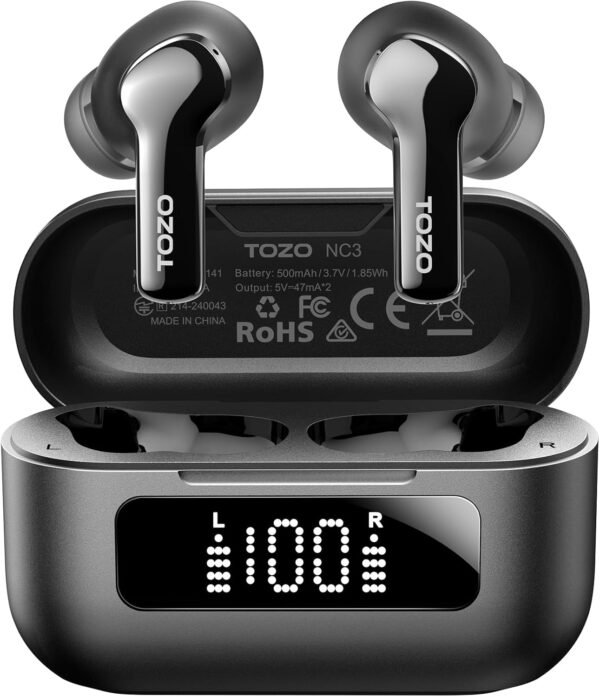
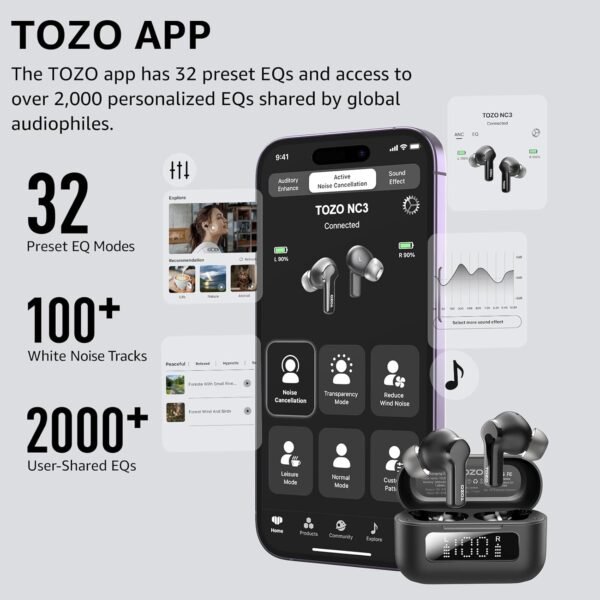
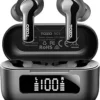
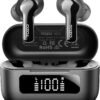
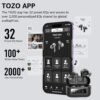
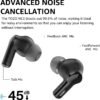
The TOZO NC3 is a true wireless earbud built around hybrid active noise cancellation, with six microphones for calls, a battery figure quoted at up to 55 hours, and a companion application offering 32 preset equalization modes. That is a specification list that would have described a flagship product a few years ago, and its appearance at the value end of the market is the whole story of how this category has developed.
TOZO occupies a specific place in that market. The company competes on delivering the standard feature set of a premium earbud without the brand position, which means a buyer is choosing on specification rather than reputation. Whether the implementation matches the specification is the question that matters, and no listing settles it. Alternatives across the same feature set are collected in the earbud headphones category, and the flagship comparison point is the Sony WH-1000XM5 wireless headphones, though that is a full size design.
Hybrid Cancellation and the Six Microphones
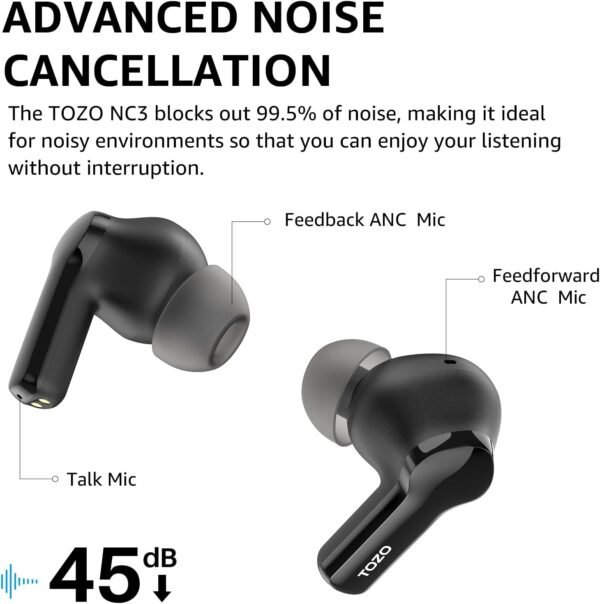
Hybrid active noise cancellation means microphones on both the outside and the inside of each earbud. The outer microphone samples ambient noise before it arrives, and the inner one measures what actually reached the ear canal after the tip seal, allowing the system to correct for leakage and for the shape of an individual ear. That inner correction loop is what distinguishes a hybrid design from a simpler feedforward system, and it is now the standard architecture on serious cancelling earbuds.
The six microphone count covers both jobs at once. Two per earbud handle cancellation, and the remaining pair handle voice pickup for calls, which is a separate task with different requirements. A voice microphone has to isolate speech from wind, traffic, and background conversation, and multiple microphones allow the processing to compare what each hears and suppress sound arriving from directions other than the mouth. It is worth being clear that call microphone processing improves what the person on the other end hears and does nothing for the wearer, which is a distinction many listings blur. Anyone whose primary need is call quality in an office should also consider a dedicated headset design such as the Jabra Engage 65 stereo wireless headset.
Battery Arithmetic and the Equalization Presets
The 55 hour figure is a combined total across the earbuds and the charging case, which is how this specification is quoted throughout the category. It is not the runtime of the earbuds themselves, and the listing does not publish that number. The distinction is the one that determines whether the earbuds survive a long flight, and a buyer whose use depends on single charge endurance should get that figure from TOZO rather than working from the headline.
What a high combined figure does indicate is a case with substantial capacity, which means fewer trips to a wall socket and more tolerance for a forgotten charge. It also means the case battery, which usually cannot be replaced, is the component that determines the practical life of the product. The 32 preset equalization modes in the application are a large number, and large preset counts are more useful for finding something acceptable quickly than for precise adjustment, since presets by definition are not custom. As with any application dependent feature, the equalization is available for as long as the application is maintained and remains compatible with current phones, which is a shorter horizon than the hardware. Listeners who prefer no application at all should look at wired designs from the on ear headphones category.
Highlights
- Hybrid active noise cancellation using microphones inside and outside each earbud.
- Six microphones in total, split between cancellation and voice pickup for calls.
- Combined runtime quoted at up to 55 hours across the earbuds and the charging case.
- Companion application with 32 preset equalization modes.
- True wireless format with no cable between the earpieces.
Things To Consider
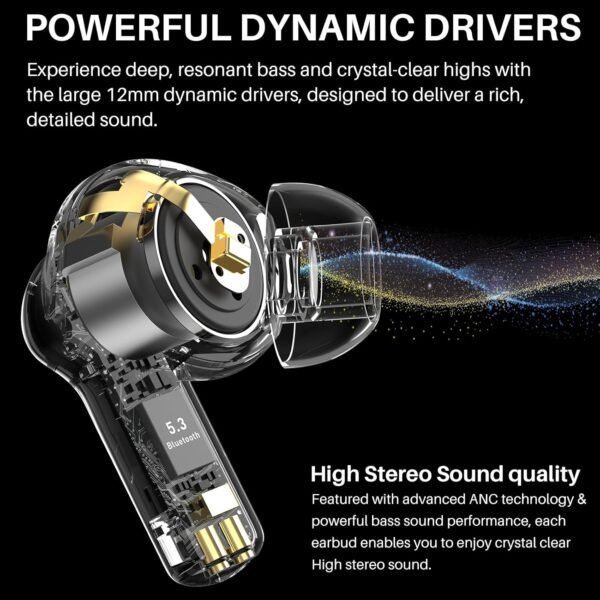
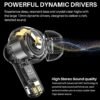
The imported record for this product contains no manufacturer description and no specification table at all. Everything above comes from the marketing bullets. That means there is no published driver size, no Bluetooth version, no codec list, no ingress protection rating, no single charge runtime, no case capacity, no charging connector, no weight, no confirmation of multipoint pairing, and no statement about wear detection or wireless charging. Several of those would change a purchase decision. The absence of an ingress protection rating matters for anyone planning to exercise in them, and the absence of a codec list matters for anyone who cares about wireless audio quality.
The claims that are present use the language common to the whole category. Exceptional cancellation, crystal clear calls, and an immersive experience are descriptions rather than measurements, and they appear on products at every level of the market. This page reports them as listing claims rather than as findings.
Two further considerations apply to cancelling earbuds generally. Cancellation depends heavily on the ear tip seal, so a tip that does not fit will undermine the electronics no matter how capable they are, and tip selection is the single highest impact adjustment an owner can make. And cancellation remains far more effective against steady low frequency noise such as engine and cabin drone than against speech, which is true of every product in the category regardless of price or microphone count. Buyers expecting an office to fall silent should adjust that expectation before purchase, and those wanting deeper cancellation in a larger chassis should compare the Sennheiser ACCENTUM Plus wireless headphones.
Who Should Buy It and Who Should Not
The NC3 suits a commuter or office worker who wants the standard cancelling earbud feature set without paying a flagship position, is comfortable buying on specification rather than brand, and will actually use the equalization presets to tune the sound to taste. The very long combined battery figure means the case can go a week or more between charges for most listeners.
It is a weaker choice for anyone who needs a documented water resistance rating before exercising in them, for anyone who needs codec information or single charge runtime before buying, and for anyone who would rather not manage a phone application. Those buyers should look at products with fuller published data, at a neckband alternative such as the Bose QuietControl 30 wireless earbuds, or at a wired sport design such as the MEE Audio M6 sport wired earbuds where nothing depends on software at all.