
Description
Audioengine B1: a Bluetooth receiver aimed at equipment that predates streaming
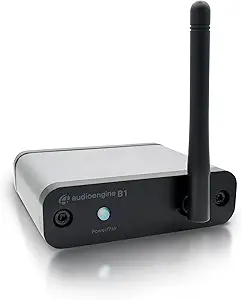
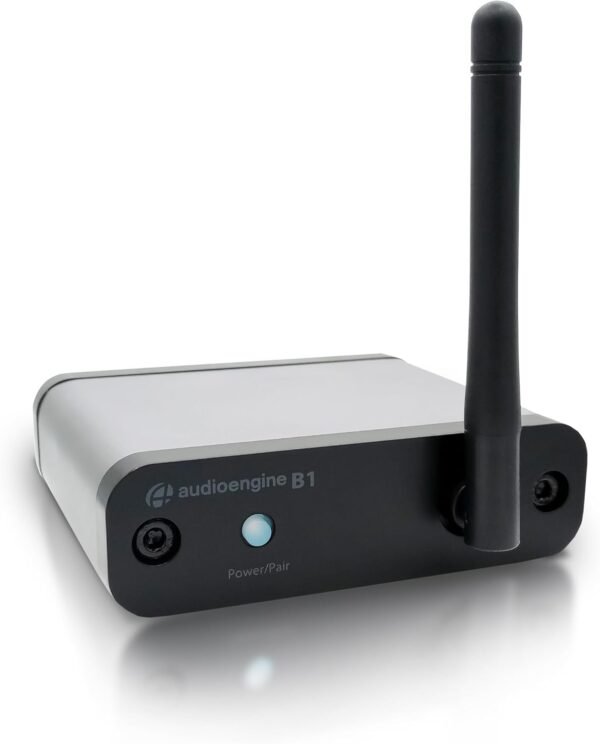
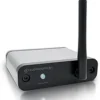
The Audioengine B1 exists to solve one problem: a good stereo system with no way to play music from a phone. It is a Bluetooth receiver that connects to an amplifier, a receiver or a pair of powered speakers and adds wireless streaming to whatever is already in the room. Audioengine describes it as a Bluetooth 5.3 receiver for older classic stereo speakers and sound systems, supporting adaptive wireless streaming at up to 32 bit audio, with long range operation. The unit is small at 3.75 by 3.5 by 1 inches and 5 ounces.
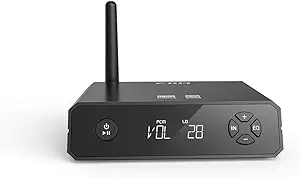
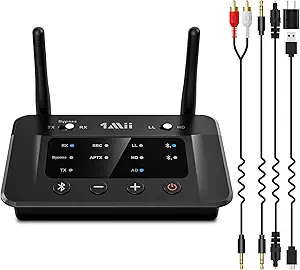
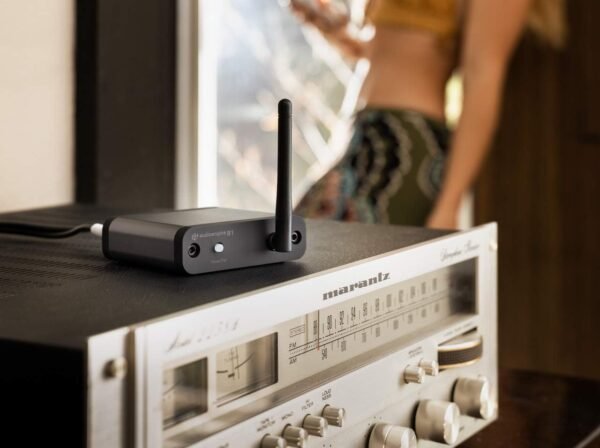
The value of this approach is that it preserves an investment. A receiver from twenty years ago may sound entirely good and have no fault at all, while lacking any way to accept audio from a phone. Replacing the whole system to gain that one function is expensive and wasteful. A receiver like this adds it for a fraction of the cost, and the same logic applies to the 1Mii B03 and the FiiO BR13, which attack the same problem with different feature sets.
Why a dedicated receiver beats a cheap dongle
The audible weak point in any Bluetooth receiver is the digital to analog conversion happening inside it. Every wireless receiver takes a compressed digital stream and turns it into an analog signal for the amplifier, and the quality of that conversion sets the ceiling for everything downstream. A very cheap adapter does the job at minimum cost, which is why the results through a capable system are often disappointing.
Audioengine positions the B1 against that outcome, with a stated capability of handling up to 32 bit audio. The claim is about the receiving and conversion chain rather than about the Bluetooth link itself, since Bluetooth remains a compressed transport regardless of what a receiver can decode. What matters practically is that the analog output is designed to feed a real stereo system rather than a computer speaker.
Long range operation is the other stated advantage. Standard Bluetooth is specified for roughly 10 meters in open space, and walls reduce that considerably. A receiver designed for extended range lets the phone stay in a pocket in another room without the audio breaking up, which matters more in daily use than most specifications do.
Installation and what to connect it to
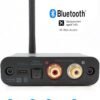
Setup is simple by design. The receiver connects to a line level input on an amplifier or receiver, pairs with a phone or tablet, and requires no software. Anyone with an amplifier that has a spare auxiliary or tape input can add streaming in a few minutes. The same applies to powered speakers with a line input, and to a shelf system or an integrated amplifier such as the Yamaha R-S202, though that particular model already includes Bluetooth of its own.
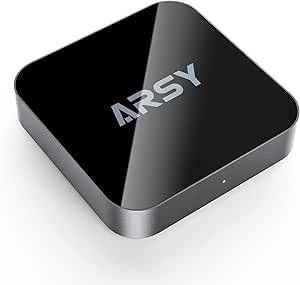
For systems where a networked source is preferred over Bluetooth, a Wi-Fi based streamer such as the ARSY NE-2 takes a different route, playing directly from a service rather than relaying from a phone. Which approach suits depends on whether the phone should be the source or just the remote control.
Highlights
- Bluetooth 5.3 receiver designed to feed a line input on existing hi fi equipment.
- Stated support for up to 32 bit audio in the receiving chain.
- Long range wireless operation, beyond the usual short Bluetooth reach.
- Compact at 3.75 by 3.5 by 1 inches and 5 ounces.
- No software or app required for setup.
- Strong feedback record, averaging 4.7 stars across more than 2,200 ratings.
- Long lived product, first listed in August 2014 and still available.
Things To Consider
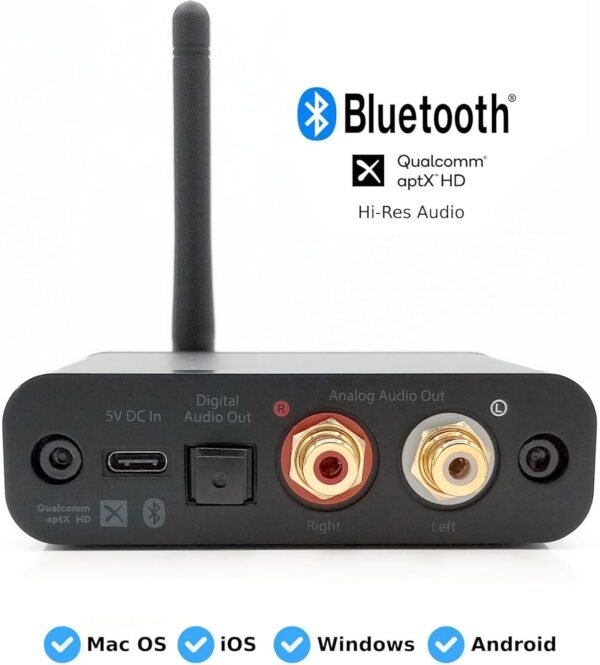
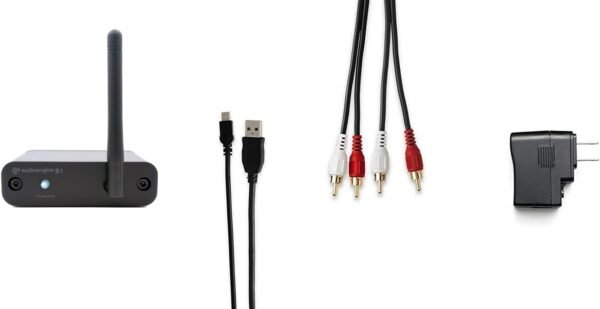
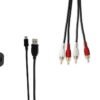
The listing data contains one clear error worth naming. A batteries field states that two lithium polymer batteries are required, which does not describe a small receiver intended to sit permanently beside an amplifier. Nothing else in the listing mentions a battery, a runtime or a charging port. Treat this as a template artifact and assume an external power supply is needed, but confirm the power arrangement and what is included in the box before ordering, since the listing does not specify it.
The specification sheet is thin in other ways too. There is no stated output connector type, no output voltage, no supported codec list and no stated range figure in feet or meters despite long range being a headline claim. Codec support in particular decides how a specific phone will sound, since an Android device and an iPhone negotiate different codecs, and the listing does not resolve that question.
Bluetooth itself remains the limiting factor for absolute quality. It is a compressed transport, and no receiver can restore information the transmitter discarded. For most listening that is inaudible or unimportant, but anyone who wants the best possible quality from a good system should use a wired source or a network streamer instead, and treat a Bluetooth receiver as a convenience rather than a hi fi upgrade.
Finally, this device adds one function and nothing else. There is no volume control described, no multiroom capability, no voice assistant and no display. That focus is deliberate and it is why the product has survived in the catalog for more than a decade, but buyers expecting a full featured streamer should look elsewhere.
Who it suits
The B1 suits owners of good older amplifiers, receivers and powered speakers who want to stream from a phone without replacing anything, listeners who want better conversion than a bargain adapter provides, and anyone who values a device that works without an account, an app or a firmware update.
It is not the right purchase for someone whose amplifier already has Bluetooth built in, for a buyer who wants service integration and multiroom grouping, or for anyone unwilling to check the power arrangement first given the confused listing. Compare the alternatives in the wireless audio receivers and adapters category, and look at the receivers category if the amplifier itself is due for replacement, since a modern receiver makes an external adapter unnecessary.