

Description
What the NE-2 Does
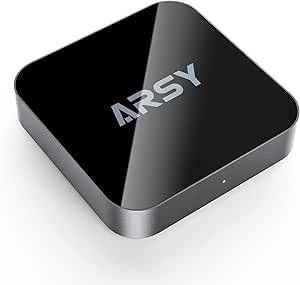
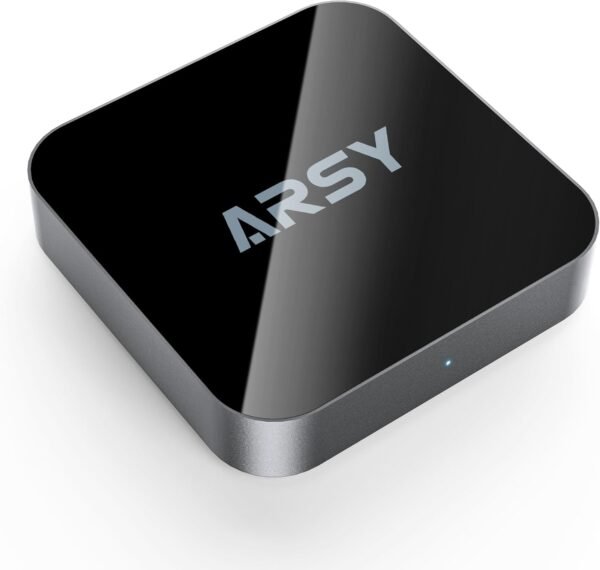
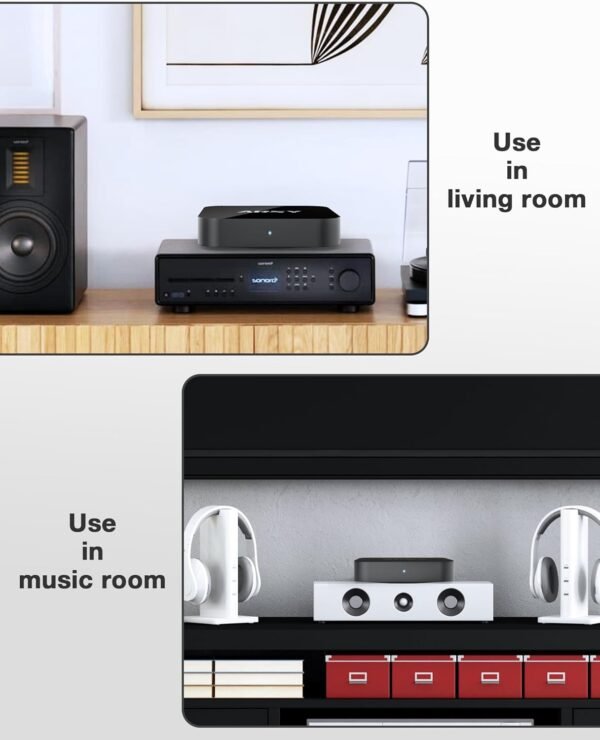
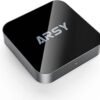
The ARSY NE-2 is a network audio streamer, which is a specific and often misunderstood category. It has no amplifier and no speakers. Its entire job is to receive audio over a home network and hand it to an existing stereo system as either a digital or an analog signal, turning an amplifier that predates streaming into something a phone can send music to.
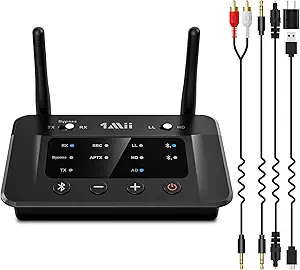
The distinction that matters most is between this and a Bluetooth receiver. A Bluetooth adapter such as the 1Mii B03 takes a compressed stream from a paired phone, is limited by radio range, and stops when the phone leaves the room. A network streamer pulls audio over the local network or the internet, is not tied to a single paired device, and is not subject to Bluetooth’s bandwidth ceiling. ARSY makes this point directly in its own copy, and it is the correct reason to choose this product class.
Protocol Support and Ecosystem Fit
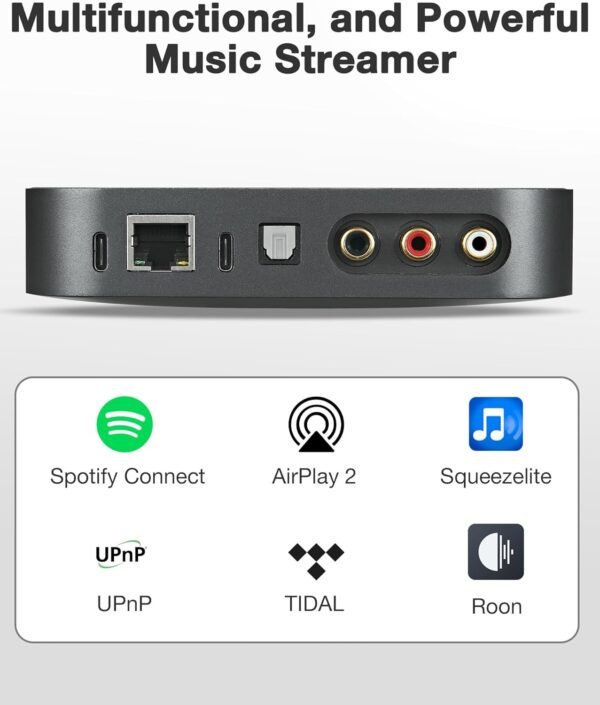
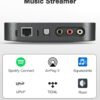
The protocol list is unusually broad for an inexpensive device: AirPlay 2, Spotify Connect, Roon Bridge, UPnP, HQPlayer NAA and Squeezelite. Roon Bridge in particular is a meaningful inclusion, because Roon users normally pay considerably more for certified endpoints. Squeezelite and HQPlayer NAA point at the same audience, people running a music server at home who want cheap endpoints in additional rooms.
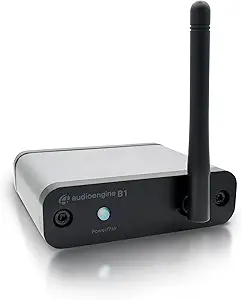
ARSY is also honest about the limits. The copy states that Android users can stream directly through Spotify and TIDAL, and that other applications need UPnP support to work. That is a real constraint: there is no universal Android equivalent of AirPlay, so an Android household should check that the applications they actually use support one of the listed protocols before buying. Buyers who want the simplicity of Bluetooth alongside network streaming should compare the FiiO BR13 and the Audioengine B1.
The DAC and Resolution Claims
ARSY specifies a Cirrus Logic CS43198 converter and quotes a dynamic range of 130 dB with total harmonic distortion of -115 dB. Those are chip datasheet figures rather than measurements of the finished product, and the gap between the two can be large: the power supply, the analog output stage and the board layout all determine what the converter actually achieves in a given enclosure. Treat them as an indication of the class of part chosen rather than as performance guarantees.
Resolution support is stated as up to 24-bit and 192 kHz with gapless playback and bit for bit output over optical or coaxial. ARSY adds a useful clarification that most manufacturers omit: not every service delivers content at that resolution, with Qobuz and personal libraries supporting the full rate, and TIDAL Masters handled through MQA core decoding at up to 24-bit and 96 kHz. That is a more accurate description of the streaming landscape than the blanket Hi-Res claims found on most competing listings. Anyone pairing this with a headphone system will still need amplification, which the FiiO K11 and similar units provide.
Setup and Physical Design
The unit measures roughly 5.12 by 5.12 by 1.12 inches and weighs 11.3 ounces, which is small enough to hide behind an amplifier. ARSY states that connecting over the wired Ethernet port requires no setup at all, and that Wi-Fi configuration takes three steps. Wired Ethernet is worth using where possible: streaming high resolution audio over congested Wi-Fi is the most common cause of dropouts, and an RJ45 cable removes that variable entirely.
The listing dates the product to December 2024 and shows it ranked at 726 in Wireless Audio Receivers and Adapters, which places it as a niche product rather than a volume seller. The rest of the wireless audio receivers and adapters category shows how the Bluetooth-only alternatives compare on price and capability.
Highlights
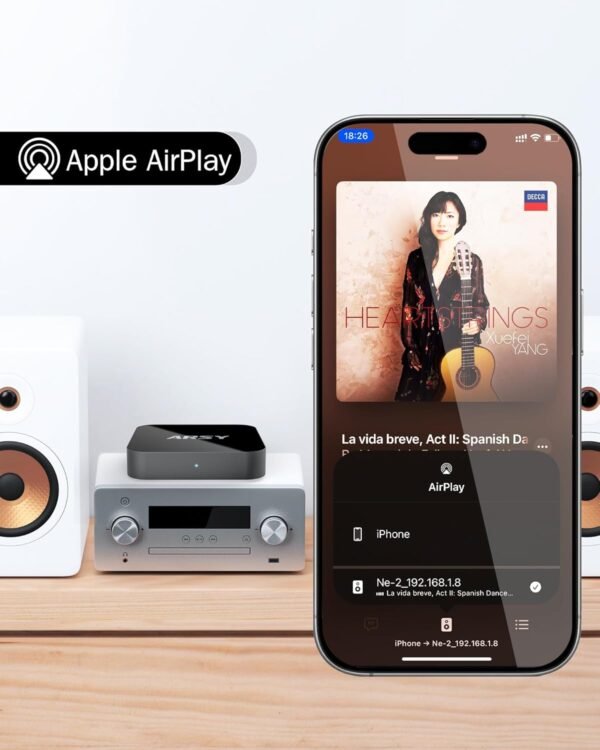
- AirPlay 2 support, which turns any connected amplifier into an Apple streaming endpoint.
- Roon Bridge, Squeezelite and HQPlayer NAA, a protocol list normally found on much costlier hardware.
- Wired Ethernet option with no configuration required.
- Optical and coaxial digital outputs for an unaltered digital handoff to an external converter.
- Honest resolution guidance naming which services actually deliver 24-bit and 192 kHz.
- Small footprint at roughly 5 inches square and just over an inch tall.
Things To Consider
One line in ARSY’s own product copy is self-contradictory and should be flagged rather than glossed over. The DAC bullet states that the streamer “DOES NOT support PCM and DSD256”, which cannot be correct for a device that elsewhere claims 24-bit and 192 kHz playback; PCM is the format that description refers to. The most likely reading is that DSD is unsupported and PCM was included in the sentence by error, but the listing as written says otherwise, and buyers who need DSD playback should confirm before purchasing. The same bullet mentions balanced output, which no connector list on the listing supports.
- No amplifier and no speakers: this device is useless without an existing system.
- Android support depends on the application, since there is no AirPlay equivalent.
- The DAC figures are chip specifications, not measurements of the finished unit.
- The PCM support statement is self-contradictory in the manufacturer’s own copy.
- The specification block is extremely thin, with no output list, no impedance and no power figures.
- The speaker type is listed as “Bookshelf”, which is meaningless for a streamer.
Who Should Buy It and Who Should Skip It
The NE-2 makes sense for someone with an amplifier or receiver they like and no way to stream to it, particularly in an Apple household where AirPlay 2 solves the problem outright. It is also a strong candidate as a cheap Roon endpoint for a second or third room, where paying full price for a certified streamer would be hard to justify.
Skip it if you need Bluetooth for guests or for a phone that is not on the home network, since none is described here. Skip it too if the plan was to buy one device that plays music on its own, because this is a source component and nothing more. Anyone in that position should be shopping powered speakers or an all-in-one system rather than a streamer.