

Description
Boss LS-2 Line Selector: a routing tool rather than an effect
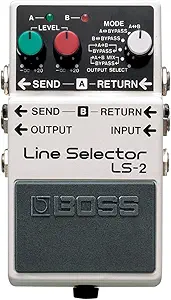
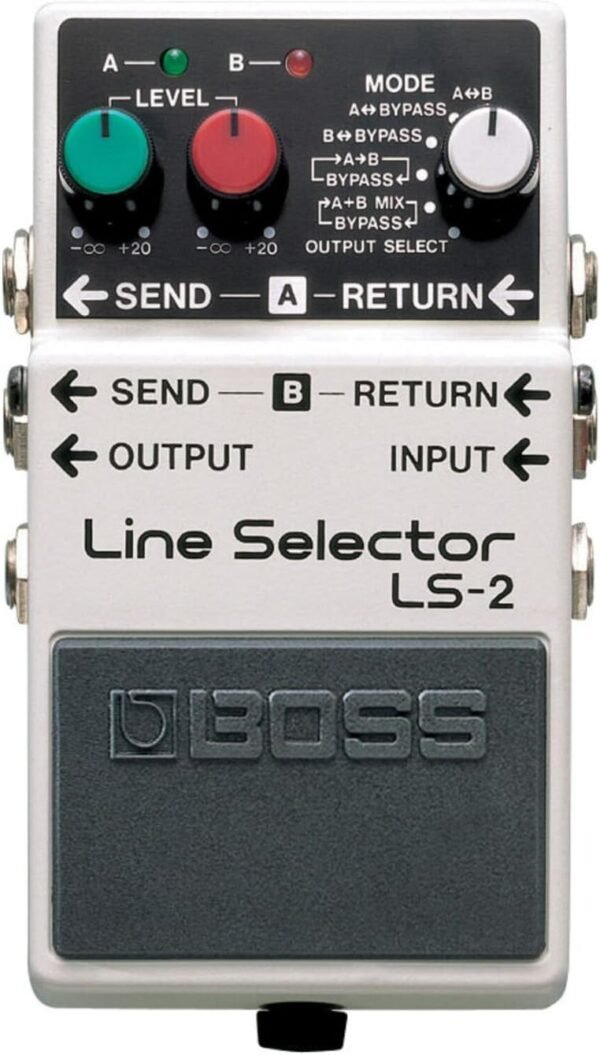
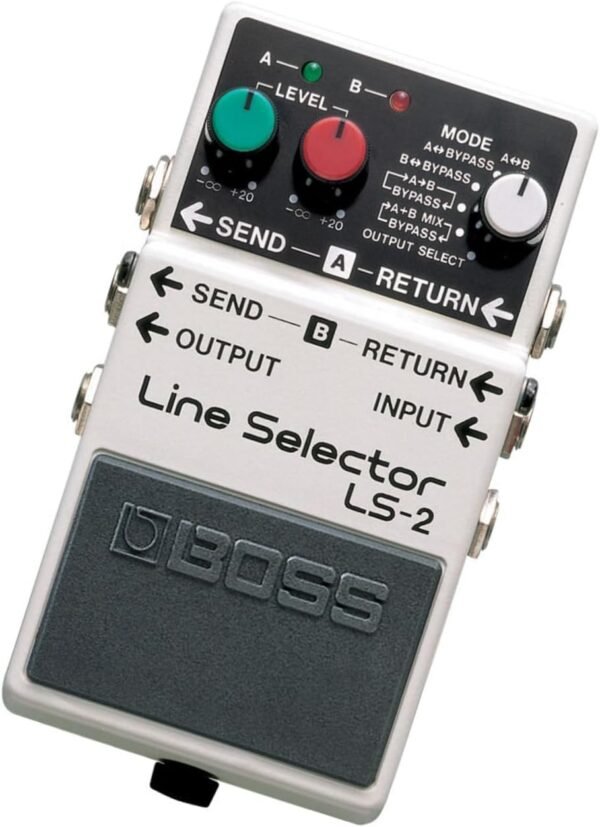
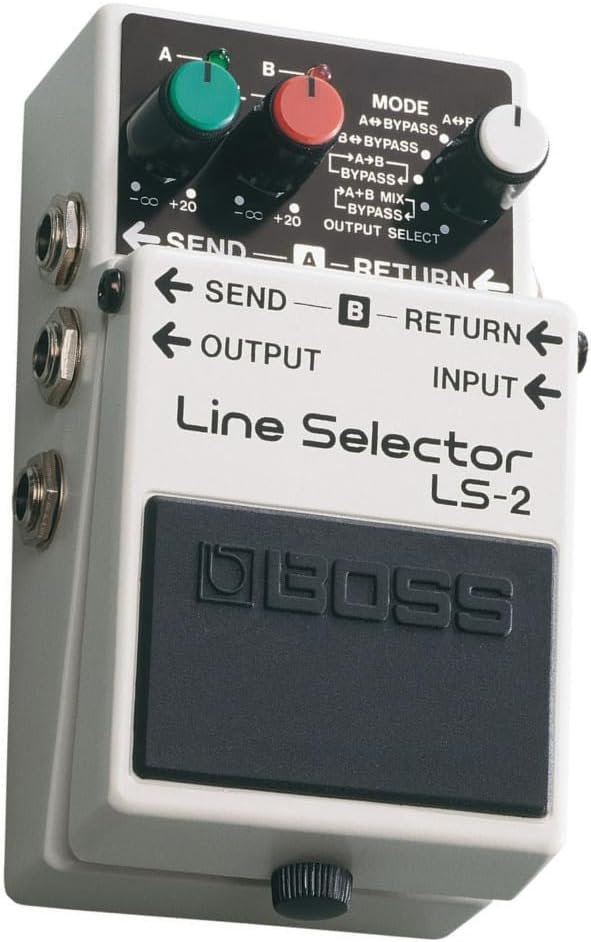
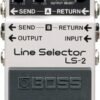
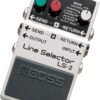
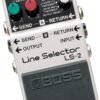
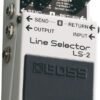
The Boss LS-2 Line Selector is not a sound producing pedal at all. It produces no distortion, no modulation and no delay. What it does is decide where the signal goes, and for players running more than one amplifier or more than one chain of effects, that turns out to be one of the most useful boxes on a pedalboard. The listing gives the standard Boss compact enclosure at 6 by 3.75 by 2.85 inches and 1.01 pounds, finished in silver, with quarter inch jacks, an analog signal path, a country of origin of Japan and a first availability date of July 19, 2007.
The pedal provides two loops, each with its own send and return and its own level control. Those loops can be used in several configurations: switching between two effect chains, switching between two amplifiers, running both chains in parallel, or bypassing everything. The independent level controls are what makes this practical rather than merely possible, since two different effect chains rarely arrive at the same volume, and a switch that changes loudness along with tone is a distraction on stage.
The problems it solves
The most common use is A and B switching between two sounds. A player with a clean chain and a dirty chain can build each separately and switch between them with one footswitch, rather than tap dancing across four pedals to change sound. The level controls then match the two so the transition is a change of character rather than a jump in volume.
The second use is parallel routing. Effects placed in parallel with the dry signal behave differently from effects placed in series, and a blend of wet and dry is how many studio effects are actually applied. Running a modulation pedal such as the Boss CH-1 Stereo Super Chorus in one loop against a dry path in the other allows the effect to be dialed in as a proportion rather than as an all or nothing insert.
The third use is amplifier switching, which is where the pedal earns its place in larger rigs. Two amplifiers with different characters, switched from the floor, is a common professional setup, and this is one of the least expensive ways to achieve it. Players who instead consolidate everything into one digital unit, such as the Line 6 HX Effects or the IK Multimedia TONEX pedal, get routing flexibility in software instead and may not need a separate selector at all.
Power and construction
The listing states a 9 volt supply with a battery included, and the power source field notes external power as well. Unusually for a compact pedal, the LS-2 can also distribute power to other pedals, which is why it appears in the guitar signal path category rather than only among effects. That capability saves an outlet and some cable clutter on a small board, though the total current available is limited and it should not be treated as a substitute for a proper multi output supply on a large board.
Construction follows the Boss compact standard, a format that has survived largely unchanged for decades. The consistency of the enclosure size is a practical benefit on a pedalboard, where mixed formats waste space, and the long production run since 2007 means used examples and replacement parts are easy to find. The listing shows a 4.6 star average across 269 ratings.
Highlights
- Two independent loops, each with its own send, return and level control.
- Switching between two effect chains, two amplifiers, or parallel and series routing.
- Level matching between loops so switching does not change volume.
- Can supply power to other pedals from the same 9 volt source.
- Standard Boss compact enclosure at 6 by 3.75 by 2.85 inches and 1.01 pounds.
- Fully analog signal path with quarter inch connections throughout.
- In production since 2007, with a 4.6 star average on the listing.
Things To Consider
This pedal makes no sound on its own, and that is the most common source of disappointment among buyers who did not read carefully. A player with a single amplifier and three pedals in a line has nothing to gain from it. The LS-2 only becomes valuable once there are two of something to choose between, and buyers should be honest about whether their rig has reached that point.
Understanding the routing takes some study. The mode selector offers several configurations, and the difference between them is not obvious without reading the manual and experimenting. Players who want plug in simplicity will find the learning curve steeper than it looks for a box with four knobs.
Amplifier switching carries a caution. Connecting two amplifiers to one guitar signal can produce ground loop hum, and solving that usually requires an isolation transformer that this pedal does not include. Anyone planning a two amplifier rig should be aware that the switching is only part of the problem, and that hum is a common outcome without isolation.
Finally, the power distribution feature has limits. It shares a single 9 volt supply, so total current is constrained and mixing a digital pedal with high draw onto the same supply can introduce noise. Treat it as a convenience for a small board rather than as a power solution. Players assembling a board around a filter effect such as the Vox V845 wah plus several others will still want a dedicated supply.
Who it suits
The LS-2 suits players running two amplifiers, players with two distinct effect chains they need to switch cleanly, and anyone who wants to blend an effect in parallel with a dry signal. It also suits pedalboard builders who want to solve a routing problem with one small analog box rather than replacing the board with a digital system.
It is the wrong purchase for a beginner with a single amplifier, for anyone expecting it to change the sound by itself, and for players already using a multi effects unit with programmable routing. Those buyers should look through the sound producing options in the electric guitar effects category, or the pedals and footswitches category for control hardware that suits a larger rig.