
Description
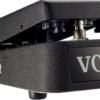
Vox V845 Classic Wah: the pedal that invented the effect, at an entry price
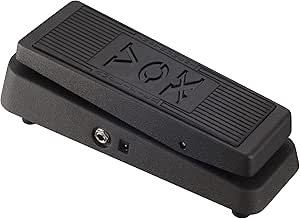
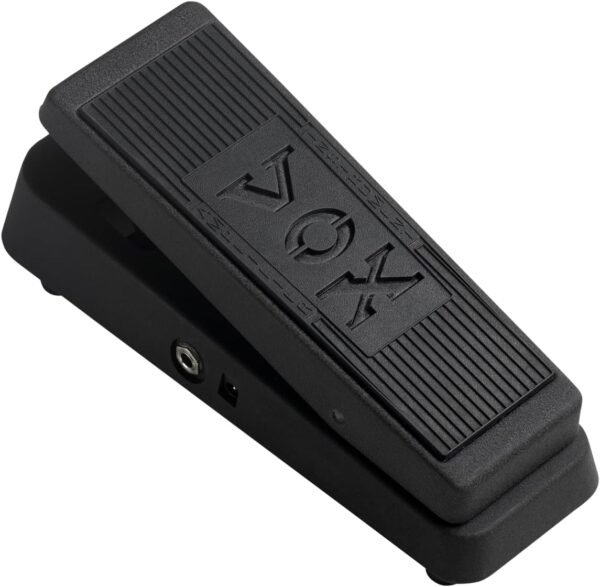
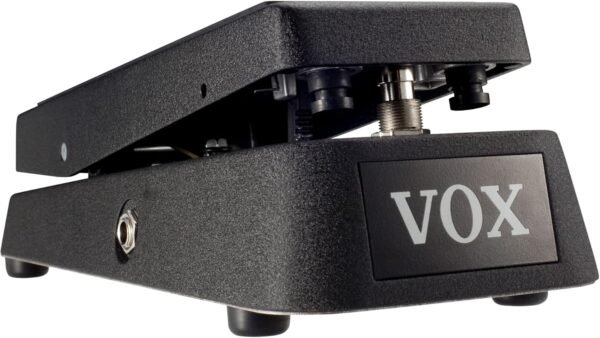
The Vox V845 is a wah pedal built to emulate the company own 1960s original. Vox developed the first wah effect in that decade, originally as a way for guitarists to imitate the sound of a muted trumpet, and the pedal became a permanent part of guitar vocabulary through players such as Eric Clapton and Jimi Hendrix. The V845 is the accessible entry into that lineage, specified against the original design and finished in an all black coating.
The listing gives a chassis of 11 by 3 by 5 inches at 2.36 pounds with a metal body, quarter inch audio connections and a fully analog signal path. It has been on sale since April 2004 and carries a 4.4 star average across more than 1,700 ratings, which is a substantial feedback record for a single effect pedal.
How a wah pedal works and why it needs a foot
A wah is a sweepable filter. Rocking the treadle moves the center frequency of a resonant peak up and down the spectrum, emphasizing different parts of the guitar signal as the foot moves. Held still, it acts as a fixed tone shape, which is the parked wah sound heard on a great deal of funk and rock rhythm playing. Moved in time with the music, it produces the vocal effect the name describes.
That makes it fundamentally different from most pedals on a board. A distortion or a chorus is set once and switched on; a wah is played continuously, and the result depends on the player rather than on the settings. There are no knobs on this pedal at all, and that is by design. Anyone who wants the same filter under automated or preset control rather than under a foot will find that capability inside a multi effects unit such as the Line 6 POD Go or the IK Multimedia TONEX pedal, though the feel of a physical treadle is difficult to replicate.
Power, build and pedalboard fit
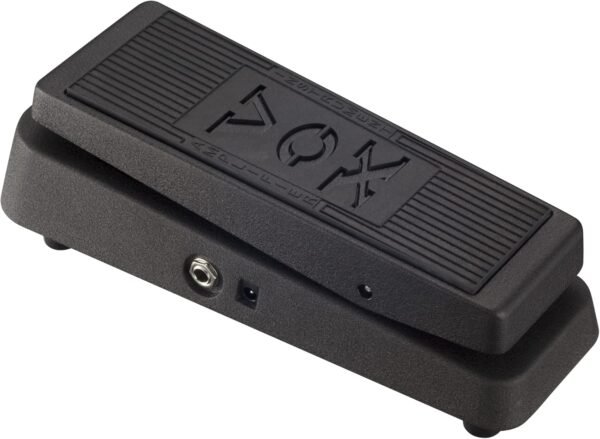
The headline improvement over the vintage design is the 9 volt power supply input, which Vox describes as eliminating the need for a battery. That matters more on a wah than on most pedals, because a wah has no bypass switch to leave off; older designs draw current whenever a cable is connected, and a forgotten cable flattens a battery overnight. A barrel jack input and a regulated supply removes that problem entirely.
Note that the specification table disagrees with the description on this point. It lists the Power Source as Battery Powered and states that one 9 volt battery is required, while giving the voltage as 9 Volts AC, which is wrong for a pedal that takes DC power. The description and the connector type field are the more reliable guide here, and the practical answer is that the pedal accepts an external 9 volt supply through a barrel jack. Confirm the supply polarity and type before connecting anything.
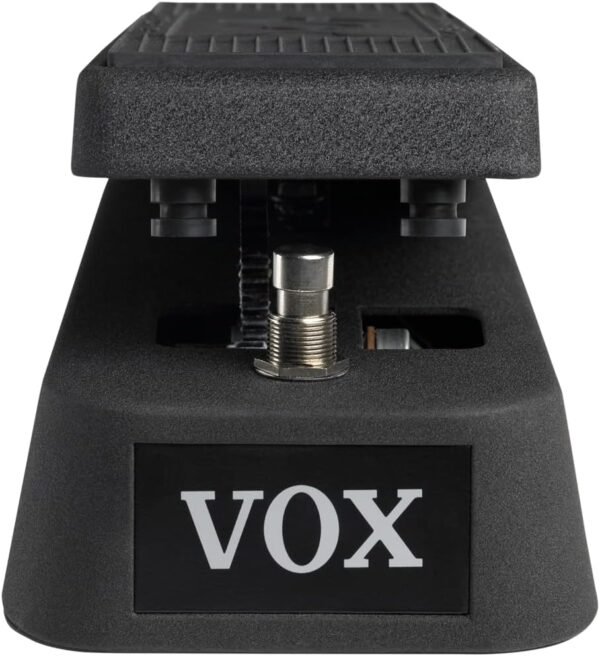
The metal body and the 2.36 pound weight are appropriate for a device that is stood on. A wah takes more physical abuse than any other pedal on a board, and a light plastic chassis would not survive it. The footprint is also larger than a compact pedal such as the Boss CH-1, which is worth planning for on a crowded board.
Highlights
- Classic wah voicing specified against the original 1960s Vox design.
- External 9 volt power supply input through a barrel jack.
- Metal body built for the physical demands of a treadle pedal.
- Fully analog signal path with quarter inch input and output.
- All black coated finish.
- Long production history since 2004 with a 4.4 star average across more than 1,700 ratings.
- No knobs to set, so the sound is controlled entirely by foot movement.
Things To Consider
The listing does not state whether this pedal uses true bypass or buffered bypass switching, and that omission matters for anyone building a long signal chain. Bypass behavior affects what happens to the guitar tone when the pedal is switched off, and it is one of the most discussed characteristics of wah pedals specifically. Buyers who care about this should confirm it in the manufacturer documentation rather than assuming either answer.
Board space is a practical constraint. At 11 inches long, a wah occupies more room than two compact pedals side by side, and it has to sit at the front edge where a foot can reach it comfortably. On a small board that is a significant allocation for a single effect.
A wah is also a demanding effect to use well. Beginners frequently buy one, discover that rocking a treadle in time with music is harder than it sounds, and leave it switched off. It rewards practice more than most pedals, and it is worth being realistic about whether it will be used regularly.
Finally, mechanical wear is the long term consideration on any wah. The potentiometer that tracks the treadle position is a moving part under constant use, and it is the component that eventually becomes scratchy or intermittent. That is a characteristic of the design rather than a fault with this model, and replacement parts are widely available for pedals in this family. Players wanting to switch a wah in and out of a larger rig cleanly should look at a routing solution such as the Boss LS-2 Line Selector.
Who it suits
The V845 suits a guitarist who wants the traditional wah sound without paying for a boutique or signature model, a player building a first pedalboard around classic effects, and anyone who prefers a dedicated physical treadle to a modeled equivalent. The external power input makes it easy to integrate into a modern board.
It is the wrong purchase for a player who wants preset control, for very small pedalboards where an 11 inch chassis cannot be justified, and for anyone who has not yet decided whether they will actually use a wah. Those buyers should look through the rest of the wah and filter effects category, or at the wider electric guitar effects category to see what else the same money buys.