Description
HIFIMAN EF400: a balanced desktop amplifier with an R2R converter
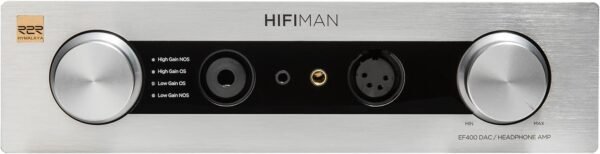
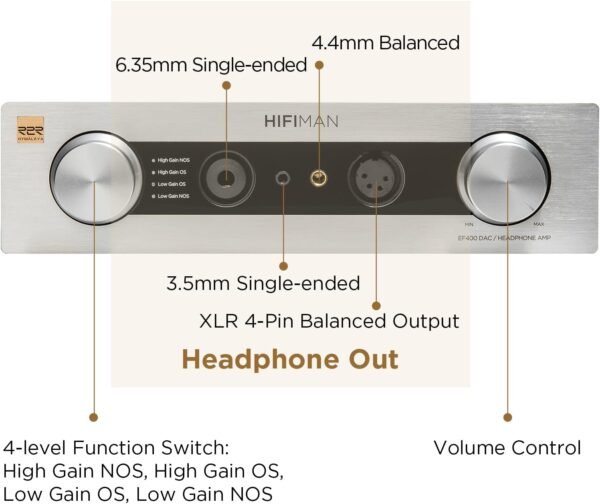
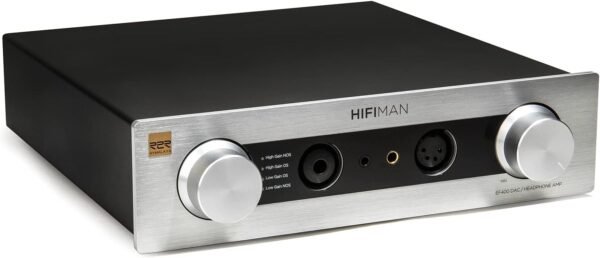
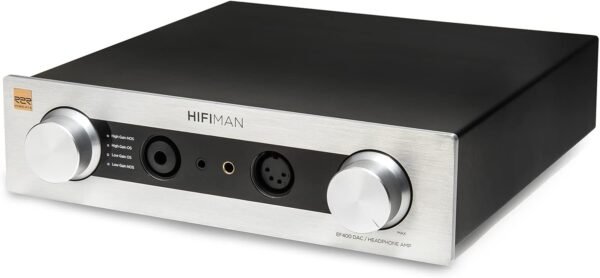
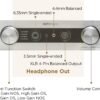
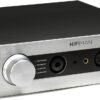
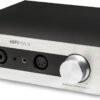
The HIFIMAN EF400 is a desktop headphone amplifier and digital to analog converter built around the company Himalaya R2R conversion module, with three headphone outputs covering 3.5 millimeter, 4.4 millimeter balanced and 6.35 millimeter connections. The listing gives dimensions of 9.69 by 8.98 by 2.4 inches and a weight of 6.78 pounds, and the product has been on sale since May 2022.
Two design decisions define this unit. The first is the R2R converter. Rather than the delta sigma chips used in almost all consumer audio, an R2R design builds the analog waveform from a ladder of precision resistors. Measured performance from modern delta sigma converters is generally better, and R2R persists because a portion of listeners prefer its character and because implementing one well requires component matching that most manufacturers avoid at this price. HIFIMAN builds its own module rather than buying a chip, which is unusual.
The second is balanced output. A balanced connection carries each channel on its own pair of conductors with separate grounds, and in a headphone amplifier it usually means the internal amplification is arranged differently as well, typically delivering more voltage swing. The 4.4 millimeter Pentaconn socket here is the current standard for balanced headphone connections and it has largely replaced the older four pin XLR on desktop units of this size.
Why HIFIMAN builds this alongside its headphones
HIFIMAN is primarily a headphone manufacturer, and specifically a planar magnetic headphone manufacturer. Planar drivers present a low impedance load and generally want current rather than voltage, which is exactly the case where a laptop headphone socket or a small portable dongle runs out of ability. An amplifier from the same company is built with those loads in mind.
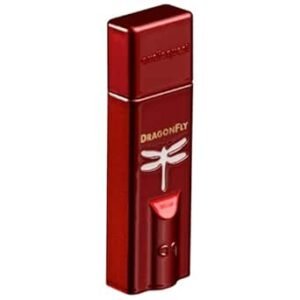
Pairing the EF400 with a planar headphone such as the HIFIMAN Sundara is therefore the intended use case, and it is the comparison that matters most: the difference between a demanding planar driven from a phone dongle such as the AudioQuest DragonFly Red and the same headphone on a mains powered desktop amplifier is usually obvious at higher volumes, where the portable device begins to compress dynamics.
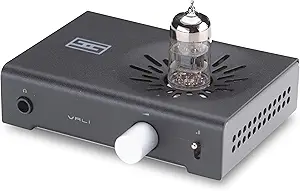
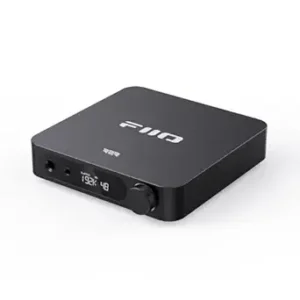
Buyers cross shopping desktop units should also look at the FiiO K11 R2R, which takes a similar conversion approach at a lower price, and the Schiit Vali 3, which pursues character through a tube hybrid amplifier stage instead of through the converter.
Three outputs and what they are for
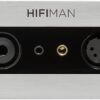
The three sockets cover the realistic range of headphone connectors. The 6.35 millimeter quarter inch jack is the traditional full size connector on studio and audiophile headphones. The 3.5 millimeter socket accepts portable headphones and in ear monitors without an adapter. The 4.4 millimeter balanced socket serves headphones supplied with, or rewired to, a balanced cable.
Having all three means no adapter is needed for most collections, which matters more than it sounds: adapters add mechanical stress to sockets and are the usual cause of intermittent connections on a desk. The 6.78 pound weight and the full desktop footprint indicate a linear power supply and substantial internal construction rather than a light switch mode design.
Footprint is worth planning for. At roughly 9.7 by 9 inches, this occupies about the same desk area as a sheet of letter paper, which is more than a small dongle and less than a full width component. It is designed to sit flat rather than to stack, and cable clearance behind it adds to the depth needed. Anyone fitting it beside a monitor stand should measure rather than assume, because desktop audio equipment tends to accumulate and space runs out faster than expected.
Highlights
- Himalaya R2R conversion module developed in house rather than a third party chip.
- Balanced 4.4 millimeter output alongside 6.35 and 3.5 millimeter sockets.
- Substantial build at 6.78 pounds in a 9.69 by 8.98 inch desktop chassis.
- Designed by a planar magnetic headphone manufacturer with those loads in mind.
- Combines conversion and amplification in one box, removing an interconnect.
- Mains powered, with far more headroom than a bus powered portable device.
- No adapters needed for most common headphone connector types.
Things To Consider
The rating record is the weakest part of this listing. The average sits at 4.1 stars across 78 ratings, which is both a small sample and a noticeably lower average than most audio hardware in this category earns. That is not evidence of a fault, but it is a lower figure than a buyer would usually accept without investigating further, and it is worth reading recent feedback directly before committing.
The specification data is also thin. There is no published output power into any impedance, no output impedance, no supported sample rate list, no input list and no frequency response. For an amplifier, output power into a stated load is the number that determines whether it will drive a given headphone, and its absence means the manufacturer specification sheet is required rather than optional.
Balanced connection also has a practical cost. Headphones ship with single ended cables by default, so using the 4.4 millimeter output usually means buying a balanced cable, and not every headphone can be rewired for one. Buyers should confirm that their headphones support a balanced connection before treating that output as a reason to buy.
Finally, this is a desk bound product. At nearly seven pounds with a mains supply, it is not moving between locations, and anyone who needs portability should be looking at dongles rather than desktop units. The R2R architecture should also be understood as a preference rather than a measurable upgrade, since a competing delta sigma design at the same price will usually measure better on paper.
Who it suits
The EF400 suits an owner of demanding headphones, particularly planar magnetic designs, who wants one desktop box to handle conversion and amplification. It also suits a listener curious about R2R conversion who wants a balanced output without moving into specialist pricing, and anyone with a mixed collection of headphone connectors.
It is the wrong purchase for portable use, for efficient in ear monitors that need very little power, and for buyers who make decisions on published measurements, since this listing supplies none. Those buyers should compare the alternatives in the amplifiers category, and check the drive requirements of anything in the over ear headphones category before matching the two.