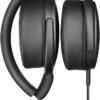
Description
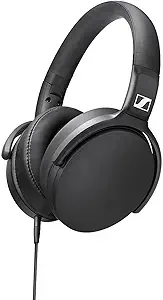
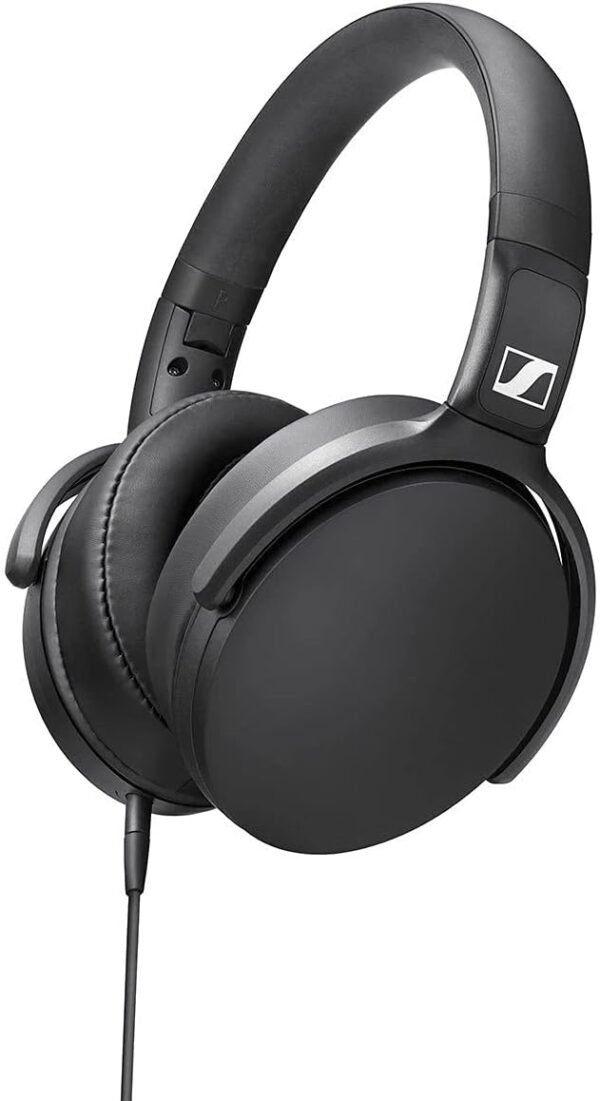
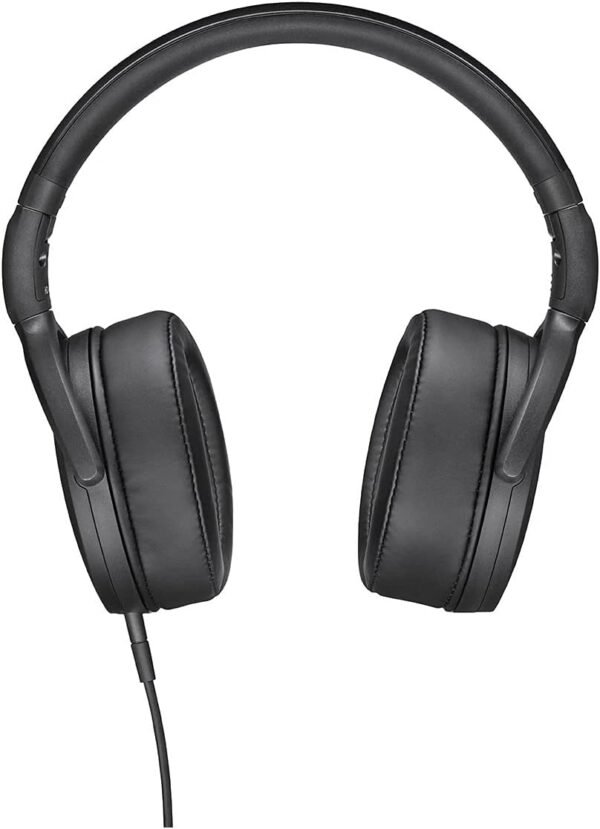
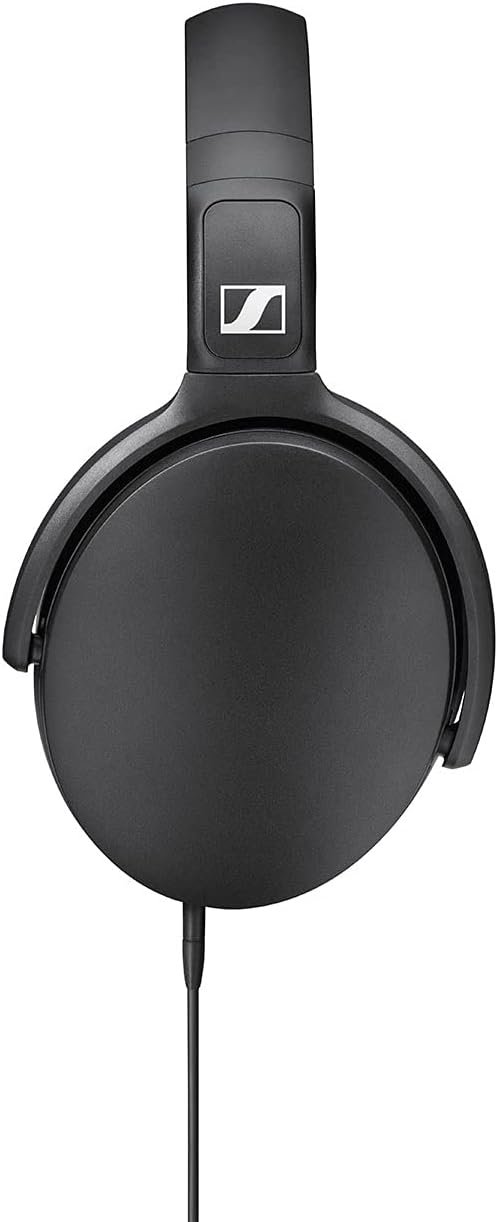
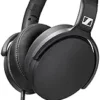
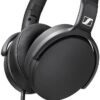
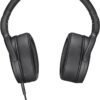
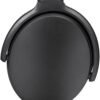
Sennheiser HD 400S: a closed back wired headphone with an inline remote
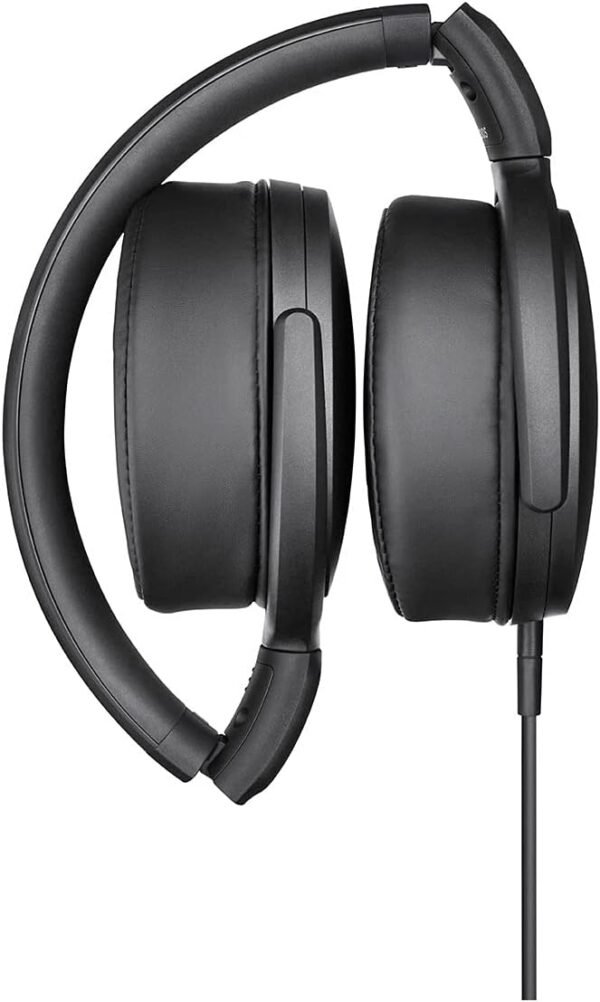
The Sennheiser HD 400S is a closed back, around ear wired headphone with a one button remote built into a detachable cable. Sennheiser describes dynamic drivers delivering a well extended response with dynamic bass, and a folding design intended to make the headphone compact enough to travel. The listing gives a weight of 7.7 ounces, a plastic construction, a cable length of 4.9 feet and a round earpiece shape.
Everything about the design points at a specific buyer: someone who wants a full size headphone for daily use, with no battery to charge and no pairing to manage. In a market dominated by wireless models, a wired headphone at this level offers a simpler proposition. It works with anything that has a headphone socket, it never runs out of power, it adds no latency to video, and it costs less than a wireless model of comparable build because there is no radio, no battery and no charging circuit to pay for.
The detachable cable and the remote
A detachable cable is the single most valuable longevity feature on any wired headphone. Cables fail long before drivers do, usually at the strain point where they enter the earcup or the plug, and a headphone with a fixed cable becomes scrap when that happens. A detachable cable turns a terminal failure into a cheap replacement part.
The one button remote handles play, pause, track skipping and call answering, which covers the common controls without the complexity of a three button remote that behaves differently across platforms. It is placed on the cable rather than on the earcup, which means it works identically on every device rather than depending on onboard electronics.
Note that the listing describes the headphone jack as 2.5 millimeter. On detachable cable designs of this kind, the small connector is the end that plugs into the earcup, while the end that plugs into a phone or a computer is a standard 3.5 millimeter plug. Anyone reading that field as the source connector would be confused, and anyone buying a replacement cable should confirm both ends rather than only one.
Closed back isolation without electronics
Noise control on this model is listed as sound isolation, meaning it is entirely passive. A closed back earcup physically blocks outside noise, which works reasonably well on higher frequency sound such as speech and keyboards, and much less well on the low frequency rumble of an aircraft or a train. There is no active cancellation, no battery and no processing.
That is a legitimate design choice rather than an omission at this level. Passive isolation is always available, needs no charging, and does not alter the sound the way some cancellation systems do. Listeners who want cancellation for travel should look at a wireless model such as the Sennheiser ACCENTUM Plus from the same manufacturer, which addresses that need with adaptive cancellation and a quoted 50 hour battery.
Closed back also matters in the other direction. An enclosed cup keeps sound from escaping toward people nearby, which is why closed designs suit shared offices, libraries and household listening while open backed headphones do not. It is the same property that makes them the standard choice for recording, since an open headphone leaks the backing track into the microphone. Buyers weighing closed against open should treat leakage and isolation as one decision rather than two.
Buyers considering this for desk work or content creation should also compare studio monitoring designs such as the Audio-Technica ATH-M40x and the Shure SRH440A, both of which use the same closed back wired formula with a flatter tuning intended for critical listening rather than for enjoyment.
Highlights
- Closed back around ear design with passive isolation and no battery.
- Detachable 4.9 foot cable, replaceable when it eventually fails.
- One button inline remote for playback and call control on any device.
- Folding construction for transport.
- Light at a listed 7.7 ounces.
- Works with any device that has a headphone socket, with no pairing required.
- 4.3 star average across more than 2,400 ratings since first appearing in 2019.
Things To Consider
The listing includes a batteries field claiming that one lithium ion battery is required. That is wrong for a passive wired headphone, which contains no battery, no charging port and no electronics beyond the drivers and the remote switch. It is a template artifact and should be ignored.
The absence of active cancellation matters most on aircraft, trains and in open offices. A closed back cup helps, but a buyer coming from a cancelling headphone will notice the difference immediately, and turning the volume up to compensate is worse for hearing than cancellation would be.
Plastic construction keeps the weight and the price down, and it is the usual choice at this level, but it also means the headband and hinges are the parts most likely to fail over years of folding. That is a general characteristic of folding plastic headphones rather than a specific criticism, and it is worth handling the hinge points with some care.
The listing publishes no impedance, no sensitivity and no frequency response figures, so there is no way to confirm from this record how easily the headphone is driven from a phone or a laptop. In practice a consumer headphone of this type is designed to work from portable devices without an amplifier, but the specification is not stated. There is also no carrying case or pouch listed among the included components, only the cable and the headphone itself, which is worth knowing for a design marketed on portability. Buyers wanting the simplest possible wired alternative can compare the Sony MDR-ZX110AP, which strips the format back further still.
Who it suits
The HD 400S suits a listener who wants a full size headphone for home, office or study use with no charging and no pairing, someone who takes calls from a laptop or phone and wants inline control, and anyone who values a replaceable cable on a product they intend to keep for years.
It is the wrong headphone for frequent flyers who need active cancellation, for anyone who wants wireless freedom, and for critical studio monitoring where a flatter reference tuning is required. Those buyers should look through the alternatives in the over ear headphones category, or consider the lighter designs in the on ear headphones category if portability outranks isolation.