

Description
What the MDR-ZX110AP Is
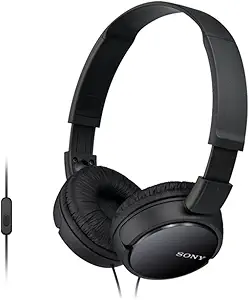
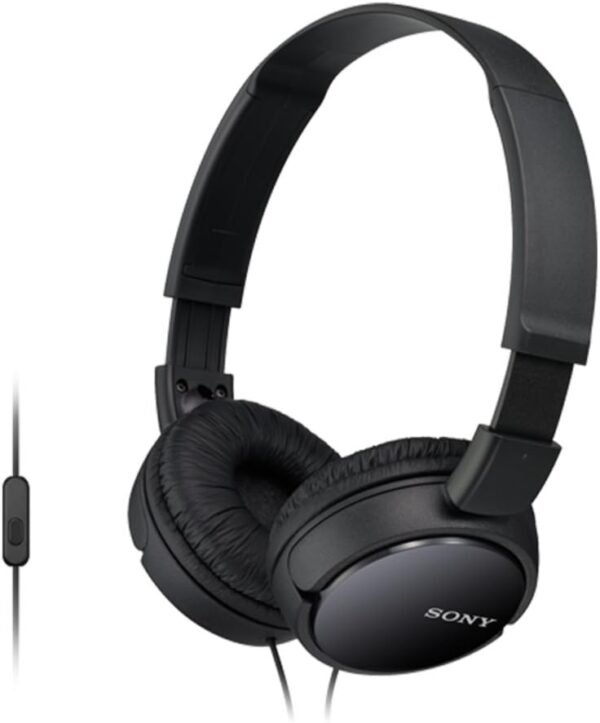
The Sony MDR-ZX110AP is an entry-level wired headphone with a closed-back design, an inline microphone and a fixed cable. It is one of the highest-volume headphones Sony sells, with roughly 13,042 ratings at a 4.4 star average on this listing, and it exists to do one job competently at a very low price.
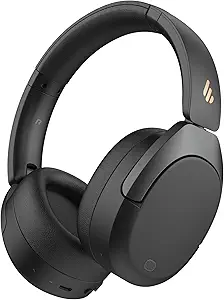
The AP suffix denotes the version with the inline remote and microphone, as opposed to the plain ZX110 which has neither. That is worth checking at purchase, because the two look identical in photographs and the microphone is the reason most people choose this variant. Buyers who want a wireless equivalent at a similar level should compare the Edifier W600BT.
Closed Back and Passive Isolation
Sony describes an enfolding closed-back design that seals in sound, with cushioned earpads. Closed construction means the rear of each driver is sealed rather than open, which keeps sound from leaking out and keeps some external noise from getting in. There is no active cancellation here, and none is claimed; all the isolation is mechanical.
For a bus, a library or a shared room, passive isolation from a decent seal covers most of what people actually need, and it costs nothing in battery or in the pressure sensation that cancellation can produce. It will not defeat aircraft engine noise. Buyers who want cancellation at a still modest price should look at the Sony MDR-ZX110NC, the cancelling sibling of this exact model, or the wider over-ear headphones category.
The Driver Size Contradiction
The listing gives the driver size in two incompatible ways and it is worth naming rather than resolving. Sony’s description text specifies “1.38 in neodymium dynamic drivers”, which converts to 35 millimetres. The bullet points on the same listing specify “30mm neodymium dynamic driver units”. Those are different drivers, and the listing provides no way to determine which is correct.
Practically the difference is modest at this level, and both sizes are conventional for a compact closed headphone. What it does illustrate is that the listing was assembled from at least two sources that were never reconciled. The stated frequency range of 12 Hz to 22 kHz is wider than the audible band at both ends, which is a common specification claim and tells a buyer very little about how the headphone actually sounds.
The Inline Remote and Microphone
The remote sits on the cord and carries a microphone, allowing calls to be answered and playback to be controlled without taking a phone out of a pocket. Sony notes that hands-free calling works with selected smartphones, which is the usual caveat: the single button remotes on wired headphones follow a convention that most Android and Apple devices support, but multi-button remotes are frequently platform-specific.
The cable is 1.2 metres, which is the right length for a phone in a pocket and short for a desktop computer, and it terminates in an L-shaped 3.5 mm plug. An L-shaped plug puts less strain on a phone socket when the device is in a pocket, which is a genuine durability advantage over a straight plug. The cable is not detachable, so cable damage means the headphone is finished.
Portability and Build
The earcups swivel, which lets the headphone lie flat rather than sticking out awkwardly when packed. At a listed 4.2 ounces this is a light product, and the construction is plastic throughout, which is what keeps both the weight and the price down.
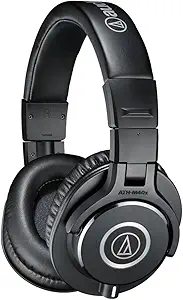
Expectations should be set accordingly: the headband adjustment, the hinges and the cable entry are all points that wear on an inexpensive headphone, and this is a product to be replaced rather than repaired. That is a reasonable proposition at this price, and the very large rating count suggests most buyers get what they expected. For a lighter clip-on alternative that avoids the headband entirely, the Koss KSC75 is worth a look, and the Sennheiser HD 400S shows what a step up in build looks like.
Highlights
- Inline microphone and remote, which the plain ZX110 lacks.
- Closed-back design with cushioned pads for passive isolation.
- Swiveling earcups that pack flat.
- L-shaped 3.5 mm plug, easier on a phone socket than a straight one.
- 4.2 ounces, light enough to be forgotten on the head.
- Very large rating base: roughly 13,042 ratings at 4.4 stars.
Things To Consider
The specification block contradicts itself repeatedly. It states that one AAAA battery is required and, in a separate field on the same listing, that batteries are not required; a passive wired headphone needs none. The wireless communication technology is given as Bluetooth on a wired product, and the cable feature reads “Without Cable” while the included components list a cable. There is a “Number of USB 2 Ports: 4” entry, a volume of 1 millilitre, and a language field set to Italian. The earpiece shape says on-ear while the product is categorized and described as over-ear.
- The cable is not detachable, so cable failure ends the product.
- Two different driver sizes are published in the same listing.
- No active noise cancellation, only passive isolation.
- Plastic construction with the usual wear points at the hinges and headband.
- Most current phones need a 3.5 mm adapter.
- Multiple specification fields directly contradict each other.
Who Should Buy It and Who Should Skip It
The MDR-ZX110AP suits someone who wants a cheap, light, functional headphone with a microphone for calls, a spare pair for a desk drawer or a bag, or a first headphone for a child where loss and damage are likely. The very large rating base means the product is a known quantity, and Sony’s build at this price is generally more consistent than unbranded alternatives.
Skip it if you want noise cancellation, a detachable cable, or a headphone that will last for years of heavy use. Skip it too if your phone has no headphone socket, since an adapter would add a significant fraction of the purchase price. Anyone whose main use is music quality rather than convenience should spend more, where the improvement per dollar is still steep at this end of the market. The on-ear headphones category covers the smaller alternatives.