Description
What the Linton Is
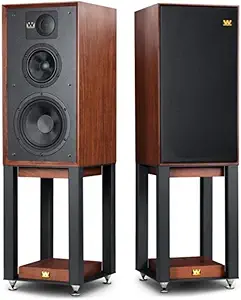
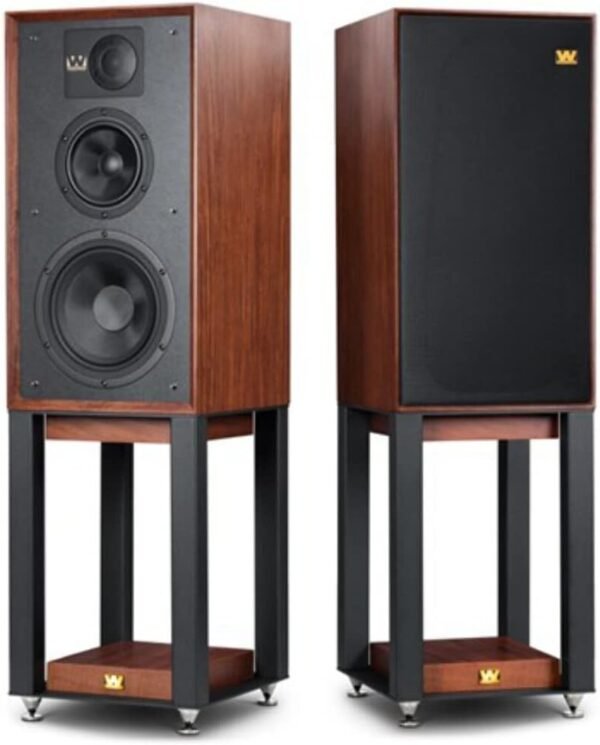
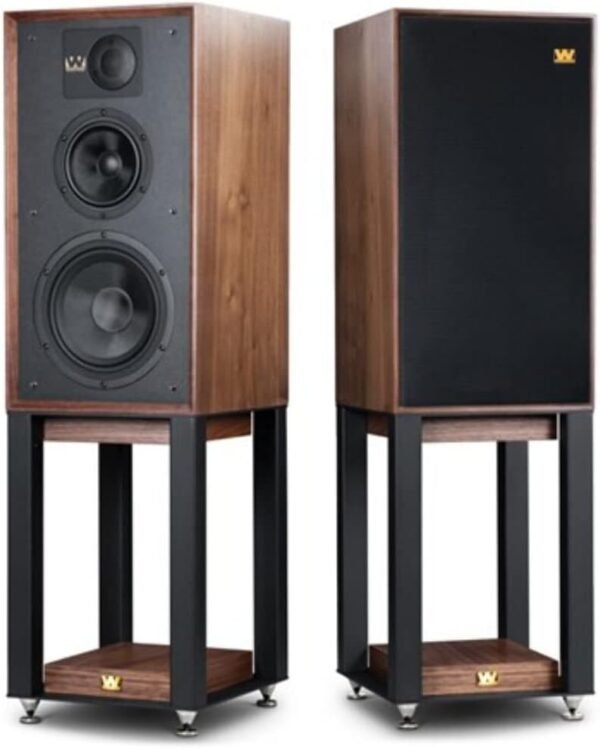
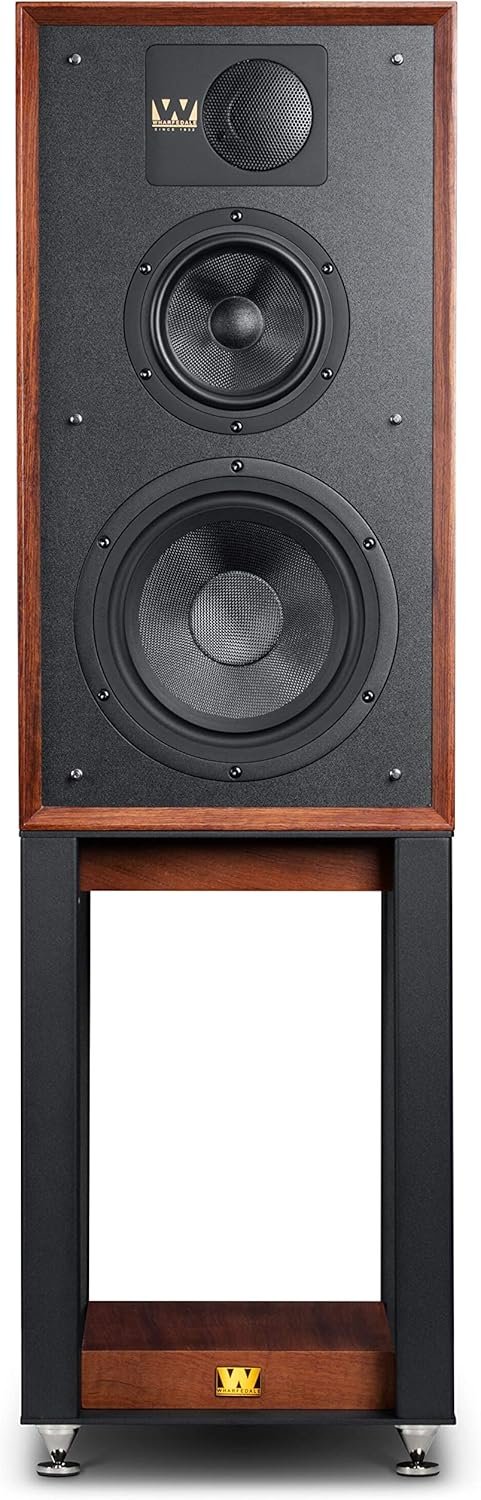
The Wharfedale Linton is a three-way passive loudspeaker whose lineage Wharfedale traces to 1965. The company describes the original as known for a warm, rich and natural character, and states that the current version retains that voicing while adding a more open and detailed performance. This listing includes the matching stands as well as the speakers, which is worth pausing on: dedicated stands for a speaker of this size are frequently a substantial extra purchase, and having them designed for the cabinet rather than adapted to it solves both the height and the stability question at once.
Calling this a bookshelf speaker is technically accurate and practically misleading. The cabinet is roughly 22 inches tall and a foot deep, which is larger than many floorstanding designs in footprint terms and far too large for an actual bookshelf. Anyone whose room genuinely requires a small speaker should be looking elsewhere in the bookshelf speakers category, and anyone with the floor space to spare should honestly compare against a tower such as the Klipsch R-620F before deciding.
The Retro Design Argument
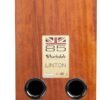
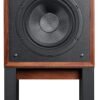
Wharfedale is explicit that this is a heritage product. The proportions, the veneer, the visible driver arrangement and the grille cloth all reference a period when loudspeakers were furniture rather than appliances. That is a legitimate design position and it is the main reason people buy this model rather than a modern equivalent at the same price.
It also carries an engineering consequence. A large sealed or ported cabinet with a substantial midrange driver behaves differently from a compact two-way, typically offering more low frequency extension and a less strained midrange at volume, in exchange for needing more space around it and more care about placement. Wharfedale’s own description emphasizes value for money alongside craftsmanship, which is a fair summary of the proposition: the cabinet volume and the driver complement here would cost considerably more in a modern high-gloss form factor.
What You Need To Drive Them
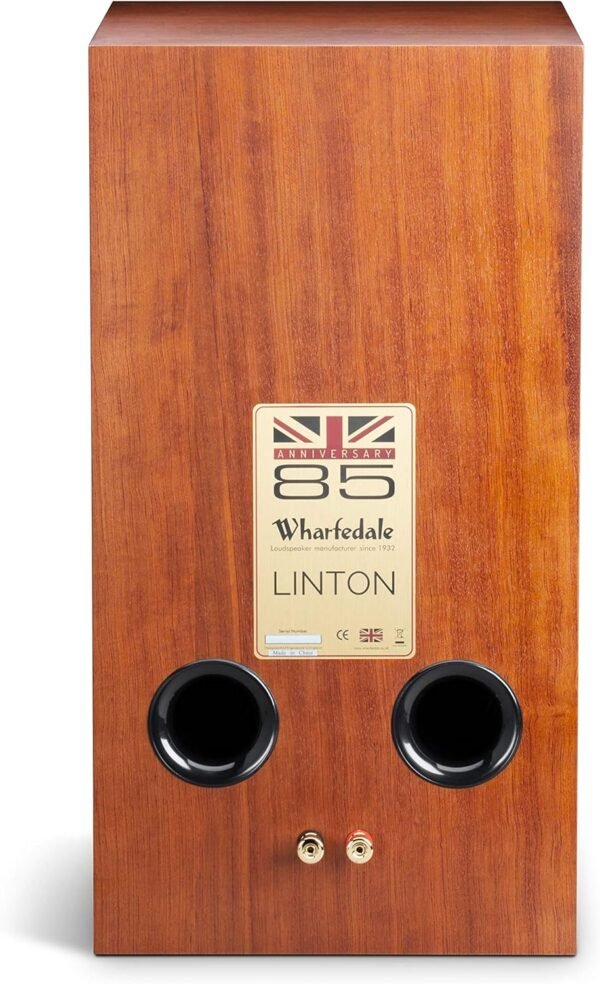
This is the single most important practical point and the listing does its best to obscure it. The Linton is entirely passive. It contains drivers and a crossover network and nothing else. It has no amplifier, no power connection, no wireless receiver, no radio and no remote control. It requires a separate integrated amplifier or a receiver, and speaker cable to connect them.
The listed nominal impedance is 6 ohms, which most competent amplifiers will drive without difficulty, though a nominal figure hides the minimum impedance the amplifier actually sees. Buyers building a system from scratch should budget for the amplifier as a real cost rather than an afterthought; something like the Yamaha R-S202 stereo receiver is the entry point, and the receivers category covers the range. Buyers who want speakers that simply plug into the wall and stream should be looking at an active system such as the KEF LS60 Wireless instead, which is a completely different product class.
Placement and System Context
A cabinet of this size on dedicated stands wants breathing room. Large enclosures pushed against a rear wall gain bass but usually lose definition, and Wharfedale’s stands exist partly to get the tweeter to seated ear height, which is where a three-way design images correctly. Expect to spend time on toe-in and distance from the wall rather than treating placement as solved once the stands are assembled.
For home theater use, the Linton would sit as a front pair and would need a matching center channel and surrounds to make sense; options in that role include the Klipsch R-34C center channel, though mixing brands across a front stage is a compromise. The Linton is more obviously a two-channel music speaker, and that is how Wharfedale describes it.
Highlights
- Matching stands included, designed for the cabinet rather than adapted to it.
- Three-way driver arrangement in a large cabinet, which is rare at this price.
- Warm, natural voicing per Wharfedale’s own description of the model line.
- Real wood veneer finish in red mahogany.
- 6 ohm nominal impedance, undemanding for most amplifiers.
- Design heritage dating to 1965, with the current model built on that lineage.
Things To Consider
The Amazon specification block for this product is badly wrong in a way that could genuinely mislead someone. It lists Bluetooth as the wireless communication technology, names Bluetooth again as the connectivity protocol, gives the power source as corded electric, sets the control method to “Remote”, and lists “Radio” as a special feature. None of that is true. This is a passive loudspeaker pair with no electronics at all. The manufacturer name is even misspelled as “Wharfdale”. A shopper who bought expecting a wireless speaker would be badly disappointed.
- An amplifier or receiver is mandatory and is not included.
- The cabinet is far too large for an actual bookshelf despite the category name.
- The listed 140 pound weight covers the shipped pair plus stands, and it is a two-person delivery.
- The Bluetooth, radio and remote specifications are entirely false.
- Only around 54 ratings, so the 4.7 star average rests on a thin sample.
- Placement is demanding: these need distance from walls to perform as intended.
Who Should Buy It and Who Should Skip It
The Linton suits a listener building a two-channel music system who has the floor space, already owns or is buying an amplifier, and wants a large-cabinet sound with a classic appearance. The inclusion of matching stands makes it a more complete purchase than the price alone suggests, and for a living room where the speakers are meant to be seen rather than hidden, the finish is a genuine part of the value.
Skip it if the room is small, if the speakers need to sit on a shelf or against a wall, or if you were expecting anything wireless. Skip it too if there is no amplifier in the budget, because underpowering a speaker of this size produces a worse result than a modest active system would. Buyers in that position should treat the amplifier decision first and the speaker decision second.