

Description
What JVC Means by Nearphones
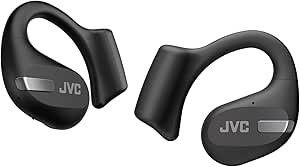
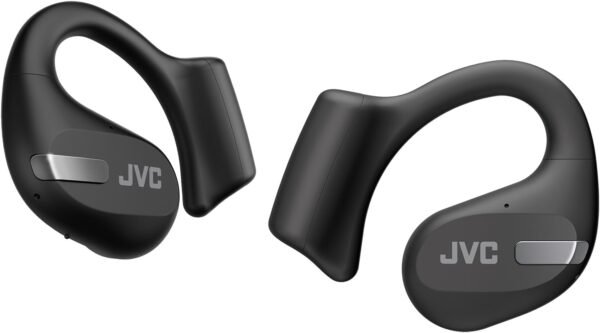
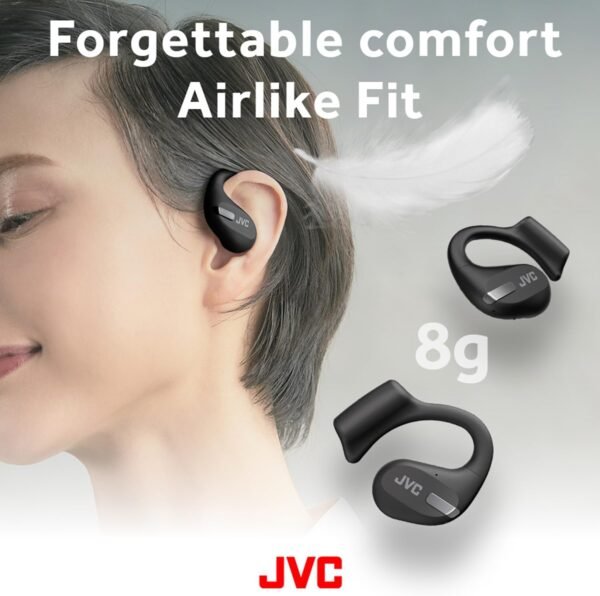
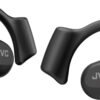
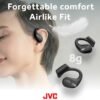
The JVC HA-NP50T, sold under the Nearphones name, is a true wireless earphone that does not go into the ear canal. The driver sits near the ear rather than inside it, held by a clip or hook arrangement, which is where the product name comes from. JVC lists the earpiece shape as Flat and the style as open ear true wireless, and specifies a 16 mm driver, which is large for an earphone and reflects the fact that an open design has to move more air to be heard without the amplification a sealed canal provides.
The appeal is awareness. Nothing blocks the ear, so traffic, colleagues, announcements, and household sound all come through unaltered. JVC lists the recommended uses as calling, running, and exercising, and lists specific uses across sports, business, and personal. Single ear use is called out in the product title, which is a genuinely useful capability for anyone taking calls while remaining aware of a room. Shoppers comparing open designs will find several approaches in the open ear headphones category, including bone conduction models that transmit through the skull rather than through the air.
Connection and Everyday Features
JVC specifies Bluetooth 5.3 with a stated range of 10 meters, and lists a multipoint function and a low latency mode. Those two features are more consequential than the version number. Multipoint allows the earphones to hold connections to two devices at once, so a call on a phone can interrupt audio from a laptop without re pairing, which is the single most requested feature among people who use earphones for work. Low latency mode reduces the delay between video and sound, which matters for watching video and for casual gaming where lip sync errors are obvious.
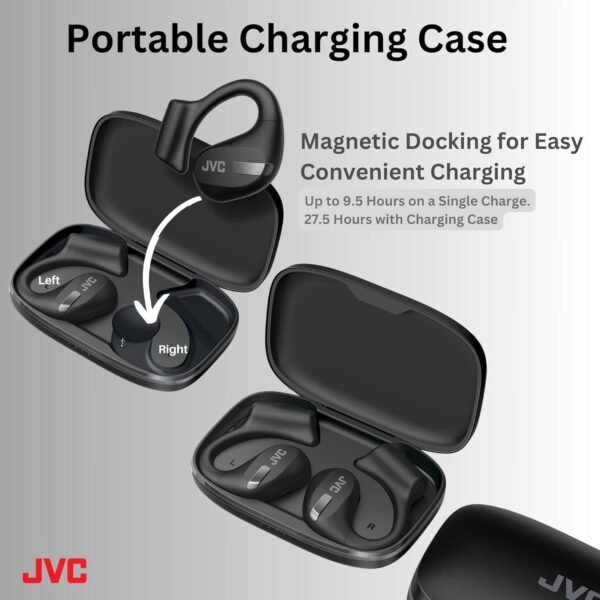
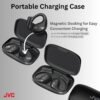
Charging is listed at 2 hours to full, with a plastic charging case in black and a cable included. The listed package weight is 3.84 ounces and the package dimensions are 1.69 by 2.87 by 5.51 inches, which describes the case and contents rather than the earpieces. Control is listed as voice control, and the water resistance is described as IPX4 in the manufacturer description, a rating that covers splashing from any direction and therefore covers sweat and light rain but not immersion. Listeners who want the same portability with a sealed fit can compare the JVC Marshmallow memory foam earbuds from the same brand, which take the opposite approach to isolation.
The Battery Numbers Need Reading Carefully
This listing gives battery life three times and the figures do not agree. The product title claims up to 38 hours. The manufacturer description says up to 36 hours of playback. The specification table lists battery life as 36 hours. Two of those three agree on 36, and the 38 hour figure in the title is the outlier, but the listing never states which figure refers to the earpieces alone and which includes the charging case. That distinction is the one that actually affects a buyer.
The safe reading is that the higher figure is a combined total across the earpieces and the case, since that is how the specification is conventionally quoted across the category, and that single charge runtime is a much smaller number that this listing does not publish at all. Anyone whose use depends on how long the earpieces last between returns to the case should get that number from JVC. For comparison, over ear designs generally publish a single unambiguous figure because there is no case in the equation, which is one reason the Sony MDR-ZX110NC on ear headphones and similar models are easier to plan around.
Highlights
- Open ear true wireless design with 16 mm drivers and no canal seal.
- Bluetooth 5.3 with a multipoint function for two simultaneous device connections.
- Low latency mode aimed at video and casual gaming.
- IPX4 water resistance described in the manufacturer text, suitable for sweat and light rain.
- Single ear use supported, with a 2 hour charging time and a plastic case included.
Things To Consider
This product is filed on the site under earbud headphones, which does not describe it. It is an open ear design and belongs with the open ear products, a distinction that matters because the two categories perform in opposite ways on noise. The listing itself compounds the confusion by setting the noise control field to Sound Isolation, which is the one thing an open ear earphone cannot do. There is no seal, so there is no isolation.
Other fields are simply junk. The cartoon character field reads Nearphones. The theme field lists video game, movie, TV series, work, and sports. The frequency response field reads 20000 Hz on its own, while the frequency range field gives 20 to 20000 Hz. Water resistance is described as Water Resistant in the table with the actual IPX4 rating appearing only in the description text. None of these change the product, but they show that the specification table on this listing was assembled automatically rather than checked.
The buyer feedback deserves attention. The listing shows a 3.5 star average across 121 ratings, which is noticeably lower than most products in this catalog and low enough that it should not be dismissed. A 3.5 average across a sample that size usually indicates a consistent complaint rather than random variation, and prospective buyers should read the individual reviews before ordering. Beyond that, the format limits are the usual ones for open ear designs: no meaningful noise reduction, limited low frequency output because there is no sealed volume to pressurize, and audible leakage to people nearby at higher volumes.
Who Should Buy It and Who Should Not
The Nearphones suit someone who needs to hear their surroundings while listening, takes calls throughout the day, and wants multipoint pairing across a phone and a computer. The single ear use option and the low latency mode make them a reasonable choice for a work from home setup where awareness of the room matters as much as the audio.
They are the wrong choice for commuters trying to reduce noise, for listeners who want bass weight, and for buyers who want a strong ownership record behind their purchase, given the rating average on this listing. Those buyers should consider a sealed true wireless set from the earbud headphones category, or a competing open ear design such as the Monster Open Ear AC210 headphones, which addresses the same use case with different trade offs.