Description
What the HX Effects Is Meant To Replace
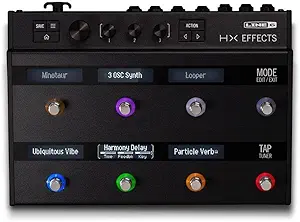
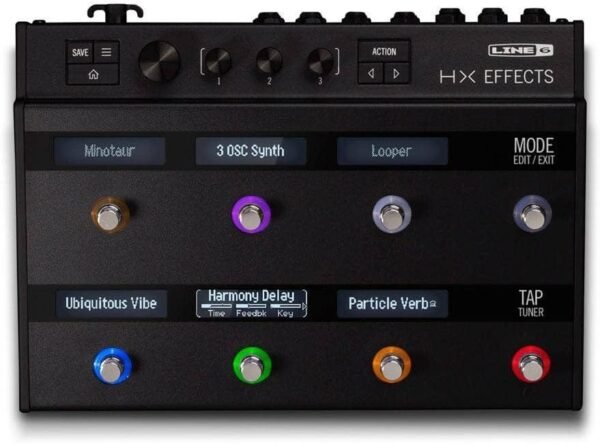
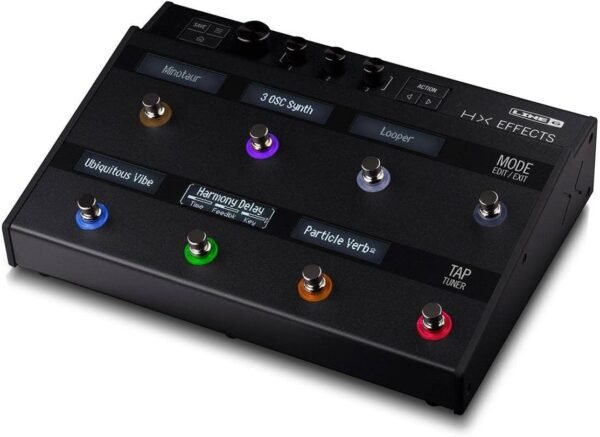
The Line 6 HX Effects is an effects only floor unit drawn from the company Helix platform. Line 6 states that it carries more than 100 effects taken from the Helix hardware and software processors, in a compact format sized for a pedalboard, with up to nine effects running at once. Legacy effects from the earlier Line 6 M Series and Stompbox Modeler pedals are included as well.
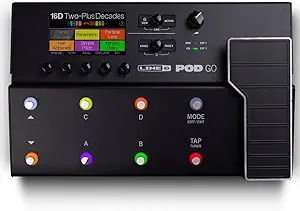
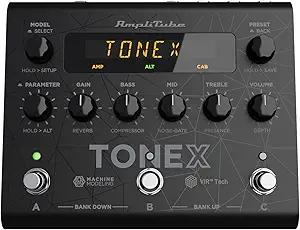
The word missing from that description is amplifier. Unlike a full modeler, HX Effects does not model amplifiers or cabinets. It is built to sit on a board in front of, or in the loop of, a real amplifier and replace a row of individual pedals. That is a specific and deliberate design choice, and it defines who the product is for: a player who is happy with their amplifier and wants to consolidate everything else. A player who wants amplifier sounds too should look at the Line 6 POD Go guitar multi effects pedal or at a capture based unit such as the IK Multimedia TONEX pedal.
Control Surface and Editing
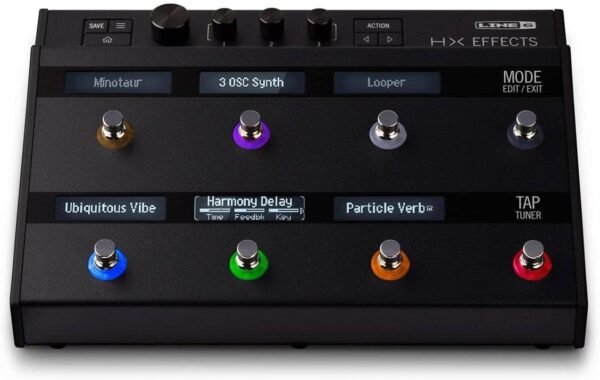
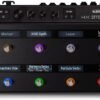
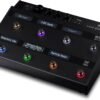
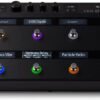
The control layout is the strongest argument for this unit over a smaller processor. Line 6 describes eight capacitive sensing footswitches, six scribble strip LCD displays, and color coded LED rings. Capacitive sensing means the switches respond to a touch as well as to a press, so resting a finger on a switch jumps straight to that effect for editing without changing what is currently active. That solves the single most frustrating part of using a multi effects unit on stage, which is finding the right parameter without stopping the song.
Scribble strips do the complementary job. Six small displays label what each switch is currently assigned to, which removes the memorization that a unit with unlabeled switches demands. Color coded rings add a second layer of state information visible from standing height. Together these are the features that separate a floor unit designed for live use from one designed for a desk. Players building around a single pedal instead can compare a classic single function unit such as the Vox V845 classic wah pedal to understand the trade in immediacy.
Routing, Bypass, and Signal Path
Line 6 lists a choice between analog bypass and digital signal processing bypass with trails. That option matters to players who care about what happens when an effect is switched off. Analog bypass takes the processing out of the path entirely, which appeals to players who want their amplifier and guitar connected as directly as possible when no effect is engaged. DSP bypass with trails keeps the processing running so that a delay or reverb tail decays naturally rather than cutting off, which is the musically preferable behavior when switching between sounds mid song. Being able to choose per situation, rather than being locked into one philosophy, is a genuine feature.
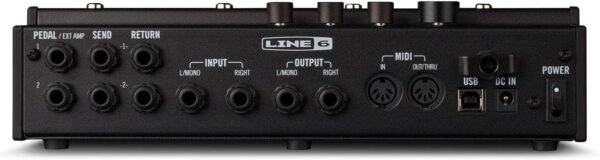
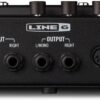
The listing quotes 123 dB of dynamic range and describes extensive routing and control options for integration with traditional pedalboards and amplifiers. That routing flexibility is what allows the unit to sit partly in front of an amplifier and partly in its effects loop, which is how most players actually want a modulation and time based effects chain arranged. Line 6 describes the dynamic range figure in comparative terms in its own marketing text, and this page reports the number rather than the comparison. Boards that combine this with an analog chorus or similar can look at the Boss CH-1 stereo super chorus pedal for context on what a single dedicated pedal still offers.
Highlights
- More than 100 effects drawn from the Helix platform, with up to nine running simultaneously.
- Legacy M Series and Stompbox Modeler effects included alongside the current library.
- Eight capacitive sensing footswitches with six scribble strip displays and color coded LED rings.
- Selectable analog bypass or DSP bypass with trails.
- Extensive routing options for integration with an existing amplifier and pedalboard.
Things To Consider
The most important limitation is the one stated plainly above: there is no amplifier or cabinet modeling. A player who buys this expecting to plug into a mixer and get a full guitar sound will be disappointed, because the unit assumes an amplifier is already in the chain. That is not a flaw, it is the product definition, but it is the single most common mismatch between buyer expectation and what this unit does.
Physical size and weight are real considerations. The listing gives the dimensions as 7.9 by 10.8 by 3 inches and the weight as 7.1 pounds. That is a substantial footprint on a pedalboard and a meaningful addition to what has to be carried, and it is heavier than several full featured floor modelers. Buyers should measure their board before assuming it fits.
Two specification fields on this listing are wrong. The signal format is given as Analog, which does not describe a digital effects processor built on the Helix DSP platform. The hardware interface is listed as 1/4-inch Audio, which describes a connector type rather than an interface. The power source is listed as a DC supply at 9 volts, and buyers should confirm the current draw with Line 6 before planning shared pedalboard power, since a processor of this class typically draws far more than a standard analog pedal. The listing also shows a 4.3 star average across 134 ratings, a modest sample for a product first available in 2018, so individual reviews are worth reading rather than the average alone.
Who Should Buy It and Who Should Not
HX Effects is aimed at a gigging player who already owns an amplifier they like and wants to replace a crowded pedalboard with one unit that switches reliably and labels itself clearly. The capacitive switches, the scribble strips, and the bypass options are all features that only matter on a stage, which is a fair signal of the intended user.
It is the wrong purchase for a player who needs amplifier modeling for direct recording, for anyone with a small board or a strict weight limit, and for a beginner who would be better served by a simpler unit with fewer routing decisions to make. Those players should look at the floor multieffects category for all in one alternatives, or at the wah and filter category if a single expressive pedal is really what is wanted.