Description
What the Denon DP-29F Is Designed To Do
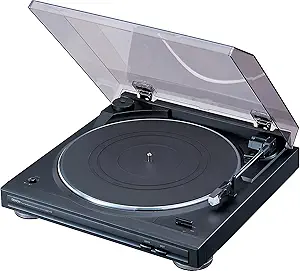
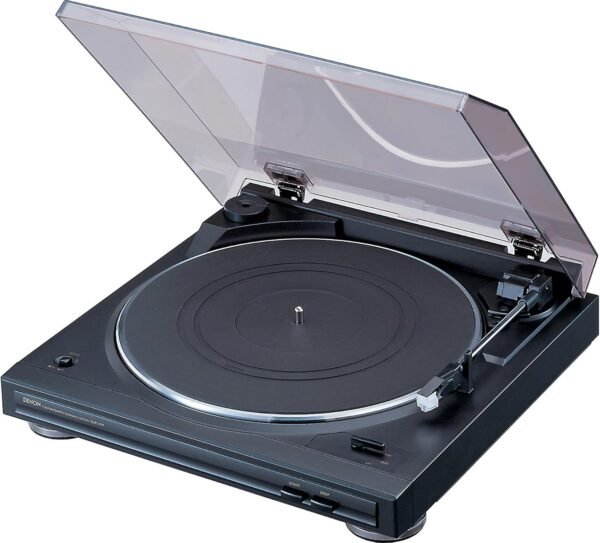
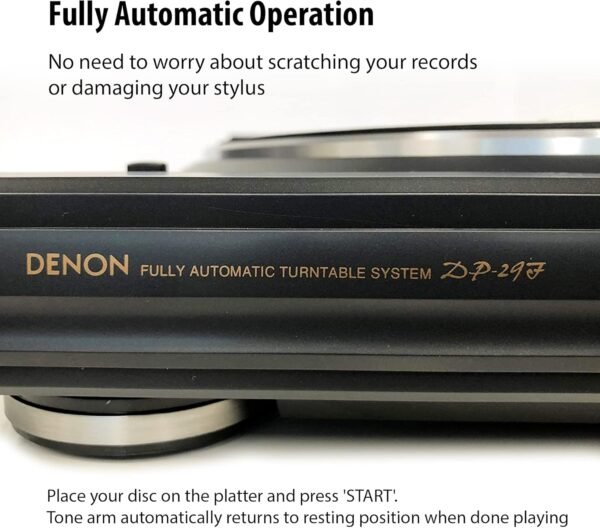
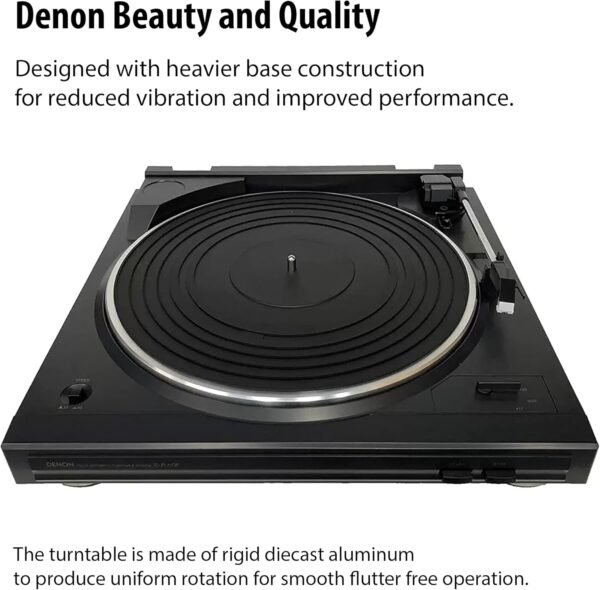
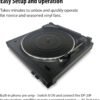
The Denon DP-29F is a belt driven turntable built around convenience rather than around adjustability. The listing describes a rigid diecast aluminum platter, fully automatic tonearm operation, an integrated phono equalizer, and a manual lifter for cueing. Those four features together describe a specific philosophy: a turntable that plays a record correctly without asking the owner to set anything up first.
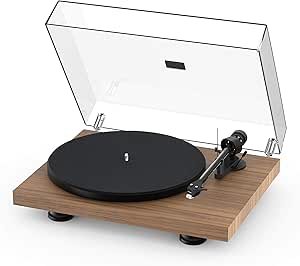
That matters because the alternative philosophy dominates the enthusiast end of the market. An audiophile turntable typically expects the owner to mount a cartridge, set tracking force, adjust anti skate, level the plinth, and supply an external phono stage. Every one of those steps is a chance to get it wrong, and every one of them is removed here. Buyers who want that adjustability, and the upgrade path that comes with it, should compare a component design such as the Pro-Ject Debut Carbon EVO turntable, and browse what else is available in the turntables category.
The Built In Phono Equalizer
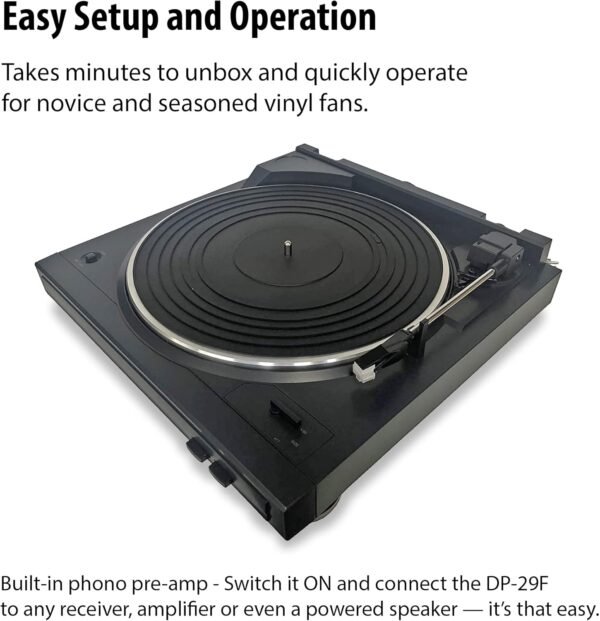
The integrated phono equalizer is the most practically significant feature on this turntable, and the one most often misunderstood by first time buyers. A phono cartridge produces a signal that is both far quieter than a line level source and deliberately altered in frequency balance during record cutting, following the RIAA curve. A phono stage does two jobs: it amplifies that tiny signal to line level and it reverses the RIAA curve so the music sounds correct. Without one, a record sounds thin and almost inaudible.
Most modern amplifiers, receivers, and powered speakers no longer include a phono input, because most people stopped playing records for two decades. A turntable with the equalizer built in can connect to any line level input, including a Bluetooth transmitter, a soundbar with an analog input, or a powered speaker. That single decision removes the most common frustration in setting up a first turntable. Listeners connecting to a modern system may still want a receiver in the chain, and the Yamaha R-S202 stereo receiver shows what a current stereo receiver provides.
Automatic Operation and the Platter
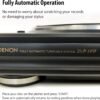
Fully automatic operation means the tonearm moves to the lead in groove, lowers itself, plays the side, then lifts and returns at the end without the owner touching it. The value of that is partly convenience and partly protection. The most common way a record and a stylus get damaged is a hand slipping while cueing, and an automatic mechanism removes that risk. It also means a record does not sit with the stylus riding the run out groove for an hour if the listener falls asleep or leaves the room.
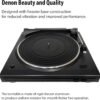
The manual lifter complements the automation by allowing the arm to be raised and moved deliberately to skip to a particular track, which is the one thing full automation takes away. The diecast aluminum platter is the other structural feature. A heavier, rigid platter stores rotational energy, which helps the speed stay steady between the small variations a belt drive motor introduces, and it resists the resonances a thin stamped platter would add to the sound. Listeners who want to send vinyl around a house wirelessly can look at the Audioengine B1 Bluetooth receiver for the other end of that chain.
Highlights
- Fully automatic tonearm that starts, plays, and returns without handling.
- Built in phono equalizer, so the turntable connects to any line level input.
- Rigid diecast aluminum platter for steadier rotation and reduced resonance.
- Manual lifter for cueing to a specific track when automation is not wanted.
- Designed to be usable without cartridge setup, tracking force adjustment, or an external phono stage.
Things To Consider
The imported record for this product carries no manufacturer description and no specification table, which leaves several things unstated that a buyer would reasonably want. There is no confirmation of which speeds are supported, no cartridge type or model, no statement of whether the cartridge is user replaceable, no wow and flutter figure, no signal to noise specification, no dimensions, and no weight. Those omissions matter differently depending on the buyer. Speed support and cartridge replaceability are the two that would change a purchase decision, and both should be confirmed with Denon.
The design decisions that make this turntable easy also cap what it can become. Automatic tonearm mechanisms add moving parts near the arm, which enthusiasts avoid because any linkage attached to the arm is a path for vibration and a constraint on arm movement. A built in phono stage cannot be bypassed on some designs, which limits the benefit of adding a better external one later. And a turntable built for simplicity generally does not offer adjustable tracking force or anti skate, so the cartridge runs at whatever the factory set, with no way to optimize it or to compensate as the stylus wears.
None of that is a criticism of the product on its own terms. It is a description of the trade being made. A buyer who wants a record to play with one button is being served well. A buyer who expects to upgrade the cartridge next year, then the phono stage, then the platter mat, is buying into the wrong design and should look at a manual turntable instead. For a different route into vinyl entirely, an all in one system such as the Sharp XL-BH250 shelf system shows how the source and amplification can be combined.
Who Should Buy It and Who Should Not
The DP-29F suits someone returning to records after years away, someone buying a first turntable, or someone who wants vinyl playback in a room where a fussy setup would never get used. The automatic operation and the built in equalizer together mean the turntable can be unboxed, connected to almost anything, and used the same evening.
It is the wrong turntable for a listener who wants to tune the setup, replace cartridges, or build a system around an external phono stage, and it is the wrong turntable for anyone who needs published specifications before buying, since this listing provides none. Those buyers should look at manual designs in the turntable cartridges category to understand the upgrade path they would be giving up here.