



Description
SHOKZ OpenFit: true wireless earbuds that leave the ear canal open
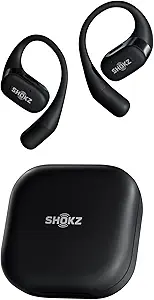
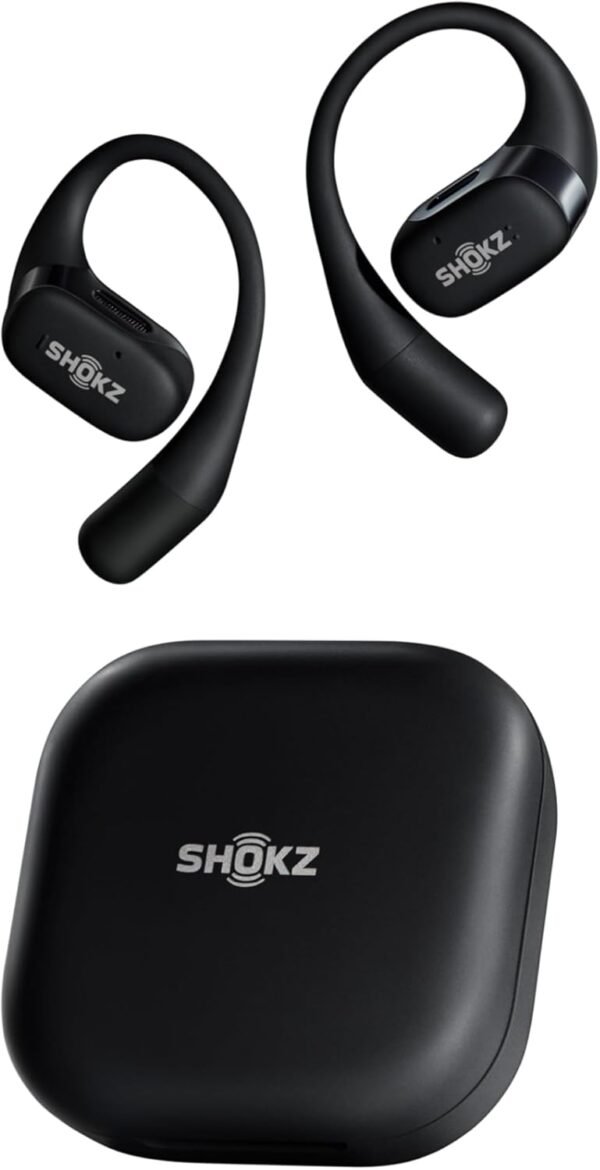
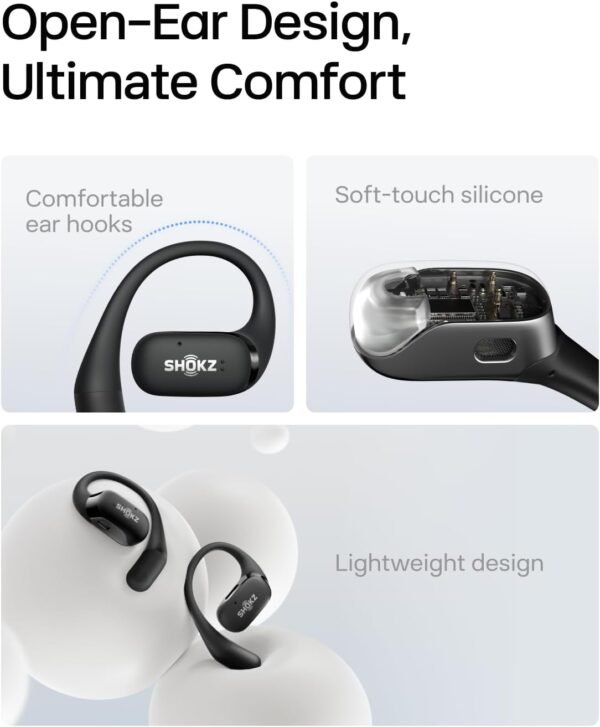
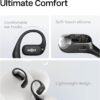
The SHOKZ OpenFit is an open ear true wireless earbud with a flexible ear hook, designed to sit beside the ear canal rather than seal into it. SHOKZ lists the specific uses as travel, fitness and business, with a stated recommended use of calling, and the construction given as silicone and plastic. Each earbud is listed at 0.586 ounces, and the earpiece shape is described as an angular form with an ear hook.
The open design is the entire proposition. A sealed earbud isolates the wearer from the outside world, which is what makes it good on a plane and dangerous on a road. An open earbud does the opposite: traffic, a training partner, a colleague at the next desk and an announcement over a station tannoy all remain audible while music plays. Runners and cyclists are the obvious audience, and so is anyone in an office who needs to remain reachable. The tradeoff is that the same openness lets ambient noise in and lets some sound out, which the Things To Consider section below covers in detail.
Battery, charging and the numbers that add up
The battery figures in this listing are internally consistent, which is worth noting because many are not. Battery life per earbud is given as 7 hours, and the charging case is listed at 21 hours, which produces the 28 hour total quoted in the product name. Charging time for the earbuds is stated as 1 hour and the case as 2 hours, and a USB-C charging cable is included.
Seven hours in the bud is a long single session figure for a true wireless design, and it is the number that matters for a marathon, a long shift or a full working day of calls. The case then provides three more full charges. The case itself is listed at 10.2 by 10.6 by 5 centimeters and 18.6 grams, which is a jacket pocket rather than a jeans pocket item, since the ear hooks require a wider case than sealed buds need.
Connectivity is Bluetooth 5.2 with a listed range of 10 meters, using a dynamic driver. Compatible devices are given as iPhone, Android, PC, Mac and smartwatches, and the controls are described as touch based media control. Water resistance is listed only as water resistant, without an ingress protection rating, which is discussed below.
How it compares within the SHOKZ range
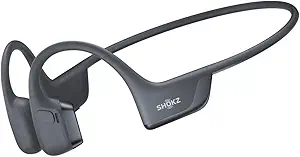
SHOKZ builds two different kinds of open ear product, and buyers regularly confuse them. Models such as the SHOKZ OpenRun Pro2 use a headband that wraps behind the neck and transmit through bone conduction against the cheekbone. The OpenFit is a true wireless design with no band at all, with each bud held by its own hook. The choice between them is mostly about whether a neckband is acceptable, and about how each interacts with sunglasses, helmets and hats.
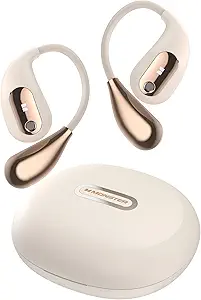
Against other true wireless open ear designs, the field is growing quickly. The Monster Open Ear AC210 and the JVC Nearphones attack the same problem with different retention systems, and comfort over hours is the criterion that separates them rather than any published specification.
Highlights
- Open ear design that leaves the ear canal unobstructed for situational awareness.
- 7 hours per earbud with 21 hours in the case, for the 28 hour total quoted.
- Fast charging listed at 1 hour for the earbuds and 2 hours for the case.
- Very light at 0.586 ounces per earbud, with silicone and plastic construction.
- Bluetooth 5.2 with a 10 meter range and touch media controls.
- Ear hook retention aimed at running, cycling and gym use.
- USB-C charging cable, charging case and protective case included.
Things To Consider
Sound leakage is the unavoidable consequence of an open design. Because nothing seals the ear, audio radiates outward as well as inward, and people nearby will hear some of it at higher volumes. In a quiet office, a library or on a late night train this is a genuine social limitation, not a minor one. Anyone who needs privacy should choose a sealed earbud instead.
Bass response is limited by the same physics. Low frequencies depend on a sealed volume between the driver and the eardrum to build pressure, and an open design cannot create one. Listeners coming from sealed earbuds should expect a lighter low end, and no amount of equalization fully compensates for the missing seal. Noisy environments compound this, because ambient sound masks quiet passages that a sealed bud would have kept audible.
The water resistance claim needs care. The listing states water resistant and names sweat resistance, but gives no ingress protection rating anywhere in the specification table. Without an IP number there is no way to know from this listing whether the earbuds tolerate heavy rain or only perspiration. Treat them as sweat rated and keep them out of the shower unless the manufacturer documentation says otherwise.
Two other details are worth noting. The specification table includes an Is Autographed field marked No, which is a template artifact from an unrelated product category and should be ignored. The batteries field reads three lithium polymer batteries, which counts the two earbuds and the case as separate cells rather than describing anything unusual. Neither affects the product, but both are reminders that the listing data is templated rather than curated.
Who it suits
The OpenFit suits runners and cyclists on public roads, gym users who want to hear a trainer, office workers who need to stay aware of the room while taking calls, and anyone who finds sealed earbuds uncomfortable or claustrophobic. The 7 hour per bud figure supports a full working day, and the ear hooks address the retention problem that sealed buds solve with tips.
It is the wrong choice for air travel, for open plan offices where leakage would annoy neighbors, for bass focused listening and for anyone who needs a certified waterproof rating. Buyers in those situations should compare sealed models in the earbud headphones category, while anyone committed to the open format should look through the alternatives in the open ear headphones category before deciding on a retention style.