



Description
How Bone Conduction Works Here
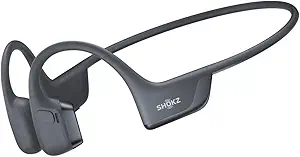
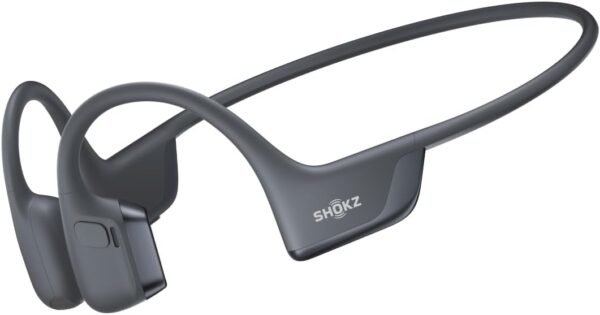
The SHOKZ OpenRun Pro2 is a sport headphone that does not cover the ear canal. Instead of pushing air into the ear, transducers rest on the cheekbones in front of the ears and transmit vibration through bone directly to the inner ear. The ear canal stays completely open, which means traffic, conversation, and footsteps remain fully audible. That is the entire reason the format exists and the reason it dominates among runners and cyclists on public roads.
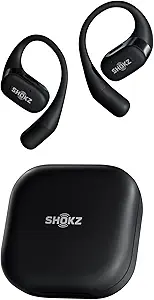
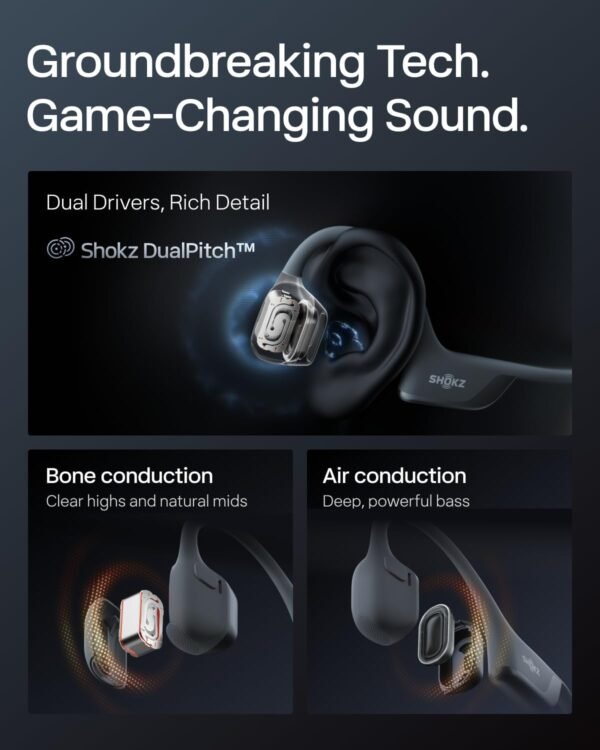
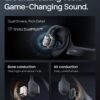
The listing describes this model as combining bone conduction with air conduction, which is a hybrid approach worth understanding. Bone conduction is excellent at delivering midrange and speech but physically struggles to produce low frequencies, because moving bone is a poor way to generate bass. Adding a small air conduction driver lets the headphone produce low frequencies conventionally while the bone path handles the rest. The result addresses the single most common complaint about the category, which is thin sound. Buyers comparing open ear approaches can look at the open ear headphones category and at the air conduction only SHOKZ OpenFit open ear headphones from the same brand.
Fit, Retention, and Wearing Comfort
The listing describes an ergonomic design with a memory wire, which is the wraparound band that passes behind the head and holds the transducers in position on the cheekbones. That band is what makes bone conduction practical for exercise: there is nothing in the ear to fall out, and the whole assembly moves with the head as one piece. For running, cycling, and gym work this is among the most secure retention methods available.
Two consequences follow. First, positioning matters more than with a conventional earphone. A bone conduction transducer sitting slightly off its intended spot loses output and clarity, and the effect is more pronounced than a slightly loose ear tip. Second, the wraparound band interacts with helmets, glasses, hats, and hairstyles, and buyers who cycle should think about how it will sit under a helmet strap. Anyone who wears glasses will find bone conduction easier than a hooked earbud, since the band sits lower and behind rather than competing for the space over the ear. Listeners who want a sealed fit for the gym instead should compare the options in the earbud headphones category.
Battery, Calls, and Awareness
Battery life is listed at up to 12 hours of continuous use. Because a bone conduction headphone is a single unit with no charging case, that figure is unambiguous in a way true wireless numbers are not: twelve hours is what one charge gives, with no arithmetic about case refills. For a runner or a commuter that is several days of use between charges.
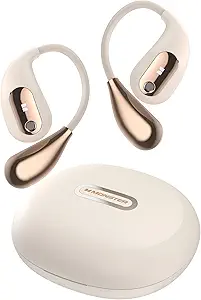
The listing describes dual microphones with noise reduction processing intended to suppress wind and background noise on calls. Wind noise is a specific and serious problem for any headphone worn outdoors during movement, because air moving across a microphone port generates broadband noise that is far louder than speech. Processing helps, and physical placement helps more, but no system eliminates it. The open ear design also has a safety consequence that runs in the intended direction: hearing an approaching vehicle is a genuine benefit rather than a marketing point, and it is the main reason many events and clubs permit this format where sealed earphones are discouraged. Listeners who want awareness with a different transmission method can compare the Monster Open Ear AC210 headphones.
Highlights
- Bone conduction combined with air conduction, addressing the thin bass typical of the format.
- Ear canal remains completely open, preserving awareness of traffic and surroundings.
- Memory wire band that holds position during running, cycling, and gym work.
- Battery quoted at 12 hours of continuous use with no charging case involved.
- Dual microphones with noise reduction processing aimed at wind and background noise on calls.
Things To Consider
The imported record for this product has no manufacturer description and no specification table at all. That leaves a great deal unstated: there is no ingress protection rating, no Bluetooth version, no codec information, no weight, no charging connector, no charging time, no multipoint confirmation, and no statement of how the two transducer types are balanced. For a product bought largely for sweat resistance, the absence of a published ingress protection rating is the most significant gap, and it should be confirmed with SHOKZ before relying on it.
The bone conduction format has honest limitations that no implementation removes. Sound leaks to people nearby, more than most listeners expect, which makes the format a poor choice for an open plan office or a quiet train carriage. There is no isolation at all, so on a noisy street the ambient level competes directly with the music and the natural response is to turn it up. Vibration against the cheekbone is perceptible at higher volumes and some listeners find it uncomfortable or distracting, particularly with bass heavy material.
The listing also mentions noise reduction processing described in artificial intelligence terms. This is signal processing applied to the microphone path for calls, and it does nothing for what the wearer hears. Anyone hoping for noise cancellation during listening should understand that an open ear headphone cannot provide it by definition. Finally, a single unit design means a failure of the band or a worn charging contact usually ends the product life rather than allowing a part to be replaced.
Who Should Buy It and Who Should Not
The OpenRun Pro2 suits a runner, cyclist, hiker, or gym user who needs to hear their surroundings, wants secure retention that does not depend on an ear tip, and values a single charge figure they can plan around. It also suits listeners who find in ear tips uncomfortable or who cannot use them for medical reasons, which is a substantial group that the sealed earbud market serves poorly.
It is the wrong purchase for commuting on noisy transport, for open plan office use given the leakage, and for listeners who want deep bass or noise cancellation. Those buyers should look at sealed cancelling designs such as the Skullcandy Crusher Evo wireless headphones for low frequency emphasis, or a true wireless set such as the EarFun Air true wireless earbuds for a smaller sealed alternative.