Description
What the K11 Is
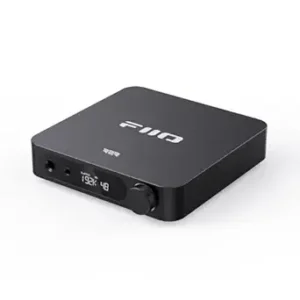
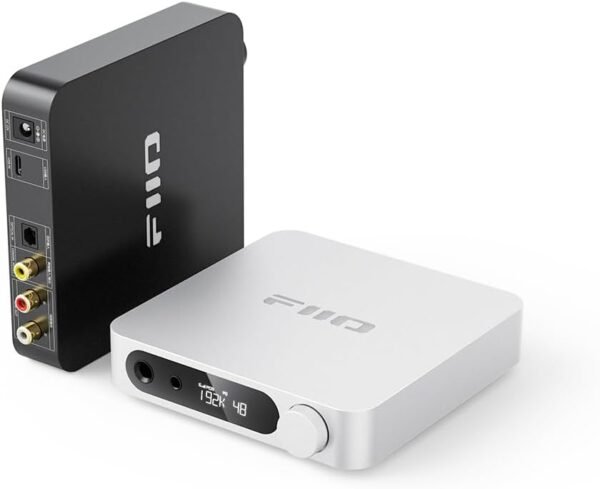
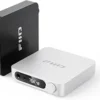
The FiiO K11 is a desktop digital to analog converter combined with a headphone amplifier. It sits between a computer, a television or a digital source and a pair of headphones or a set of powered speakers, replacing the converter and amplifier built into the source device with better ones.
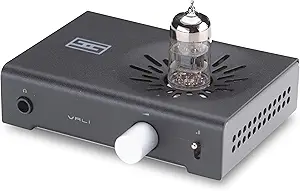
The case for a unit like this is that the audio circuitry inside a computer sits next to a great deal of electrical noise and is designed to a budget. Moving conversion and amplification outside the machine addresses both problems. The K11 also solves a specific practical issue: many full-size headphones need more voltage than a laptop can supply and sound thin and quiet without it. Buyers weighing alternatives should compare the HIFIMAN EF400 and the tube-hybrid Schiit Vali 3.
Balanced Output and Why It Is Here
The 4.4 mm balanced output alongside the conventional 6.35 mm jack is the specification that places this above entry-level units. A balanced connection carries each channel on its own pair of conductors with separate grounds, rather than sharing a single ground return between left and right.
Two benefits follow. Crosstalk between channels is reduced because the channels no longer share a return path, and the amplifier can typically deliver more voltage swing into the same headphone, which matters for harder to drive models. The requirement is a headphone with a balanced cable terminated in 4.4 mm, which many are not by default, though any in-ear monitor with a detachable two-pin or MMCX cable can be re-terminated cheaply. Buyers with a standard headphone lose nothing by using the 6.35 mm output instead.
Inputs and What It Can Connect To
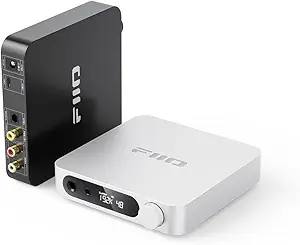
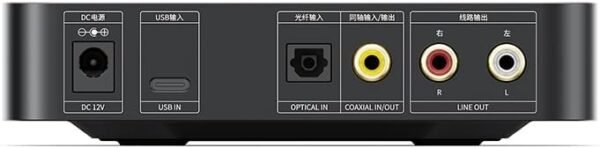
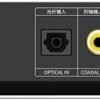
The K11 accepts USB, coaxial and optical digital inputs, which covers almost every source that might sit on a desk or in a living room. Optical in particular matters because it is what most televisions provide, and FiiO’s first bullet point is explicitly about improving television or computer sound.
On the output side there is an RCA line out for powered speakers or an integrated amplifier, and a coaxial digital output for feeding another converter. That combination means the K11 can serve as the hub of a desktop system rather than only as a headphone amplifier: a television and a computer both connected as sources, headphones for private listening and speakers for everything else. Anyone pairing it with a full-size headphone should browse the over-ear headphones category, and the rest of the amplifiers category covers the competing units.
Resolution and the Display
FiiO states support for 384 kHz at 24-bit and for DSD256. Those figures describe the converter’s maximum capability rather than what any listener will typically feed it, since almost all commercially available music is 44.1 or 48 kHz and very little is DSD. High rate support costs nothing to include and is a specification sheet feature more than a practical one, but it does mean the unit will not refuse anything.
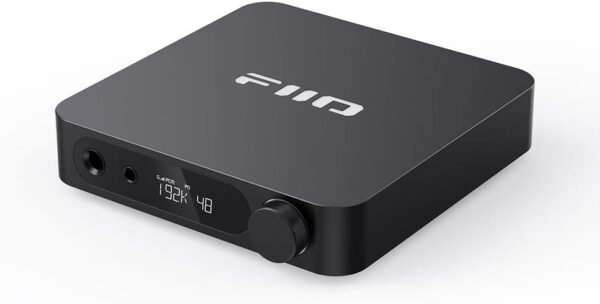
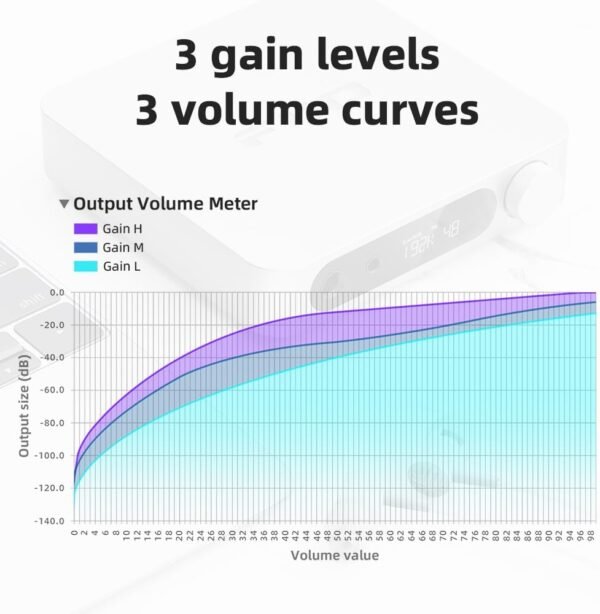
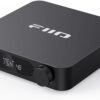
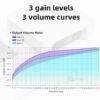
The VA display is more useful day to day. It shows the incoming sample rate, the volume setting, the gain level and the output mode. Sample rate display in particular is genuinely valuable because it confirms what the computer is actually sending: a system misconfigured to resample everything to 48 kHz is a common and invisible problem, and a front panel readout makes it obvious. Three gain levels are listed, which allows sensitive in-ear monitors and demanding full-size headphones to be driven from the same unit without a volume control that is unusable at one extreme.
Build and Desktop Fit
The body is aluminum alloy, listed at 5.11 by 5.11 inches with a stated weight of 2.05 pounds. FiiO emphasizes the compact footprint and the tidy appearance, which for a device that will sit permanently on a desk beside a monitor is a legitimate consideration rather than vanity.
A USB Type-C to Type-A cable is included. Note that this listing sits alongside a separate FiiO product on this site, the K11 R2R, which shares the model number but uses a fundamentally different converter architecture. The two are easy to confuse and are not the same product. Buyers who want something portable rather than desk-bound should look at a dongle style unit such as the AudioQuest DragonFly Red.
Highlights
- Balanced 4.4 mm and single-ended 6.35 mm outputs on the same unit.
- USB, coaxial and optical inputs, covering computers and televisions alike.
- RCA line out and coaxial out, so it can drive speakers or another converter.
- Three gain levels for both sensitive in-ears and demanding headphones.
- VA display confirming the actual incoming sample rate.
- Aluminum alloy body with a small desktop footprint.
Things To Consider
The product title states “1400W Power Balanced”, which is not credible: no desktop headphone amplifier delivers 1400 watts, and this is almost certainly a milliwatt figure with the unit dropped. The specification block is worse. Noise control is listed as “Active Noise Cancellation” on a desktop amplifier. The wireless communication field contains Chinese characters. The carrying case weight is given in German. The frequency range reads 20 Hz to 384,000 Hz, which conflates the sample rate ceiling with audio bandwidth. The earpiece shape is listed as over ear, and the height of 0.59 inches is implausible for a chassis carrying a 6.35 mm jack.
- The power figure in the title uses the wrong unit by a factor of a thousand.
- Balanced output requires a 4.4 mm terminated cable, which most headphones do not ship with.
- No Bluetooth, so this is a wired desktop device only.
- The published dimensions are not credible for the connectors described.
- Model number confusion with the separate K11 R2R product.
- Several specification fields are in the wrong language or describe a different product class.
Who Should Buy It and Who Should Skip It
The K11 suits a desk-based listener who wants one box handling a computer and a television, driving both headphones and powered speakers, with enough output for full-size headphones that a laptop cannot manage. The balanced output and the three gain levels give it genuine range, and the display makes the system easier to trust.
Skip it if your headphones are efficient in-ear monitors driven happily by a phone, where the improvement will be small and a dongle would be more convenient. Skip it too if you need Bluetooth input, which this unit does not provide, or if a portable solution is what you actually want. Buyers considering the R2R variant should read about that product separately rather than assuming the two behave the same way.