
Description
What the Tailgater Boom Is For
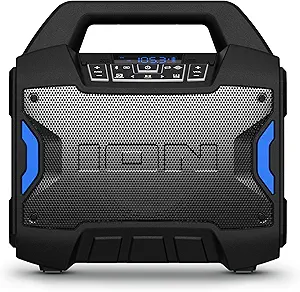
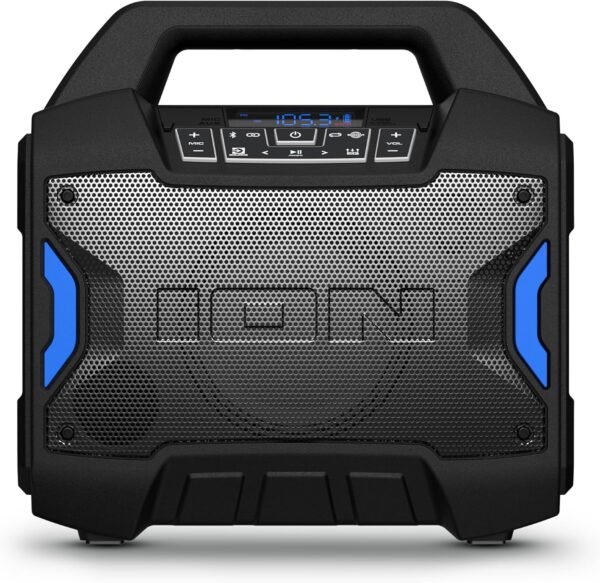
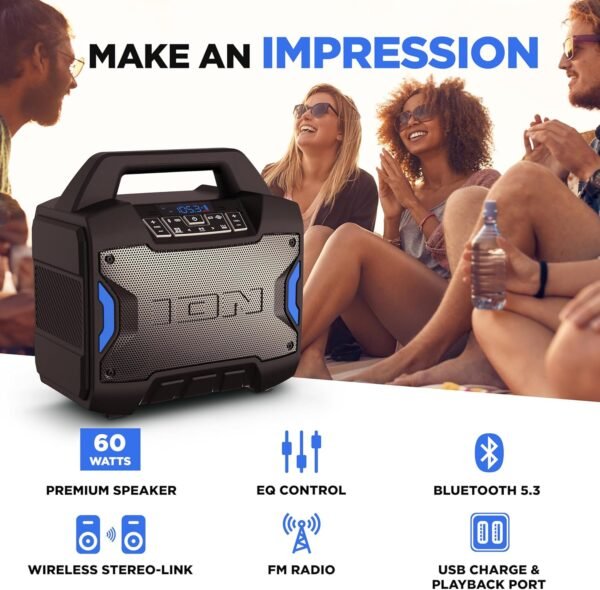
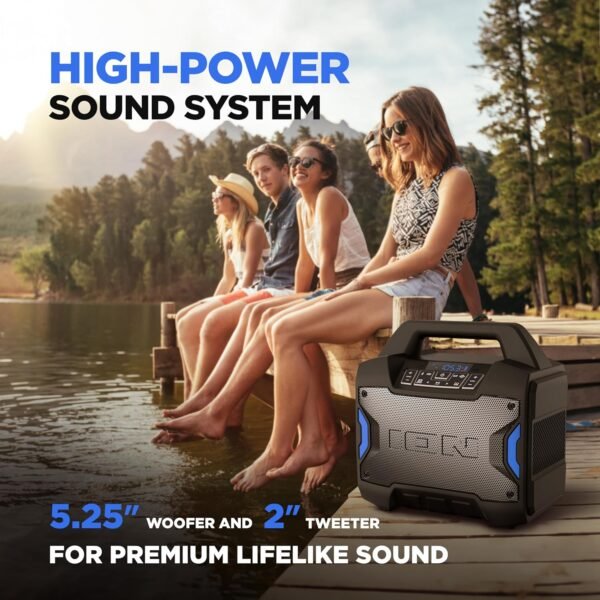
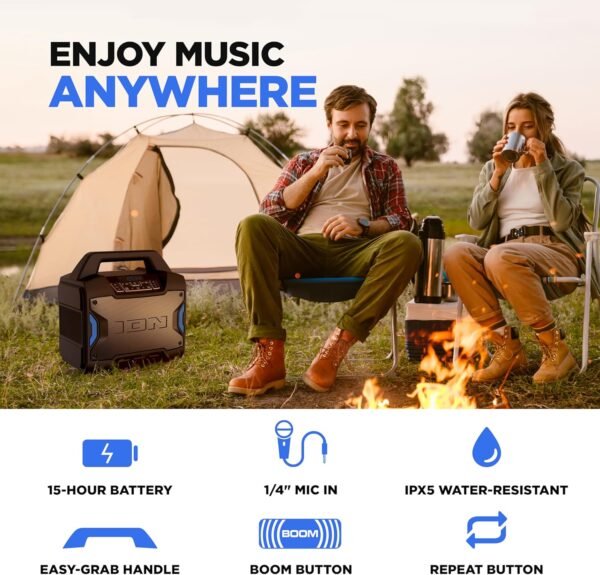
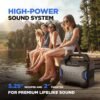
The ION Tailgater Boom is a party speaker rather than a personal one. ION quotes 60 watts driving a 5.25 inch woofer and a 2 inch tweeter, packs in a rechargeable battery rated at 15 hours, and adds an FM radio, a USB port and a quarter inch microphone input. It weighs 7.14 pounds and measures roughly 11.93 inches wide by 11.61 inches high, with a built-in handle.
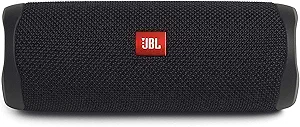
That combination points at a specific set of occasions: tailgating, backyard gatherings, small outdoor events and anywhere someone needs to both play music and be heard over it. Buyers who want something to carry on a hike or clip to a bag are shopping the wrong size entirely and should look at the JBL Flip 5 or the smaller options in the portable Bluetooth speakers category.
The Two-Way Driver Arrangement
A separate woofer and tweeter is the specification that separates this from the majority of portable speakers, which use a single full-range driver with passive radiators. Splitting the work means the woofer can be optimized for low frequencies without also being asked to reproduce cymbals and consonants, and the result is generally cleaner at high volume, which is exactly where a party speaker is used.
ION adds a BOOM button that raises bass, EQ and volume simultaneously. It is a party trick in the literal sense, and it is worth understanding that boosting bass on a battery-powered speaker at high volume is where distortion and battery drain both come from. Used sparingly it does what it promises; left on permanently it will shorten the runtime and compromise clarity. The app provides more considered EQ control for anyone who wants it.
The Microphone Input
The quarter inch microphone input is the most underrated feature here. It turns the speaker into a small public address system for a barbecue toast, a coaching session, a school event or karaoke, and quarter inch is the right connector because it accepts the vast majority of handheld dynamic microphones directly. A Shure SM48 with an appropriate cable will work into it, as will most inexpensive handhelds.
What the listing does not describe is any microphone processing: there is no mention of echo, reverb or independent microphone level control beyond the master volume. For simple announcements that is fine. For karaoke, where singers generally expect some reverb and a separate microphone volume, a dedicated machine such as the Ikarao Shell S1 is a better tool, and the PA systems category covers the step up to proper vocal reinforcement.
Battery, Ports and Connectivity
ION rates the battery at up to 15 hours and specifies USB-C charging, which is the right choice and means a laptop charger will do the job. There is also a USB-A port that both plays music from a thumb drive and charges a phone, which is genuinely useful at an outdoor event where power is scarce. ION notes that the unit can operate on mains or battery power.
Bluetooth 5.3 handles streaming with a stated range of up to 100 feet, and a wireless stereo link pairs two units for a left and right pair. An eighth inch auxiliary input covers wired sources. The ION Sound Control app manages radio presets, volume, EQ and firmware updates from Android or iOS. For a similar outdoor-focused speaker with a different feature emphasis, the Altec Lansing HydraTrek is worth comparing.
The FM Radio and Why It Still Matters
An FM tuner on a portable speaker looks anachronistic in 2026 until you consider the situations this product is designed for. Tailgating in a stadium parking lot means listening to a local sports broadcast, often in a place where cellular data is congested to the point of uselessness because tens of thousands of phones are competing for the same towers. Broadcast radio does not care how many people are listening. The same logic applies to a rural campsite, a beach with no signal, or a storm that takes the network down.
ION includes preset storage, which is the detail that makes the feature usable rather than tolerable, since scanning for a station on a small display while holding a drink is not a pleasant experience. The presets can be configured through the app, which is a much better interface for the task than the buttons on the cabinet. It is a small feature that costs almost nothing to include and gets quietly used far more often than the specification sheet position would suggest.
Highlights
- Separate woofer and tweeter, uncommon in a battery-powered portable.
- Quarter inch microphone input that accepts standard handheld microphones.
- Up to 15 hours of rated battery with USB-C charging.
- USB-A port for both thumb drive playback and phone charging.
- Built-in FM radio with presets, useful for live sports at a tailgate.
- Wireless stereo link across two units, plus app-based EQ and firmware updates.
Things To Consider
The listing contradicts itself on water protection. The specification block sets “Is Waterproof” to TRUE, while both the title and ION’s own description state IPX5, which is a water resistance rating covering spray from any direction and explicitly not immersion. Those two statements cannot both be right, and the safe reading is the specific one: this speaker tolerates rain and splashes and should not be dropped in a pool. The same block also lists a wireless subwoofer connection on a speaker with no subwoofer, and gives the recommended use as “For Surround Sound Systems”.
- IPX5 is not waterproof, despite what the specification field says.
- 7.14 pounds with a handle is carryable but not pocketable.
- No microphone reverb or independent mic level is described.
- The BOOM button trades runtime and clarity for perceived impact.
- Only a USB-A to USB-C cable is included, with no mains adapter listed.
- The waterproof and subwoofer specifications are both wrong in the listing data.
Who Should Buy It and Who Should Skip It
This suits someone who hosts outdoors, runs youth sports or community events, or wants one speaker that covers music, radio and announcements without additional equipment. The microphone input and the FM tuner are the features that justify it over a conventional Bluetooth speaker, and the USB-A charging port earns its keep at any event where phones run flat.
Skip it if portability in the backpack sense matters, if the speaker will live indoors on a shelf, or if serious karaoke is the goal, since the missing microphone processing will show up immediately. Buyers who need to cover a genuinely large space or a crowd should be looking at a powered PA speaker rather than any battery-powered consumer product, where output is measured very differently.