
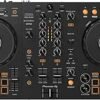
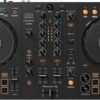
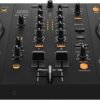
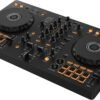
Description
What the DDJ-FLX4 Is For
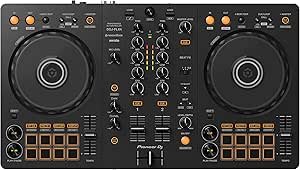
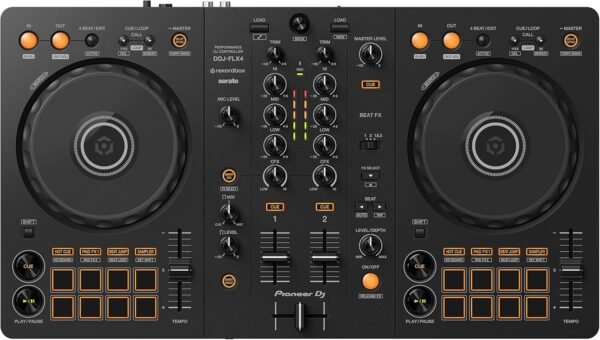
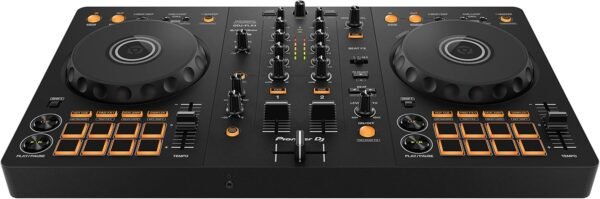
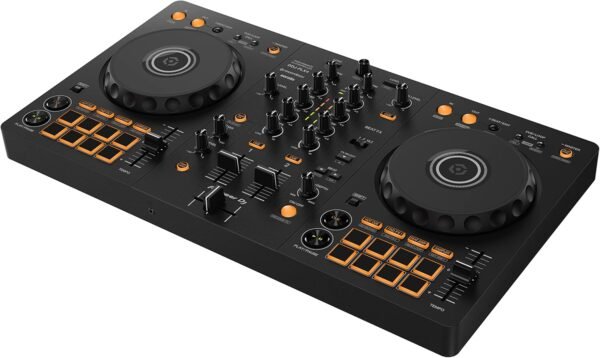
The Pioneer DJ DDJ-FLX4 is a two deck DJ controller, listed in graphite, that works with both rekordbox and Serato DJ. A controller of this type is not a standalone instrument. It is a physical interface for software running on a computer or a phone, providing jog wheels, faders, a crossfader, performance pads, and an audio interface with a headphone output for cueing. The software does the audio work, and the controller makes it playable with hands rather than a mouse.
The listing positions it around three things: compatibility with two competing software platforms, a layout that suits beginners while still offering advanced controls, and support for streaming services so tracks can be pulled from a subscription rather than a local library. That is a coherent package for someone learning, and the compatibility point is the most strategically important of the three. Musicians building a wider setup can look at the DJ controllers category and at production tools such as the Roland P-6 creative sampler.
Two Software Platforms, One Controller
rekordbox is Pioneer DJ own software and the ecosystem used by most club installations, since Pioneer DJ media players read rekordbox prepared libraries from a USB drive. Serato DJ is the long established competitor, widely used by turntablists and by DJs who came up on vinyl control systems. Historically a controller worked with one or the other, which forced a platform decision at the point of buying hardware.
Supporting both removes that lock in, and it matters more for a beginner than for anyone else. A new DJ genuinely does not know yet which workflow suits them, whether they will play clubs where rekordbox preparation is expected, or whether their friends and mentors use Serato. A controller that works with both means the software decision can be made later and changed without replacing hardware. It also protects resale value, since the buyer pool is not restricted to one camp.
Streaming, Portability, and Learning
Integrated streaming support means tracks can be played from a subscription service through the DJ software rather than from files on a drive. That lowers the barrier for a new DJ enormously, since building a library of purchased tracks is otherwise the largest early cost and the largest early time investment. It comes with a serious caveat that the listing does not mention: streaming in a DJ application requires an internet connection at the moment of play, which is exactly what venues most reliably fail to provide. Practicing at home from a stream is straightforward. Relying on it at a gig is not, and most working DJs keep local copies of anything they intend to play.
The listing describes a compact and durable design suited to mobile use and tight spaces. Physical size is a real constraint for a beginner controller, because it usually shares a desk with a laptop and a pair of monitors or headphones. Anyone learning will also need a monitoring chain, and a closed headphone with rotating cups such as the Pioneer DJ HDJ-CUE1 DJ headphones is the standard companion. Speakers to play through can come from the powered cabinets category once the practice moves out of a bedroom.
Highlights
- Two deck controller compatible with both rekordbox and Serato DJ.
- Layout designed to be approachable for beginners while retaining performance controls.
- Streaming service integration, so a library is not required before starting.
- Compact footprint suited to a desk, a bedroom setup, or mobile work.
- Built in audio interface with a headphone output for cueing.
Things To Consider
The imported record for this product carries no manufacturer description and no specification table beyond the product title. That leaves a great deal unstated. There is no dimensions or weight figure, no connector list, no confirmation of whether a microphone input is present, no statement of what audio outputs are provided or whether they are balanced, no information about the number of performance pads or their modes, and no confirmation of whether a power supply is needed or whether the unit runs on USB power alone. Output connector type in particular decides whether the controller can plug into a venue system, and it should be confirmed with Pioneer DJ.
There are also license considerations that catch new buyers. Controllers of this class typically ship with a limited version of the DJ software, and unlocking features requires either a paid upgrade or a subscription. Streaming support similarly requires an active subscription to a supported service. Neither is a hidden cost exactly, but both are ongoing costs that the hardware purchase does not cover, and a buyer should understand the software situation before assuming the controller is a complete solution.
Finally, a two deck controller is a two deck controller. Anyone who expects to move to four deck performance, or to the standalone media players used in most clubs, will be learning on a different layout from the one they eventually perform on. That is a normal and sensible way to start, but it is worth knowing rather than discovering at a first booking.
Who Should Buy It and Who Should Not
The DDJ-FLX4 suits someone learning to DJ who does not want to commit to a software platform yet, wants to practice with streamed tracks before investing in a library, and needs something that fits on a normal desk. The dual platform support is the strongest argument for it, and it removes the single decision beginners are least equipped to make.
It is the wrong purchase for a DJ who already works in one ecosystem and needs four deck control or standalone operation without a computer, and for anyone who needs published connector and output specifications before buying, since this listing supplies none. Those buyers should look at standalone units, and anyone whose interest is production rather than performance should consider a sampler or drum machine such as the Akai Professional XR20 drum machine instead.