Description
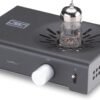
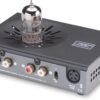
Schiit Vali 3: a tube hybrid headphone amplifier and preamplifier
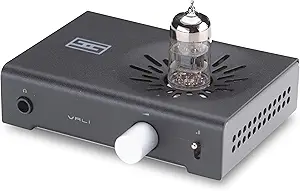
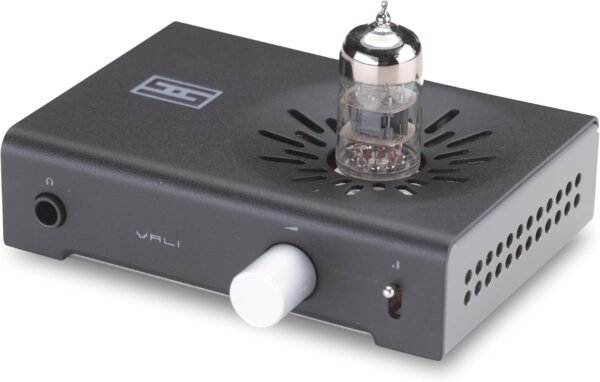
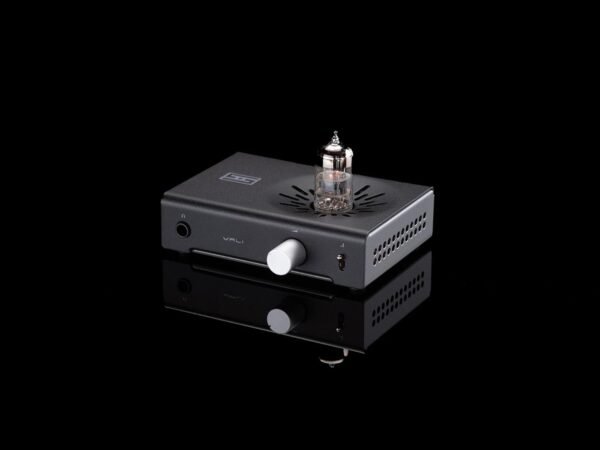
The Schiit Vali 3 is a hybrid headphone amplifier, meaning a vacuum tube handles the input stage while a solid state circuit provides the output. Schiit specifies a fully discrete Class AB bipolar output stage in what the company calls its Coherence current feedback topology, with no operational amplifiers or amplifier chips in the signal path. The tube runs with a full 100 volts on the plate, which Schiit contrasts with designs operating at 12 to 48 volts, on the argument that tubes perform better with more voltage available to them.
The unit is small, listed at 5 by 3.5 by 2.75 inches and 1 pound, in a metal chassis that Schiit describes as custom stamped and made in California, with design and the majority of production cost attributed to Texas. It ships with a 6N3P tube and an external power supply, and connects headphones through a 6.35 millimeter jack.
Tube rolling and why one tube matters
The design uses a single tube, and Schiit is explicit about the reason: good tubes are becoming harder to source, and a design needing one is easier to keep supplied than a design needing several. That is a practical decision rather than a sonic one, and it directly affects long term ownership.
It also makes tube rolling accessible. Swapping the tube changes the character of the amplifier, and Schiit lists compatible alternatives including the 5670, 2C51, ECC42 and CV4013, up to the scarce and expensive WE396A. Buying one replacement rather than a matched set keeps the cost of experimenting low, and for many owners that experimentation is a substantial part of the appeal of tube equipment.
Buyers who want a similar desktop role without tubes should compare the HIFIMAN EF400 or the FiiO K11 R2R, both of which pursue character through the conversion stage rather than through a valve.
Preamplifier outputs and system role
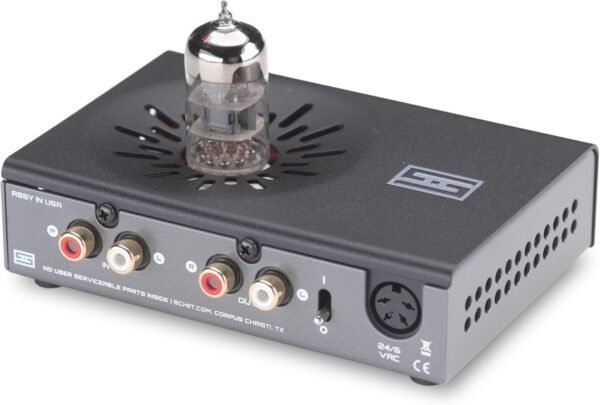
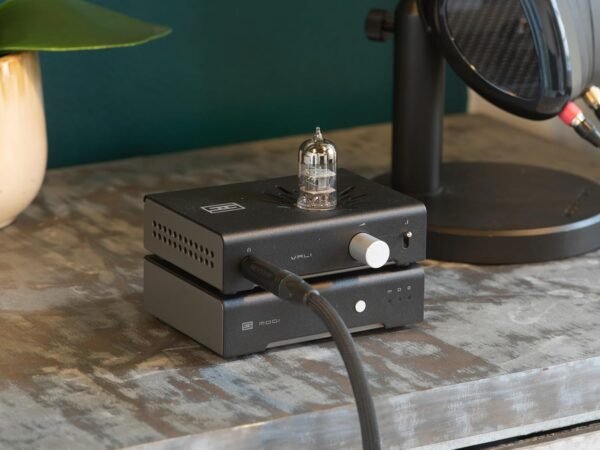
The Vali 3 is also a preamplifier. Schiit lists preamp outputs for powered monitors or a speaker power amplifier, which means the same volume knob can serve headphones and desktop speakers. That turns it into the control center of a desk system rather than a headphone accessory, and it is a meaningful addition at this size.
Compatible sources are listed as any analog source, including a CD player, a television, a receiver or an outboard digital to analog converter. That last point matters: this is an amplifier only, with no digital inputs and no converter inside. A computer based system needs a separate converter, whether that is a desktop unit or a portable device such as the AudioQuest DragonFly Red used as a source.
Schiit positions the amplifier as delivering enough power for demanding headphones while keeping a low noise floor for sensitive ones. Those two goals pull against each other in practice, and a stated gain switch with two settings is the usual way a designer addresses it. Planar magnetic headphones such as the HIFIMAN Sundara sit at the demanding end of that range.
The hybrid arrangement itself is worth understanding, because the word tube on a product does not mean the same thing everywhere. In a full tube amplifier, valves handle both voltage gain and the output stage, which requires an output transformer and adds cost, heat and weight. In a hybrid, the tube handles the small signal stage where its character is introduced, and a solid state output stage delivers current to the headphone. That combination is how a compact, light and comparatively affordable amplifier can still offer some of the sonic signature associated with valves, and it is why hybrids dominate this end of the market rather than full tube designs.
Highlights
- Tube hybrid design with a discrete Class AB bipolar output stage and no chip amplifiers.
- Single 6N3P tube supplied, with several documented alternatives for tube rolling.
- Tube plate voltage of 100 volts, higher than many designs in this class.
- Preamplifier outputs for powered monitors or a speaker power amplifier.
- Two gain settings to suit both sensitive and demanding headphones.
- Compact metal chassis at 5 by 3.5 by 2.75 inches and 1 pound.
- Country of origin listed as the United States, with an external power supply included.
Things To Consider
Tubes are consumable parts. A vacuum tube has a finite life measured in thousands of hours and will eventually need replacing, which is an ongoing cost that solid state equipment does not carry. Tubes also take a short time to warm up before the amplifier performs consistently, and they can develop microphonics, meaning they pick up mechanical vibration and turn it into audible noise. None of this is a fault; it is the nature of the technology, and it is worth understanding before a first tube purchase.
The rating sample is very small. Twenty eight ratings on a product first listed in May 2024 is not enough to establish a reliability record, although Schiit has a long history in this category.
The listing publishes no output power figures into any load, no output impedance, no frequency response and no gain values. For an amplifier those are the numbers that determine headphone compatibility, and their absence means the manufacturer specification sheet is needed rather than optional. The marketing text makes strong comparative claims about competing products, and those are the manufacturer own claims rather than measurements published here.
Two specification fields conflict. Control Method reads Touch while Controller Type reads Switch and Knob, and the description makes clear this is a physical knob and switch design with no touch interface. An Is Autographed field appears as well, which is a template artifact. There is also no digital input of any kind, so a converter is a required additional purchase for computer use.
Who it suits
The Vali 3 suits a desktop listener who wants to try tube equipment without a large outlay, an owner of demanding headphones who also wants a preamplifier for powered monitors, and anyone who enjoys the tinkering that tube rolling allows. The single tube design keeps that experimentation affordable.
It is the wrong purchase for anyone who wants a converter built in, for a buyer who wants published measurements before ordering, and for someone who prefers equipment with no consumable parts. Those buyers should compare the all in one units in the amplifiers category, and check the drive requirements of anything in the over ear headphones category before matching the two.