




Description
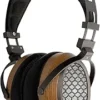
SIVGA P2 PRO: a planar magnetic headphone in a red oak shell
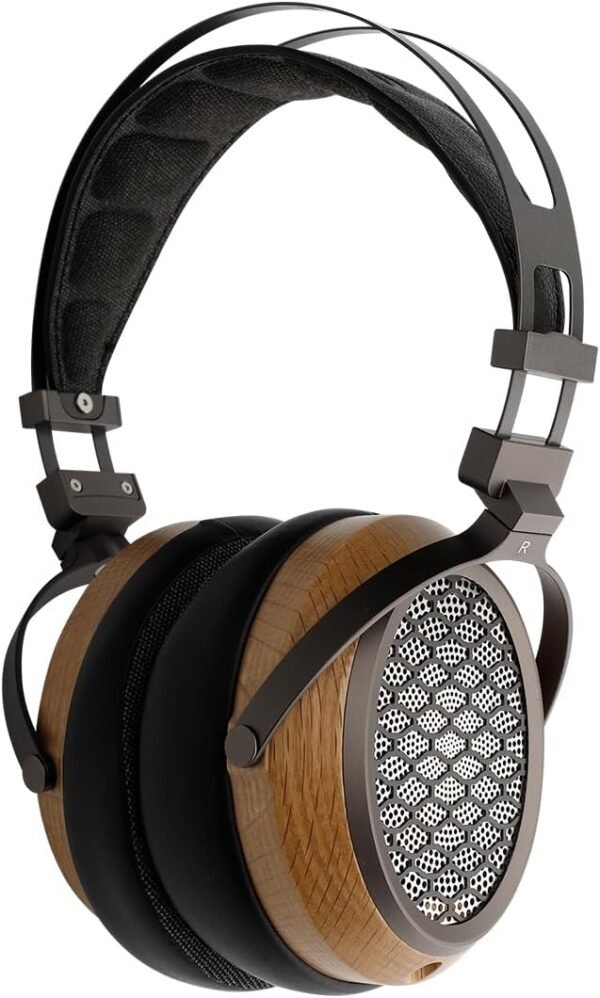
The SIVGA P2 PRO is a wired, open backed style over ear headphone built around a planar magnetic driver and housed in red oak. SIVGA lists the material explicitly, and the wood is not only decorative: a rigid natural enclosure is a common choice among smaller headphone makers because it can be machined into a shape that controls internal reflections without the resonances of thin plastic. The listing places the recommended use as music, hi fi and studio listening, with compatible devices given as smartphones, laptops, MP3 and MP4 players, music players and outboard digital to analog converters.
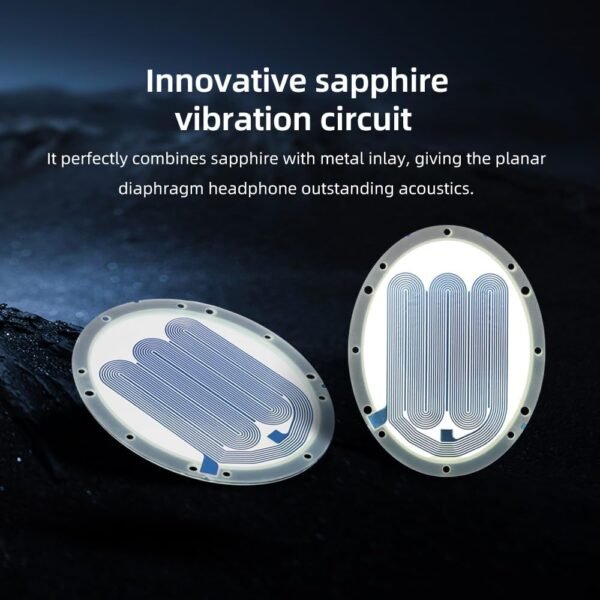
Planar magnetic drivers work differently from the dynamic drivers in most headphones. Instead of a cone driven by a voice coil at its center, a planar uses a thin diaphragm with a conductive trace suspended in a magnetic field, driven evenly across its whole surface. The practical consequence is usually lower distortion and a fast transient response, at the cost of weight and of needing more current to drive properly. That last point is the one buyers underestimate, and it is why planar headphones are so often paired with a desktop amplifier such as the HIFIMAN EF400 rather than run from a phone.
Specifications, and where the listing is incomplete
SIVGA gives a sensitivity of 98 dB and a weight of 15.3 ounces. That weight is significant. A planar driver assembly plus a wooden cup produces a headphone roughly twice the mass of a lightweight consumer model, and the headband and pad design carry the burden of distributing it. The earpiece shape is listed as oval, which is the shape that generally suits more ear sizes than a round cup.
The frequency information in the listing is where care is needed. It appears twice, once as Frequency Response given as 40 KHz and once as Frequency Range given as 40000 Hz. Both are the same figure expressed two ways, and both state only an upper limit. No lower bound is published anywhere in the data, so there is no stated bass extension figure to compare against another headphone. A 40 kHz upper limit is a high resolution audio marketing figure rather than an audible specification, since human hearing does not extend anywhere near it.
One field in the listing is simply wrong for the product. Control Method is given as Touch, which cannot apply to a passive wired headphone with no electronics in the cups. The same table correctly lists Connectivity Technology as Wired, Wireless Communication Technology as No and Noise Control as None, all three of which contradict the presence of any touch control. Read the Touch entry as an import artifact. The listing also contains an Is Autographed field marked No, which is a template field from a completely different product category.
Cables, adaptors and what comes in the box
The accessory set is more thoughtful than the price class usually allows. SIVGA lists a detachable cable, a 3.5 mm female to 6.35 mm male adaptor for desktop amplifiers and interfaces, a 4.4 mm female to 3.5 mm male adaptor for balanced sources, a leather carrying case and a hemp bag. The 4.4 mm adaptor matters to anyone using a portable player or dongle with a balanced output, and its inclusion signals that SIVGA expects these to be driven by dedicated audio hardware.
A detachable cable is the single most useful longevity feature on any headphone, since cables fail long before drivers do. Buyers comparing this against studio staples such as the Audio-Technica ATH-M40x will find the same detachable principle applied at a much lower cost, though with a dynamic driver instead of a planar one.
Highlights
- Planar magnetic driver in a red oak enclosure, listed with 98 dB sensitivity.
- Wired only, using a 3.5 mm jack with a detachable cable.
- Ships with 6.35 mm and 4.4 mm adaptors, a leather carrying case and a hemp bag.
- Oval earpieces, listed weight of 15.3 ounces.
- Stated use case is music, hi fi and studio listening.
- Compatible devices listed include outboard digital to analog converters and laptops.
- First listed in June 2024, with 4.5 stars across 7 ratings at the time the data was captured.
Things To Consider
Weight is the first practical limitation. At 15.3 ounces this is a heavy headphone, and comfort over a long listening session depends entirely on clamp force and pad geometry, neither of which is described in the listing. Anyone who has found a lightweight portable model such as the Grado SR60x comfortable should not assume the same of a wooden planar at nearly double the mass.
Drive requirements are the second. Sensitivity of 98 dB is respectable for a planar, but planar drivers typically present a low and largely resistive impedance, and the listing gives no impedance figure at all. Without it, there is no way to predict from the data how the headphone behaves on a phone dongle. Budgeting for a headphone amplifier is the safer assumption, which pushes the true cost of ownership above the sticker.
The absence of any noise control is worth stating plainly. There is no active noise cancellation and no sealed isolation claim, so this is a headphone for quiet rooms. It is unsuited to commuting, open offices and air travel. There is also no water resistance, no microphone and no inline remote, so it will not serve for calls or exercise.
Finally, the review base is small. Seven ratings is not enough to establish a reliability record, and SIVGA is a smaller manufacturer than the established names in this category. Buyers who want a long track record behind a planar purchase may prefer the HIFIMAN Sundara or the Audeze LCD-2 Classic, both of which use the same driver technology with far more history behind them.
Who it suits
The P2 PRO makes sense for a home listener who already owns a headphone amplifier or a capable digital to analog converter, who listens in a quiet room, and who values build materials and driver technology over portability or features. The adaptor set makes it straightforward to move between a desktop rig and a balanced portable source.
It is the wrong headphone for commuting, for calls, for exercise, and for anyone who intends to drive it from a laptop headphone jack without an amplifier. Those buyers are better served by a closed, lighter, more efficient design. Compare the alternatives in the over ear headphones category, and look at the amplifiers category before committing, since the amplifier decision affects a planar headphone more than it affects almost anything else.