Description
What the Bose CineMate GS Series II Is
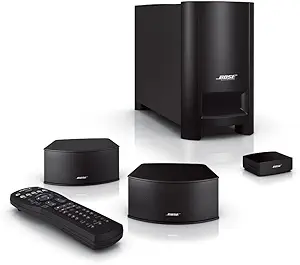
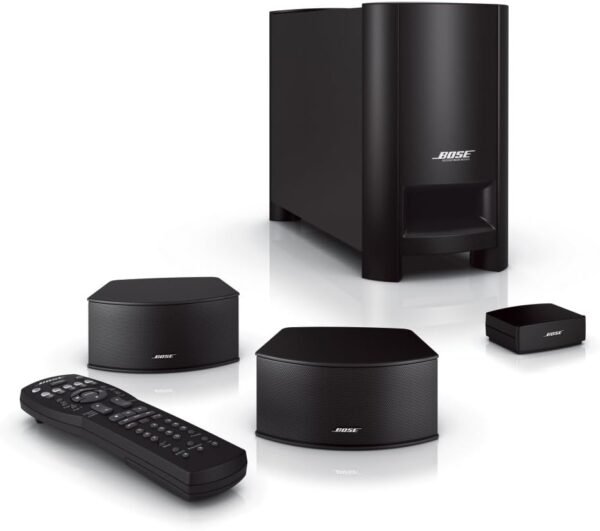
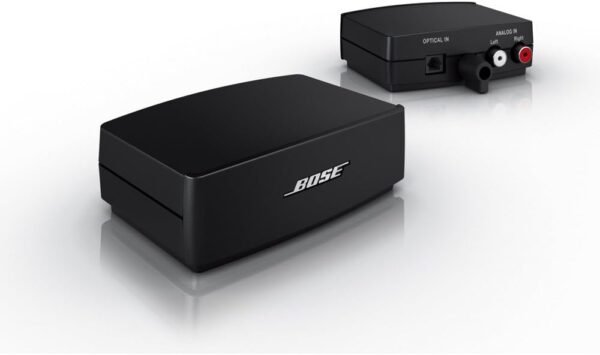
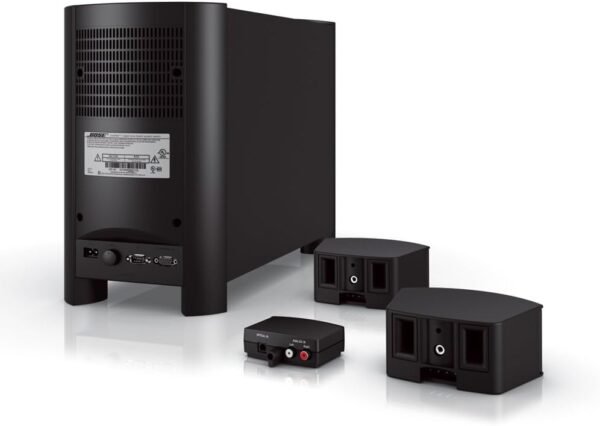
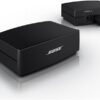
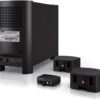
The Bose CineMate GS Series II is a packaged home theater system built on the approach Bose used for many years: two small satellite speakers, a bass module that handles low frequencies and houses the electronics, and a single interface box that connects to a television. The listing describes a compact and unobtrusive design, a universal remote, a simple setup process, and an emphasis on dialogue clarity at lower volumes.
That architecture was Bose answer to a real problem. A conventional home theater needs five speakers and a receiver, and most living rooms cannot accommodate that without visible compromise. Reducing the room presence to two small satellites and a hidden bass module made surround sound acceptable in spaces where a component system would never have been installed. The trade is that the system is closed: the speakers, the electronics, and the processing are designed together and cannot be mixed with other equipment. Buyers comparing packaged systems can browse the home theater systems category.
The Two Speaker Approach
A two satellite system with a bass module handles surround content differently from a five speaker layout. Rather than placing discrete sounds at five positions in the room, it uses processing to create a wider apparent soundstage from two positions plus the bass module. The result is broader than television speakers by a wide margin, and it is not the same as having a physical speaker behind each ear.
There is a specific consequence for dialogue, which the listing highlights. Without a dedicated center channel speaker, the dialogue that a soundtrack places in the center is produced by the two satellites together, positioned by the ear because both play the same signal at the same level. That works well when the listener sits between the speakers and degrades as they move off center. Anyone whose main complaint is that they cannot follow speech in films should understand that a dedicated center channel speaker such as the Klipsch R-34C center channel speaker addresses that problem more directly, though it requires a receiver.
Setup, Remote, and Living With It
The listing emphasizes minimal connections and a straightforward installation, which is consistent with the design philosophy. A system where all the electronics live in one module means one power connection, one cable to the television, and speaker cables to two satellites rather than to five. For a household without an equipment rack, that is the difference between a system that gets installed and one that stays in the box.
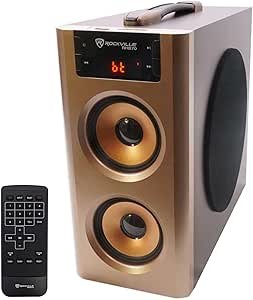
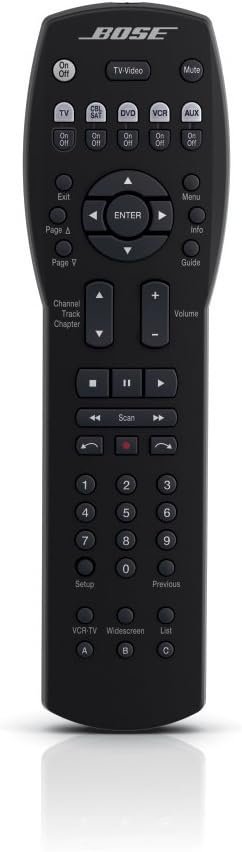
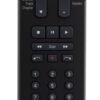
The universal remote is a genuine convenience feature that is often overlooked. A home theater system adds a remote to a household that already has one for the television and one for a streaming device, and a remote that can control several of them reduces the pile. It also means the system volume and the television are operated from one place, which matters daily. Listeners considering a modern alternative to the whole approach should look at a soundbar such as the Sony HTX8500 Dolby Atmos soundbar, which collapses the satellites into one cabinet, or the packaged Rockville RHB70 home theater speaker system for a component style layout.
Highlights
- Two satellite speakers with a separate bass module housing the system electronics.
- Compact room presence, designed to be unobtrusive in a living space.
- Universal remote that can control the system alongside other connected devices.
- Simple installation with few connections compared with a component system.
- Tuning that emphasizes dialogue intelligibility at moderate volumes.
Things To Consider
The imported record for this product is completely empty. There is no manufacturer description and no specification table of any kind. That means this page cannot state the number of drivers, the bass module size, the amplifier power, the input connections, whether HDMI is supported, which audio formats are decoded, the dimensions, or the weight. For a home theater system, the input list and the supported formats are decisive, since a system that predates current connection standards may not accept audio from a modern television at all.
That gap matters especially here because the CineMate GS Series II is a long established product rather than a current release. Buyers should confirm before ordering how the system connects to a modern television, whether an optical output on the set will work, and whether Bose still supports the product. Anyone buying an older packaged system should also consider replacement part availability, since a closed system with a failed bass module cannot be repaired by substituting a component from elsewhere.
The design has structural limits worth stating plainly. Two satellites cannot produce discrete rear channel effects, so a film mixed for surround will be presented in a widened stereo form rather than with sounds behind the listener. There is no dedicated center channel. A proprietary system cannot be upgraded piece by piece, so improving any part of it means replacing all of it. And the marketing bullets on this listing are subjective throughout, describing immersion, style, and clarity without any measurement, so this page reports them as claims rather than findings.
Who Should Buy It and Who Should Not
This system suits a household that wants a clear improvement over television speakers with minimal visual intrusion and minimal installation, and that values simplicity over configurability. The compact satellites and the single connection to the television make it a reasonable fit for a living room where a component system would be unwelcome.
It is the wrong purchase for anyone who wants true surround with speakers behind the seating, for anyone building a system they intend to upgrade over time, and for a buyer who needs the connection and format support confirmed before ordering, since this listing provides no specifications at all. Those buyers should look at a modern soundbar package with a wireless subwoofer, at a component system built around a receiver, or at adding low frequency support with a unit from the subwoofers category.