
Description
What the Edifier W830NB Offers
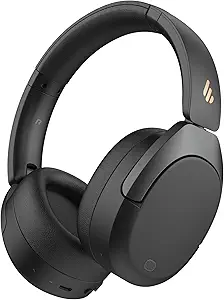
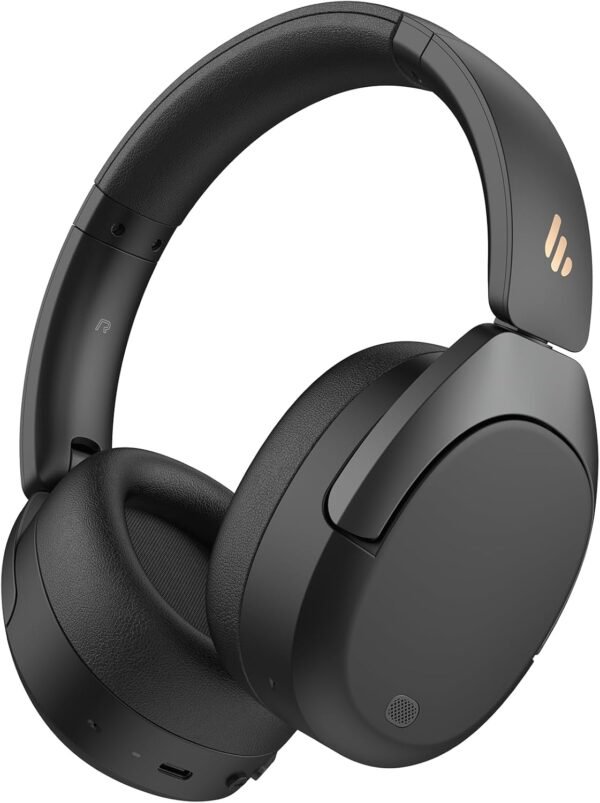
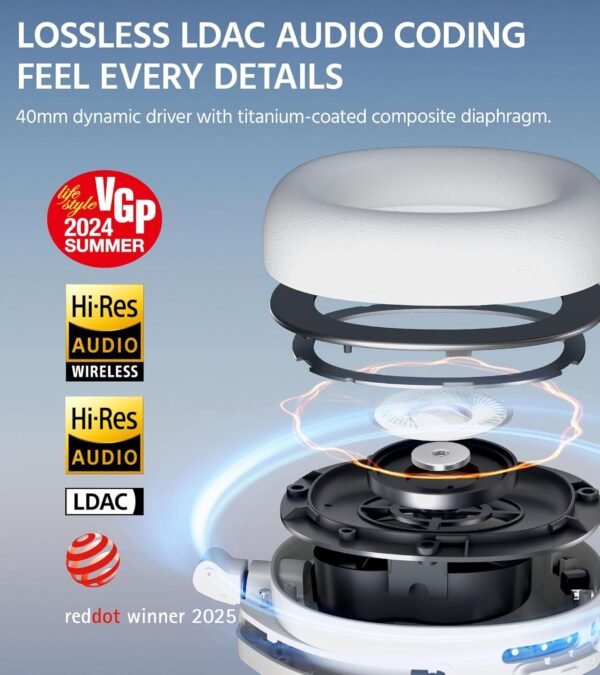
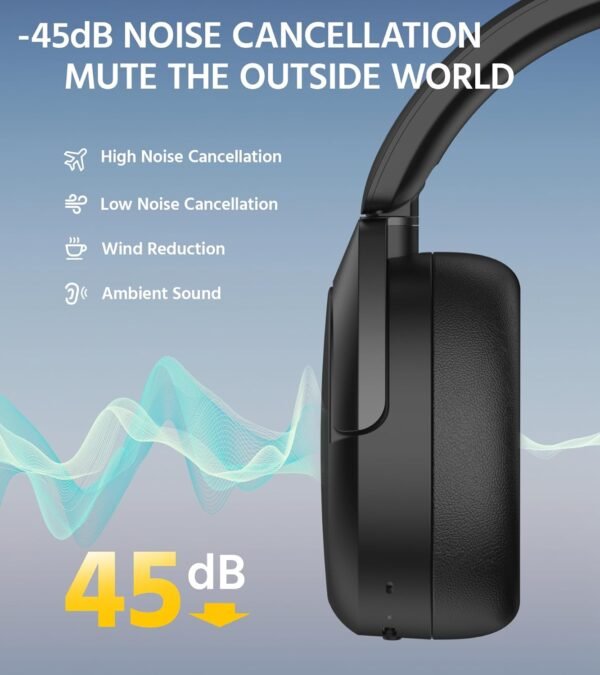
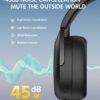
The Edifier W830NB is a wireless over ear headphone with active noise cancellation, positioned around a specific set of numbers: a cancellation depth quoted at 45 decibels, 94 hours of playtime, LDAC support for high resolution wireless audio, spatial audio processing, fast charging, multipoint connection, and Bluetooth 5.4. The listing specifies 40 mm dynamic drivers, a frequency range of 20 Hz to 40,000 Hz, and a listed weight of 9.4 ounces.
That combination places it in a competitive part of the market where the expected features are largely settled and manufacturers compete on how many of them appear at a given level. What distinguishes this listing is the battery figure, which is unusually high for a cancelling headphone, and the inclusion of LDAC, which is a codec more often found on higher priced models. Shoppers comparing across the same class will find the alternatives collected in the over ear headphones category.
Cancellation, Codecs, and Spatial Audio
The cancellation figure of 45 decibels describes the maximum attenuation the system is rated to achieve, and it needs context to be useful. Manufacturers measure this at the frequency where their system performs best, which is almost always in the low bass region where engine and cabin noise sit. It does not mean the world becomes 45 decibels quieter across the board. Cancellation of speech and sudden sounds remains far weaker on every product in the category, because those signals are too unpredictable to invert in real time.
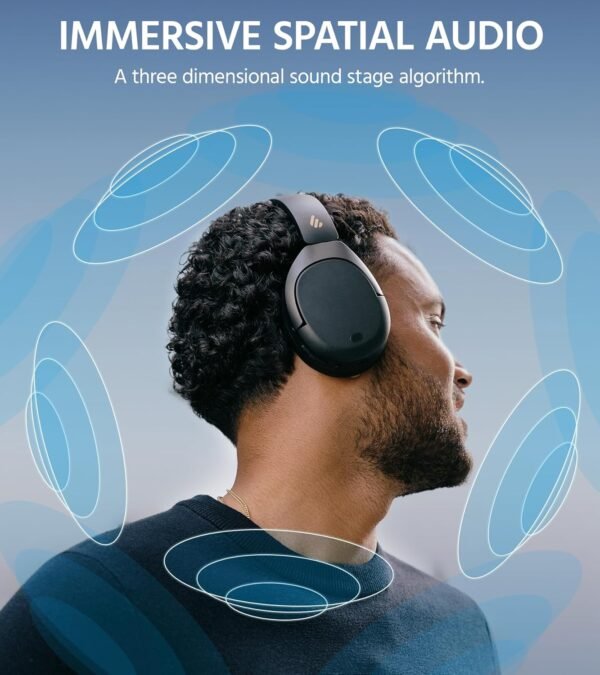
LDAC is a Sony developed codec that carries more data than the standard SBC and AAC codecs, and it requires support at both ends. An Android phone that supports LDAC can use it, and an iPhone cannot, so buyers should confirm that their source device supports the codec before treating it as a feature they will use. Spatial audio is a processing mode that widens the apparent sound stage, and implementations vary widely between manufacturers with no common standard behind the term. Multipoint connection, which allows the headphone to hold two device connections at once, is the feature on this list most likely to be used every day by someone working across a laptop and a phone. Listeners who want a simpler wired alternative can compare the Audio-Technica ATH-M40x studio monitor headphones.
Battery, Charging, and Controls
The 94 hour figure is the headline and the number most in need of careful reading. Battery life on a cancelling headphone depends heavily on whether cancellation is switched on, and manufacturers typically quote the higher figure with cancellation off. This listing states 94 hours in the battery life field without saying which condition it applies to, so a buyer should expect real world runtime with cancellation active to be meaningfully lower, and should get the two separate figures from Edifier if the number matters.
Charging is over USB-C, and the listing gives a charging time of 15 minutes, which is a fast charge figure describing how long a top up takes to yield a useful amount of playback rather than a full charge time. The cable is described as detachable, and the control method is listed as an application alongside physical buttons, so settings such as equalization and cancellation mode are likely adjusted through a phone app. App dependence is worth considering as a long term factor, since a discontinued application can remove access to features on a headphone that otherwise still works. Listeners who prefer physical control with no app in the chain will find simpler options such as the Sennheiser HD 400S headphones.
Highlights
- Active noise cancellation rated at 45 decibels of attenuation at its most effective frequencies.
- 40 mm dynamic drivers with a listed frequency range of 20 Hz to 40,000 Hz.
- LDAC codec support for higher bitrate wireless audio on compatible Android devices.
- Multipoint connection over Bluetooth 5.4, holding two device connections at once.
- Battery quoted at 94 hours with USB-C charging and a 15 minute fast charge.
Things To Consider
Several fields on this listing are wrong. The cartoon character field reads Black, which is a color and not a character. The frequency response field reads 20 Hz on its own, which is half of a range. The Bluetooth range field reads 1E+1 meters, which is 10 meters written in scientific notation. The recommended uses list includes Radio Communication, which no consumer headphone is designed for. The headphones jack field reads Type-C, which is the charging connector rather than an analog jack, and the listing does not clarify whether wired listening over USB-C is supported.
The product title as originally imported was the raw marketplace title, a run of specifications with no sentence structure. It has been rewritten here to read as a title while keeping the brand, the model, and the specifications that matter, and the page address is unchanged.
The real limitations are the ones that follow from the design. The listing states the headphone is not water resistant, so this is not a gym product. Cancellation performance and spatial audio quality cannot be judged from any specification, and buyers should treat both the decibel figure and the spatial audio claim as descriptions of intent rather than of outcome. The very high battery figure almost certainly assumes cancellation is off. And with a first availability date in 2024 and 1,127 ratings on the listing, the ownership record is reasonable but still short, which matters for a product whose features depend on continuing app and firmware support. Buyers who want a long established alternative can compare the Beats Solo Pro wireless noise cancelling headphones.
Who Should Buy It and Who Should Not
The W830NB suits a commuter or a traveler who wants deep cancellation, very long battery life, and multipoint pairing across a laptop and a phone. It suits Android users in particular, since LDAC support only pays off on a device that speaks the codec. Anyone who dislikes charging headphones frequently will find the battery figure attractive even after discounting it for cancellation being active.
It is the wrong choice for exercise, since the listing states no water resistance, and for anyone who wants a headphone that works fully without an app. Buyers who mainly want awareness rather than isolation should look at the open ear headphones category, and those who want a smaller product for the same commute should compare the SoundMAGIC E80D USB-C in ear headphones.