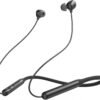



Description
What a Neckband Design Is For
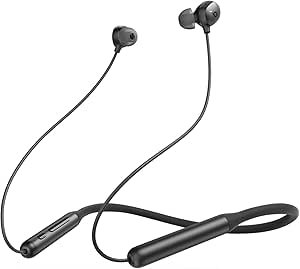
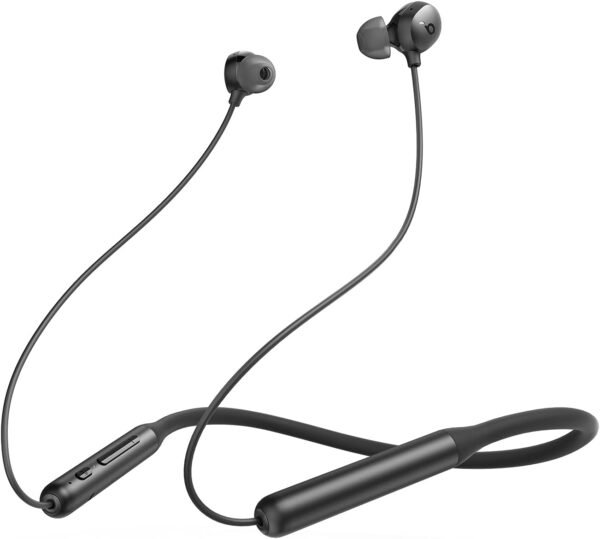
The Soundcore Life U2i is a neckband headphone, a form factor that sits between true wireless earbuds and a full-size wireless headphone. Two earbuds are connected by a flexible band that rests around the neck, with the battery and electronics distributed along it. Anker’s Soundcore line has kept producing them while much of the market moved to true wireless, and the reasons are worth setting out because they are not obvious.
The first is that the earbuds cannot be lost individually. When they are removed from the ears they hang around the neck, which for anyone who has dropped a true wireless bud down a drain or onto a train track is a substantial practical advantage. The second is battery capacity: a neckband has room for a much larger cell than a bud does, which is how Soundcore reaches a rated 24 hours from the product itself rather than from a charging case. Buyers weighing the alternatives should compare true wireless designs in the earbud headphones category, such as the Occiam T9.
Battery: 24 Hours Without a Case
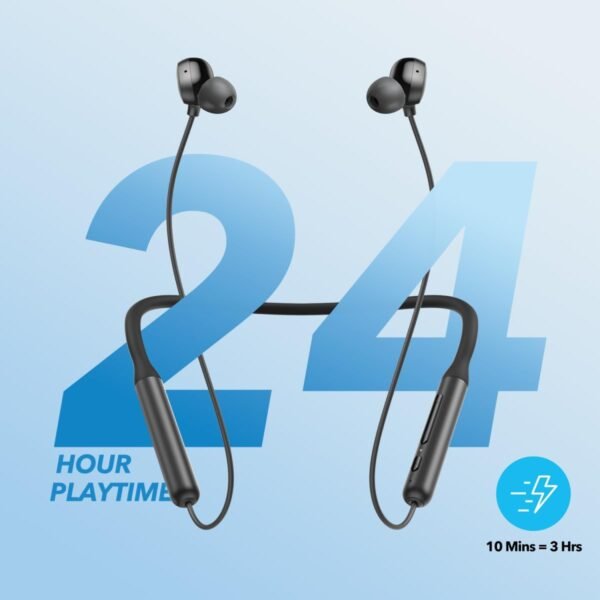
The 24 hour figure needs reading carefully because it is measured differently from the numbers on true wireless listings. A true wireless product advertising 30 hours typically means 6 hours from the buds and the remainder held in the case, meaning listening must stop while the buds recharge. The U2i’s 24 hours is continuous: the headphone plays for the full period without being put away.
For a long flight, a full working day or a commute at both ends of a shift, that distinction matters more than the headline number. Soundcore also quotes a fast charge giving 3 hours of playback from 10 minutes on USB-C, which covers the case where the headphone was left flat overnight. As with every manufacturer figure, these are measured at moderate volume and will fall short under heavy use.
Drivers, BassUp and the EQ Modes
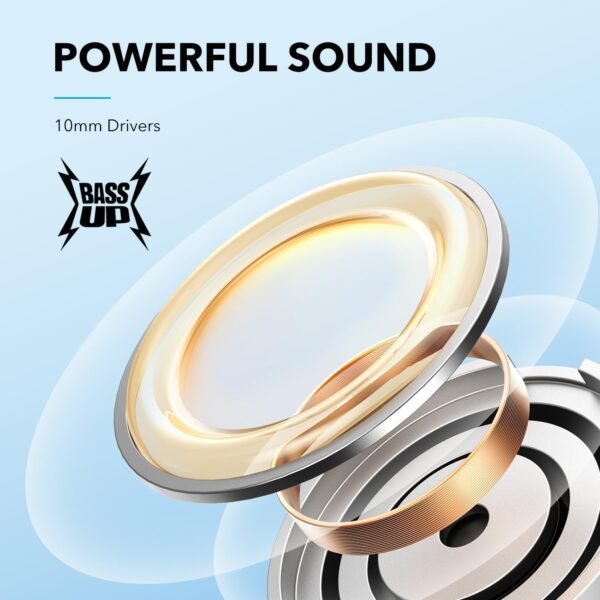
The drivers are 10 mm dynamic units, and Soundcore layers its BassUp processing over them. BassUp is a digital signal processing boost applied in the low frequencies rather than a hardware property, and Soundcore ships two EQ modes so it can be selected or avoided. That is a reasonable implementation, because a permanent bass boost becomes tiring and masks vocal detail.
What the listing does not provide is any meaningful frequency information; the single specification field reads “20000 Hz”, which is not a range and conveys nothing. Ten millimetres is a common driver size at this level and the honest expectation is competent rather than remarkable sound. Listeners who want to hear what a serious wired in-ear delivers for similar money should look at the MEE audio M6 or, a step up, the multi-driver designs in the same category.
Calls and What the AI Algorithm Actually Does
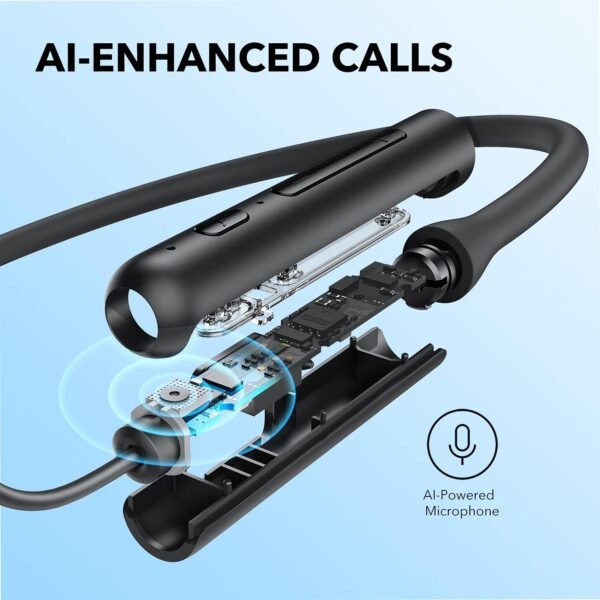
Soundcore describes a built-in microphone with an AI algorithm that isolates the wearer’s voice. This is call-side processing: it improves what the person on the other end of the call hears, and it does nothing about noise reaching the wearer’s ears. The specification block confirms this by listing noise control as “None”, meaning there is no active noise cancellation on this product at all.
That distinction is worth being blunt about, because the phrase noise reduction appears constantly on earbud listings and means two entirely different things depending on which side of the call it applies to. Anyone shopping for quiet on a train needs active cancellation, which the U2i does not have. Buyers who need it at a modest price should look at the JBL Tune 660NC or the Xiaomi Redmi Buds 6 Active comparison for what is and is not included at this level.
Fit, Materials and Durability
The band is described as ultra light and bendable with a contoured shape, made from polycarbonate and ABS plastics, and the listed weight is 0.96 ounces. A neckband that holds its shape is important: a band that flops around transmits every movement into the ears, and one that is too rigid presses on the collarbone. Soundcore’s approach of a bendable band is a middle path, and it also allows the product to fold for storage.
IPX5 covers water projected from a nozzle, which in practice means sweat and rain but not immersion. A pair of ear tips and a USB-C cable are included alongside the manual. For outdoor exercise where hearing traffic matters, a neckband still seals the ear canal, so the open-ear headphones category is the safer direction.
Highlights
- 24 hours of continuous rated playback without needing to return to a case.
- Earbuds hang around the neck when removed, so they are far harder to lose.
- 10 minute fast charge giving a stated 3 hours of listening.
- Two EQ modes, so the BassUp processing is optional rather than permanent.
- IPX5 rating for sweat and rain.
- USB-C charging and a foldable, bendable band.
Things To Consider
The specification block contains several fields that do not belong. It lists a “Cartoon Character” of “Sports”, a cable feature of “Retractable” on a product with no retractable cable, and gives both a control method of “Touch” and a controller type of “Button” in the same table. The frequency response field holds a single number rather than a range. None of these describe the product, and the listing carries no customer rating data at all, so there is no aggregate feedback to weigh.
- No active noise cancellation: the noise processing is for calls only.
- Bluetooth 5.0, older than most current competitors.
- No codec information is published anywhere.
- A neckband is visible in a way true wireless buds are not, which some people dislike.
- IPX5 covers spray, not immersion.
- No ratings on this listing, so there is no user feedback to draw on.
Who Should Buy It and Who Should Skip It
The U2i suits someone who keeps losing true wireless earbuds, who wants a full day of continuous listening without a charging case in a pocket, and who mostly takes calls and listens to podcasts rather than critical music. It also suits a work environment where earbuds go in and out repeatedly, since hanging them around the neck is faster and safer than opening a case each time.
Skip it if you want silence on a commute, because there is no active cancellation here. Skip it too if the neckband form factor is something you already know you dislike, or if sound quality is the priority, where a wired in-ear at the same price will comfortably outperform it. Anyone who needs both cancellation and a long single-charge runtime should be looking at full-size wireless headphones instead.