
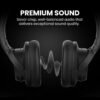
Description
What the Avantree Ensemble Solves
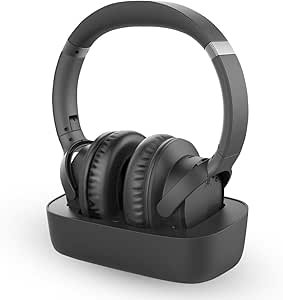
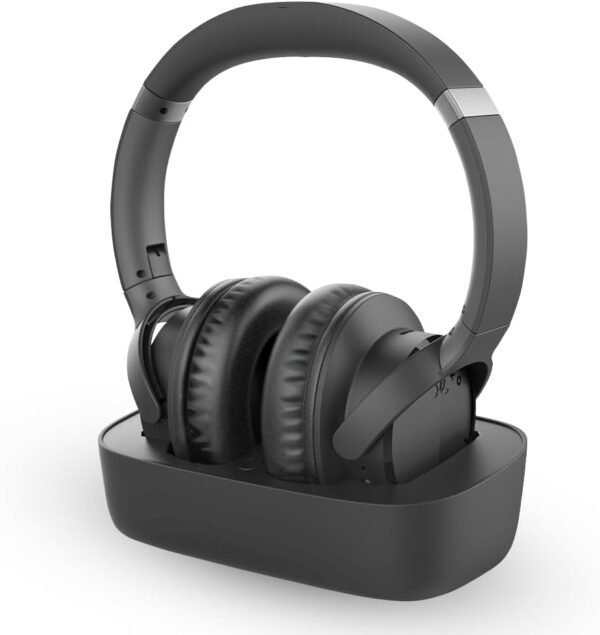
The Avantree Ensemble is a wireless television headphone system sold as a matched pair: a set of over ear headphones and a combined transmitter and charging dock. That pairing is the entire point. Buying a Bluetooth headphone and hoping a television will connect to it is where most people run into trouble, because many televisions have no Bluetooth at all, and many that do introduce a lip sync delay or refuse to pair with anything but a soundbar. A system that ships with its own transmitter removes that uncertainty.
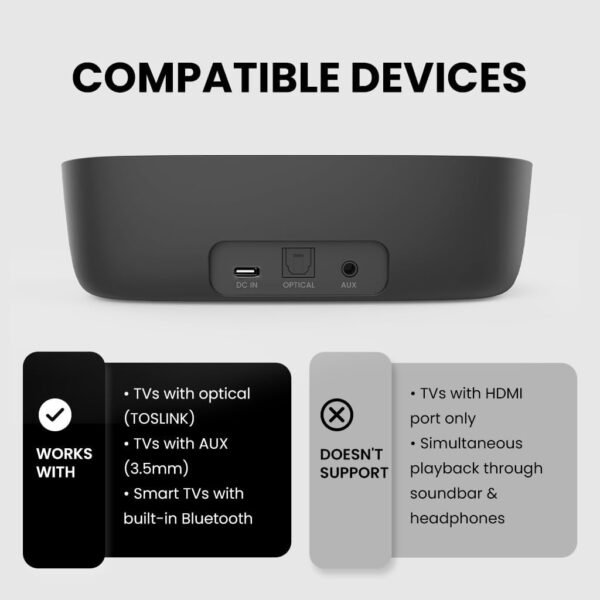
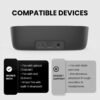
The listing specifies compatibility with televisions that have optical, 3.5 mm auxiliary, or Bluetooth audio outputs, and includes an optical cable, a 3.5 mm cable, and a power cable for the transmitter in the box. Optical is the connection that matters most, since it is present on the majority of televisions and carries a clean digital signal. Buyers who already own headphones and only need the transmitter side should look at the 1Mii B03 Bluetooth audio adapter instead.
Latency, the Feature That Actually Matters
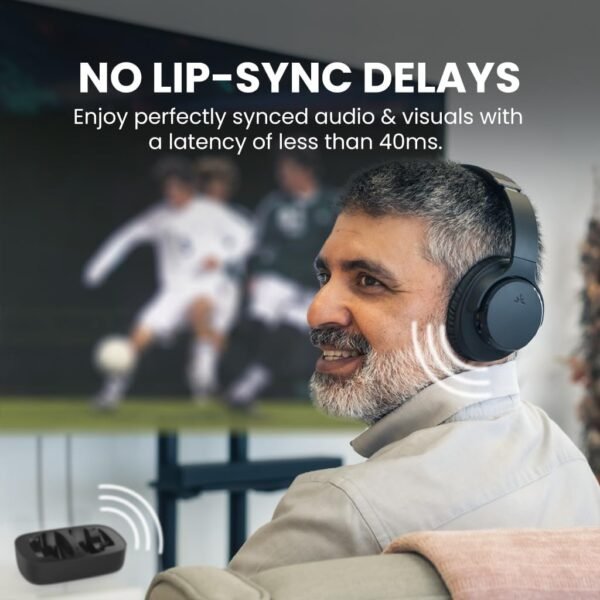
The specification that decides whether a wireless television headphone is usable is audio latency, and this listing states it plainly at 40 milliseconds. That number deserves explanation. Human perception of lip sync error becomes noticeable somewhere around 45 to 50 milliseconds for audio lagging video, and standard Bluetooth links using the common SBC codec frequently run at 150 milliseconds or more, which is unmistakably wrong on any close up of a face.
Forty milliseconds sits below the usual threshold of annoyance, which is why a matched transmitter and headphone system can work where a generic pairing does not. It is achieved by controlling both ends of the link rather than by any single component. This is the strongest technical argument for buying a system rather than assembling one, and it is the reason the listing leads with minimal audio delay. Listeners who want a wired connection with no delay at all can look at the Sony MDR-ZX110NC on ear headphones, which trade freedom of movement for a cable.
Battery, Dock, and Comfort
Battery life is listed at 35 hours with a charging time of 2 hours, and the transmitter doubles as the charging dock. That combination is more thoughtful than it first appears. A dock means the headphones have an obvious home when not in use, and they charge simply by being put back rather than by plugging a cable in. For anyone who struggles with small connectors, or who would otherwise leave headphones flat on a side table, a dock removes the most common failure in daily use.
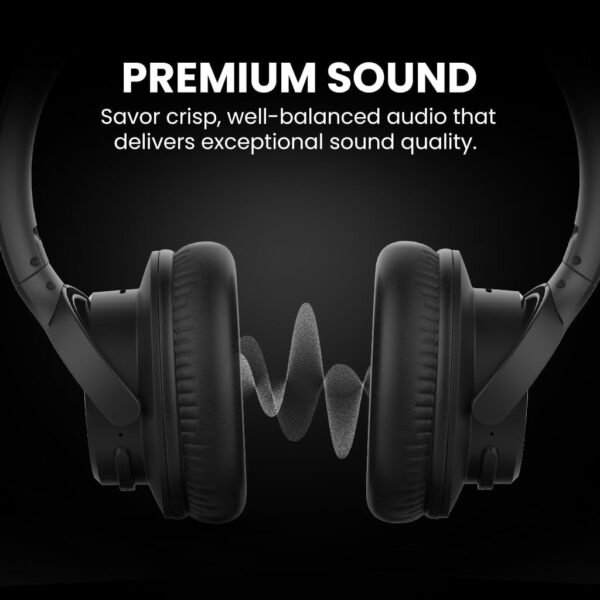
The listing gives the weight as 8.3 ounces, the material as ABS plastic, the earpiece shape as over ear, and the noise control as passive isolation, meaning the headphones block sound by covering the ear rather than by electronic cancellation. Bluetooth version 5 is listed with a range given as 100 feet. The frequency range is quoted at 20 Hz to 20,000 Hz. Buyers wanting a headphone with active cancellation for other uses should compare the over ear headphones category, since this design is optimized for television rather than for travel.
Highlights
- Matched headphone and transmitter system, removing television pairing uncertainty.
- Audio latency stated at 40 milliseconds, below the usual threshold for visible lip sync error.
- Optical, 3.5 mm, and Bluetooth input options, with optical and auxiliary cables included.
- Transmitter doubles as a charging dock, so the headphones charge by being put away.
- Battery listed at 35 hours with a 2 hour charge time, at a listed weight of 8.3 ounces.
Things To Consider
A few specification fields do not describe the product. The battery field claims one CR5 battery is required and included, which does not match a rechargeable headphone that charges on a dock. The water resistance level reads Water Resistant, which is an odd claim for a television headphone and is unsupported by any rating. The control method reads Touch while the control type reads Button Control, describing the same interface two contradictory ways. The Bluetooth range is written as 1E+2 feet, which is 100 in scientific notation. The theme field simply repeats the television compatibility sentence.
The genuine considerations are more useful. A transmitter connected to the television optical output usually needs the television audio format set to PCM stereo, because a compressed surround format sent down the optical cable cannot be decoded by a simple transmitter, and the usual symptom is silence rather than an error message. This is the single most common setup problem with any product of this type and it is worth knowing in advance.
The product is positioned in the title for seniors, which reflects the market it sells into rather than any limitation, and the design choices support it: a dock instead of a cable, buttons rather than gestures, and one system that works rather than a pairing exercise. That said, a single headphone system means only one person can listen wirelessly unless the transmitter supports a second connection, which this listing does not confirm. And passive isolation on a television headphone is a mixed blessing, since covering the ears reduces awareness of a doorbell or a phone as well as of household noise. The listing shows a 4.4 star average across 13,876 ratings, which is a very large ownership record and the most useful evidence available here.
Who Should Buy It and Who Should Not
The Ensemble suits a household where one person wants the television louder than everyone else does, or where hearing loss makes dialogue hard to follow at normal volume. The matched transmitter, the low latency figure, the dock, and the included cables together make it something that can be set up once and used daily without technical maintenance.
It is not the right product for someone who wants headphones for travel and music as well, since it is built around a television transmitter, and it is not the right product for two listeners unless the transmitter supports a second headphone. Buyers with wider needs should look at a general purpose wireless headphone, and those who mainly want dialogue clarity from the television itself should consider a soundbar or a center channel speaker such as the Klipsch R-34C center channel speaker, or a smaller in ear option from the earbud headphones category.