Description
What the Klipsch RP-1000SW Is Built To Do
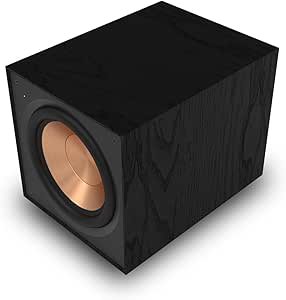
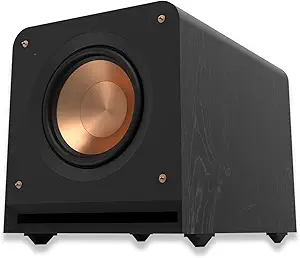
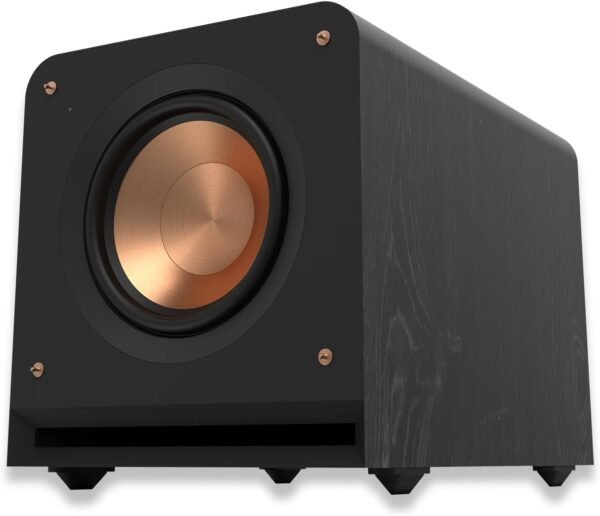
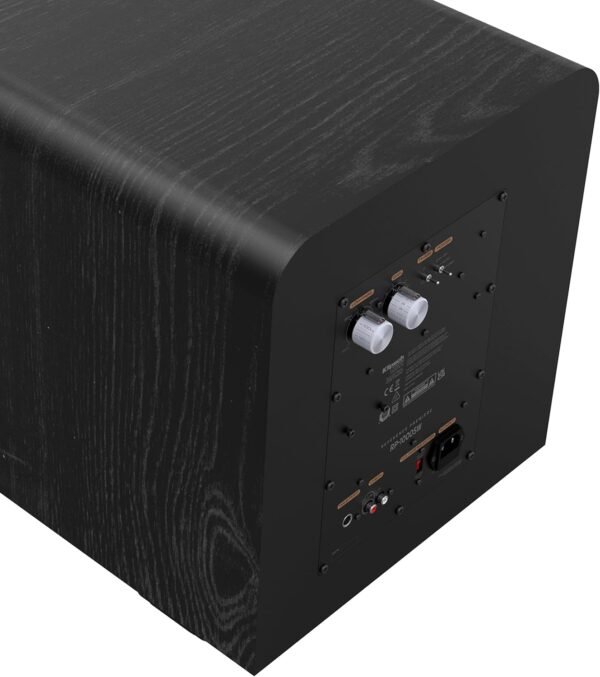
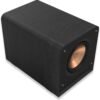
The Klipsch RP-1000SW is a powered subwoofer from the Reference Premiere line, built around a 10 inch high excursion driver in a front firing cabinet. It is a home theater subwoofer first, which shapes every decision in the design: the driver is chosen for excursion rather than delicacy, the amplifier is a Class D design chosen for efficiency and heat behavior, and the port geometry is chosen to move air without audible turbulence.
High excursion is the phrase that matters. A subwoofer produces low frequencies by moving air, and the amount of air a driver moves is the cone area multiplied by how far it travels. A 10 inch cone is not large by subwoofer standards, so Klipsch compensates with travel. That is a legitimate engineering path and it is what allows a relatively compact cabinet to produce meaningful output, but it puts more demand on the motor and the suspension than a larger driver moving a shorter distance would. Buyers comparing approaches at similar sizes can look at the SVS SB-1000 Pro subwoofer and the Klipsch R-101SW subwoofer, which sit either side of it in the market.
Cabinet, Port, and Placement
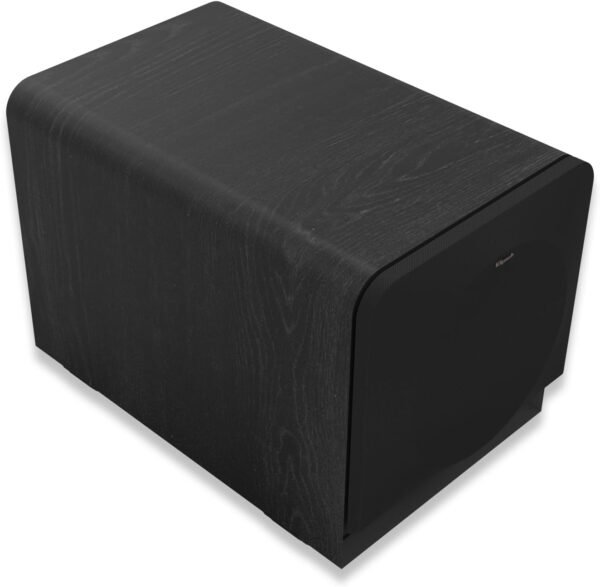
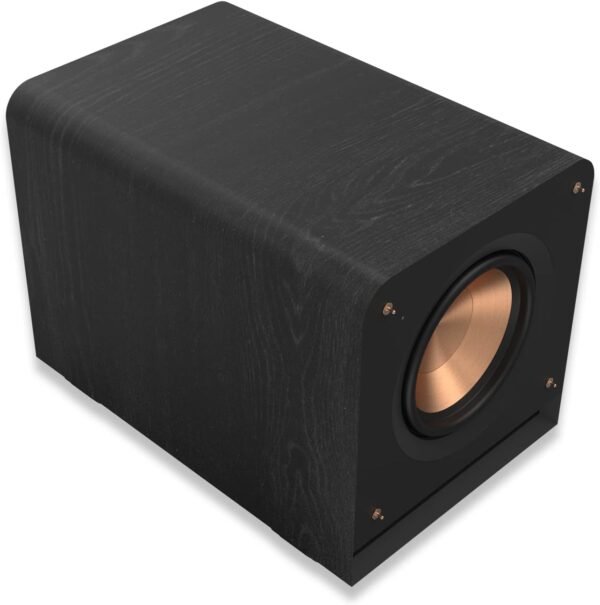
The cabinet is listed as MDF with a vinyl finish in ebony, described as scratch resistant. The stated dimensions are 24.96 inches deep by 15 inches wide by 16.64 inches high, and the weight is given as 55 pounds. That depth figure is the one to check against a room. A subwoofer this deep needs clearance behind or beside furniture, and it is substantially deeper than it is tall, which is unusual and easy to overlook when planning placement from a photograph.
The driver fires forward and the port is a front slot, which Klipsch calls an Aerofoil design and describes as reducing turbulence. The practical benefit of a front port is placement freedom. A rear ported subwoofer needs breathing room behind it or the port output is disrupted, while a front ported cabinet can sit closer to a wall. That said, proximity to a wall still changes low frequency output through boundary reinforcement regardless of where the port is, so placement remains the largest single variable in how a subwoofer performs in a room. Owners integrating a subwoofer into a full system will also want to think about the speakers around it, and the Klipsch R-620F floorstanding speakers show what the matching tower in the range looks like.
Amplification and System Integration
The listing describes a Class D amplifier and frames the choice around efficiency and clean output. Class D is the standard for modern subwoofers for good reasons: it wastes less energy as heat than older designs, which allows a large amount of power in an enclosure that does not need extensive heat sinking, and it keeps the cabinet cooler in a closed cabinet or an entertainment unit. The listing does not give a wattage figure for the amplifier in the imported data, so buyers who want to compare power on paper will need that number from Klipsch.
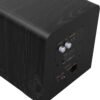
Integration is where most subwoofer purchases succeed or fail. A subwoofer needs a crossover point that hands off cleanly from the main speakers, a level matched to the rest of the system, and often a phase adjustment so the two are not fighting each other at the crossover region. None of that is visible in a specification sheet, and all of it matters more than the driver size. Buyers assembling a system around a receiver will find the crossover management handled there, and the broader subwoofers category shows how differently manufacturers expose those controls.
Highlights
- 10 inch high excursion driver in a front firing configuration.
- Class D amplifier, chosen for efficiency and low heat output in an enclosed space.
- Front slot port that Klipsch describes as an Aerofoil design intended to reduce turbulence.
- MDF cabinet with a scratch resistant ebony vinyl finish.
- Stated 55 pound weight with dimensions of 24.96 by 15 by 16.64 inches.
Things To Consider
The most serious data problem on this listing is a model number conflict. The title and the site identify the product as the RP-1000SW, while the model name field in the specification table reads RP-1400SW, which is a different and larger subwoofer in the same Klipsch line. The listing gives the model two different ways and does not resolve it. Anyone ordering should confirm which unit is actually being shipped, because the two differ in driver size and cabinet volume.
Several other fields are unusable. The wireless communication technology field reads Optical and the connectivity protocol field reads Bluetooth, neither of which describes a subwoofer that connects by a line level cable. The vehicle service type field reads Car, which has no relevance to a home theater product. The woofer diameter and audio driver size fields both read 1E+1 inches, which is 10 inches written in scientific notation. The control method reads Remote with no remote listed among the included components, where the components field lists only the subwoofer itself.
The manufacturer description also contains a marketing claim that this page will not repeat as fact, describing the product as one of the loudest and most efficient home theater subwoofers available. That is an unverifiable comparative claim with no measurement attached. On the practical side, the real limitations are size and weight: at 55 pounds and nearly 25 inches deep, this is not a unit that moves easily between rooms, and the review sample on the listing is small at 35 ratings, so the star average should be treated as preliminary rather than settled.
Who Should Buy It and Who Should Not
This subwoofer suits a home theater owner with floor space, a receiver that provides a subwoofer output and crossover management, and a preference for a front ported cabinet that can sit near a wall. It also suits someone building a Klipsch system who wants a visual and tonal match with the rest of the Reference Premiere range.
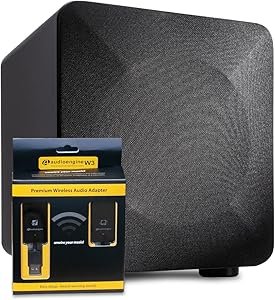
It is not the right unit for a small apartment where a 55 pound cabinet nearly 25 inches deep will dominate, for a desktop or near field setup, or for anyone hoping to connect wirelessly, since the listing gives no credible wireless capability despite what the specification fields imply. Buyers in tight spaces should look at compact designs such as the SVS 3000 Micro subwoofer or the desktop oriented Audioengine S6 wireless subwoofer instead.