

Description
Dayton Audio BST-1: a transducer that shakes furniture rather than moving air
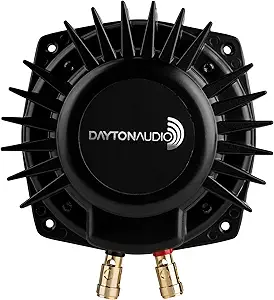
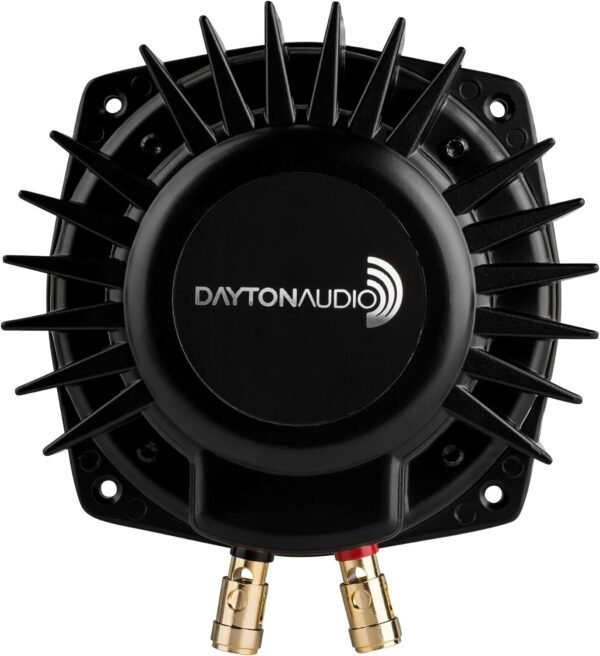
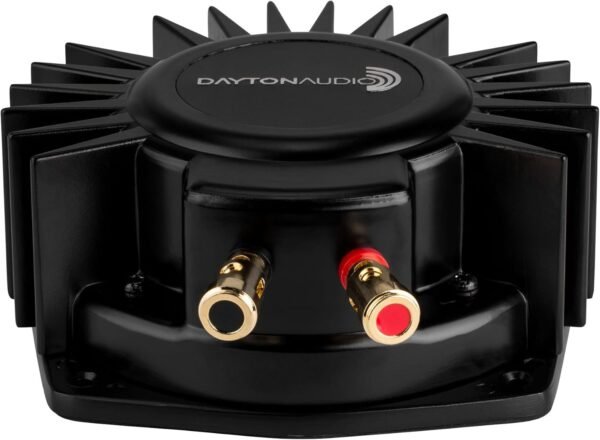
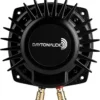
The Dayton Audio BST-1 is a tactile transducer, commonly called a bass shaker. It is important to be precise about what that means, because the listing files it under subwoofers and the two devices do very different jobs. A subwoofer has a cone and a cabinet and produces audible sound by moving air. A bass shaker has no cone and no cabinet: it bolts to a solid surface such as a couch frame, a gaming chair, a riser or a platform, and converts the low frequency signal into mechanical vibration that the body feels through the seat.
Dayton Audio lists an aluminum construction, a compact body of 2.48 inches deep by 3.15 inches wide by 5.91 inches high, a weight of 3.66 pounds and a wattage figure of 50 watts. The intended application in the listing is home theater, and it is described as suitable for 5.1 or 7.1 systems, meaning it works alongside a conventional speaker system rather than replacing part of it.
How it fits into a system
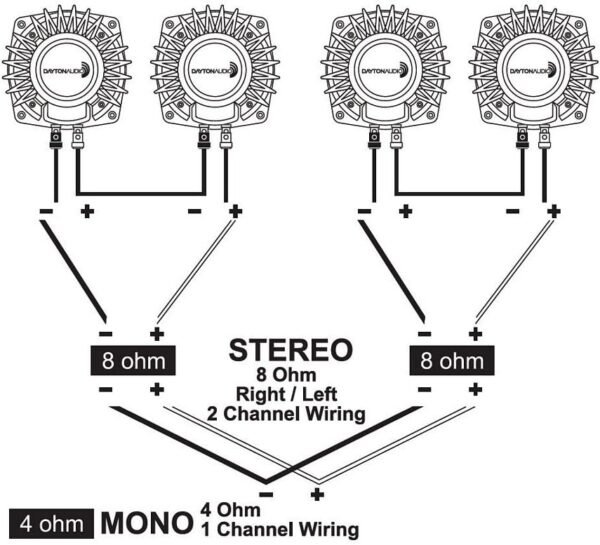
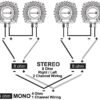
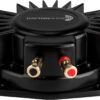
The connection is wired, and this is the detail buyers most often miss: a bass shaker is a passive transducer and needs an amplifier to drive it. It does not plug into a receiver line output, it does not have its own power supply, and it will do nothing at all connected to a subwoofer preamplifier output. A separate amplifier channel is required, fed from a low frequency signal, which is an additional purchase and an additional box in the rack. Anyone assembling this properly will need something like the Crown CDi 1000 or a smaller equivalent to power it.
Mounting is the other half of the installation. The transducer must be attached firmly to something rigid enough to transmit vibration and light enough to move, which usually means a couch frame rail, the underside of a seat platform or a wooden riser. Attached to a concrete floor it will do almost nothing, and attached to a thin panel it will buzz. Getting this right takes more planning than plugging in a subwoofer, and it is the reason results with tactile transducers vary so widely between installations.
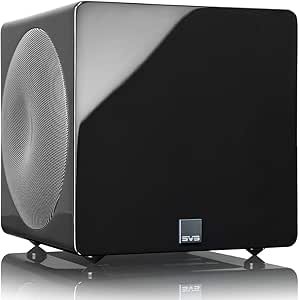
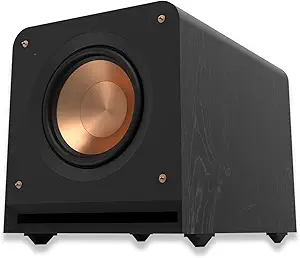
The complementary role matters too. A bass shaker adds sensation but not sound, so it does not remove the need for a subwoofer in a home theater. A compact sealed subwoofer such as the SVS 3000 Micro or a conventional model like the Klipsch R-101SW still does the acoustic work, with the transducer layered underneath it for physical impact.
Reading the listing critically
The imported specification table for this product contains several figures that cannot describe the device shown. Subwoofer Diameter, Woofer Diameter and Audio Driver Size all read 20.32 centimeters, which is 8 inches, on a unit whose overall body is listed at 3.15 inches wide. There is no 8 inch driver here, and there is no driver in the conventional sense at all. Speaker Size repeats the same 8 inch figure.
Maximum Range is listed as 20 meters on a wired device with no wireless capability of any kind. Control Method reads Touch and Controller Type reads Button, but a passive transducer has no controls whatsoever; every adjustment happens at the amplifier feeding it. A Bass Boost special feature is listed, which again belongs to a powered subwoofer with its own electronics. These are template fields rather than product characteristics, and none should influence a purchase decision.
What the listing does establish is the physical size, the weight, the aluminum construction, the 50 watt figure and the wired connection. It gives no frequency range, no impedance and no mounting hardware description, so the impedance in particular should be confirmed before choosing an amplifier.
Highlights
- Tactile transducer that transmits low frequency vibration through furniture rather than through the air.
- Compact aluminum body listed at 2.48 by 3.15 by 5.91 inches and 3.66 pounds.
- Wattage figure of 50 watts stated in the listing.
- Wired connection, intended to be driven from an external amplifier channel.
- Suitable for couches, gaming chairs, platforms and risers.
- Positioned as an addition to 5.1 and 7.1 home theater systems.
- Long running product, first listed in April 2016 and still shown as available.
Things To Consider
The amplifier requirement is the largest hidden cost and the most common reason buyers are disappointed. Budget for an amplifier and a way to feed it a low frequency signal before buying the transducer itself, or the purchase will sit in a box.
Installation is not casual. Fitting a transducer to a couch means getting underneath it, finding a rigid frame member and bolting to it, and results depend heavily on where it ends up. Renters and anyone unwilling to modify furniture should think carefully. The effect is also localized: one unit shakes the seat it is attached to and nothing else, so a three seat couch may need more than one.
Volume matching is another practical issue. Because the transducer output is set at its own amplifier, it does not follow the receiver volume control in the way a subwoofer does unless the signal is taken from a variable output. Set too high, the effect becomes a distraction that has nothing to do with the soundtrack; set correctly, it should be barely noticeable as a separate thing.
Finally, expectations should be calibrated. A bass shaker produces sensation in a very narrow low frequency band. It will not make dialogue clearer, it will not make music sound fuller through the speakers, and it does not replace any part of a conventional system. It is an effects device, and buyers who want better audible bass should spend the same money in the subwoofers category instead.
Who it suits
The BST-1 suits home theater enthusiasts who already have a working system with a subwoofer and want physical impact from film effects, sim racing and flight simulator builders who want motion cues through the seat, and gamers with a dedicated chair. It also suits apartment dwellers in one specific way: vibration transmitted into a seat is felt by the person in it while producing far less airborne sound for neighbors than a subwoofer at the same perceived intensity.
It is not suitable for anyone looking for their first bass upgrade, for anyone unwilling to add an amplifier, or for installations where nothing rigid is available to mount to. Those buyers should start with a conventional powered subwoofer, and look at the power amplifiers category first if they intend to build a transducer setup properly. A wireless capable subwoofer such as the Audioengine S6 shows how much simpler the conventional route is.