

Description
What the Procaster Is Built For
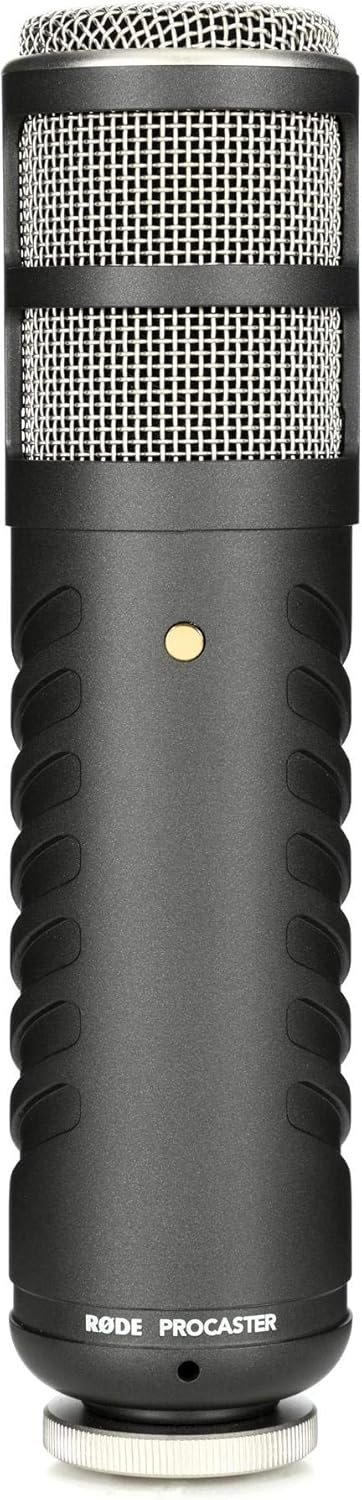
The Rode Procaster is a broadcast dynamic microphone, which is a narrower description than it sounds. It is designed to be spoken into at close range, on a boom arm, in a room that has not been acoustically treated, by someone who wants their voice and nothing else in the recording. Rode positions it for on-air use, podcasting and voice-over work, and every design decision follows from that.
The reason a dynamic capsule is chosen for this job rather than a condenser is rejection. A condenser microphone hears the room: the air conditioning, the traffic outside, the reflections off a bare wall behind the desk. A dynamic capsule with a tight pattern hears far less of it. That is why broadcast studios have used this design for decades, and why podcasters recording in a spare bedroom often get better results from a Procaster than from a more sensitive and more expensive condenser such as the Warm Audio WA-47Jr.
Pattern, Response and Ambient Rejection
Rode specifies a tight polar pattern and a frequency response tailored for voice, with the listing giving a range of 75 Hz to 18 kHz. The 75 Hz lower limit is deliberate rather than a limitation: rolling off below that removes rumble, footfalls and desk noise before they ever reach the recording, which is one fewer thing to fix in editing.
The internal pop filter is the second half of the same strategy. Plosive consonants, the hard P and B sounds, produce a blast of air that a diaphragm registers as a large low frequency thump. Building the screen into the head means the protection is always present rather than depending on someone remembering to position an external filter correctly. Combined with the internal shock mounting of the capsule, the Procaster arrives with the three most common recording problems already addressed in hardware. Anyone building a similar setup around an XLR chain should also look at the Samson Q9U, which adds a USB path alongside the analog one.
Gain Requirements and the Signal Chain
This is the single most important practical point about the Procaster and the one most often missed by first-time buyers. Dynamic microphones of this type produce a low output level compared with condensers, and close-miked speech through one demands a preamp with generous, clean gain. On an interface with a modest or noisy preamp, the result is a recording where the noise floor rises with the voice, and no amount of processing afterward will fully undo that.
Rode’s description calls this a high output dynamic capsule with a balanced, low impedance output, which is the right architecture for long cable runs into a mixing desk. The specification table on the listing, however, gives an impedance of 1500 ohms, a figure that sits oddly against the description’s own claim of low impedance. Prospective buyers should treat the descriptive copy as the more reliable of the two and plan their interface purchase around the general characteristics of a broadcast dynamic rather than around that number. Comparable microphones and the interfaces they demand are grouped in the multipurpose microphones category.
Build and What Is Included
The body is metal and the listing gives the weight as 1.06 pounds with packaged dimensions of 11.25 by 2.5 by 5.5 inches. That mass matters for a boom arm: a heavy microphone on a lightweight arm will droop, and buyers should check that whatever arm they own is rated for the load. Rode supplies a stand mount, a 3/8 inch thread adaptor and a zip pouch, so the microphone can go straight onto a standard stand without further purchases beyond an XLR cable.
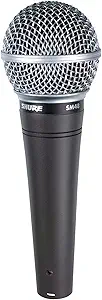
The listing also shows a European spare part availability duration of five years, which is a useful signal about serviceability in a market where most audio hardware is treated as disposable. The Procaster has been listed since November 2008 and holds a 4.8 star average across roughly 1,904 ratings, which is a long enough track record and a large enough sample to be meaningful. For handheld stage use rather than desk work, the Shure SM48 is the more appropriate tool.
Highlights
- Tight polar pattern that keeps untreated room sound out of the recording.
- Internal pop filter, so plosive protection is always in place.
- Internal capsule shock mounting against desk and stand vibration.
- Response tailored for speech, with a 75 Hz roll off that removes rumble at source.
- Stand mount, thread adaptor and pouch included in the box.
- Long availability and a five year spare part window listed for the European market.
Things To Consider
The specification block for this listing contradicts itself in several places and should be treated with caution. The frequency range is given as 75 Hz to 18 kHz while a separate frequency response field reads 20 kHz. The microphone form factor is listed as “Large Diaphragm”, which describes the capsule size but obscures the fact that this is a dynamic rather than a condenser. The hardware platform field says “Gaming Console”, which is not a meaningful destination for an XLR microphone with no interface. These are import errors.
- It needs a preamp with plenty of clean gain, which is a real additional cost for many buyers.
- No USB connection, so an audio interface or mixer is mandatory.
- No cable is described as included; budget for an XLR lead.
- Over a pound in weight, which will overwhelm a light boom arm.
- The impedance figure conflicts with the manufacturer’s own description.
- It is a close-talk microphone, and it sounds thin and distant if worked from further away.
Who Should Buy It and Who Should Skip It
The Procaster is a strong choice for a podcaster or voice-over artist recording in an ordinary room, who already owns or is willing to buy an interface with good gain, and who values a recording that needs little cleanup. It is equally at home in a small radio studio or a streaming setup where the microphone is permanently mounted on an arm and worked from a few inches away.
It is the wrong microphone for a beginner who wants to plug straight into a laptop, and those buyers should look at a USB model instead, such as the FIFINE K669B. It is also unsuited to capturing acoustic instruments, room ambience or anything that needs airy high frequency detail, where a condenser is simply the right tool. Anyone shopping the vocal microphones category should decide first whether their room is treated, because that answer largely settles the dynamic versus condenser question.