Description
What the WA-47Jr Is
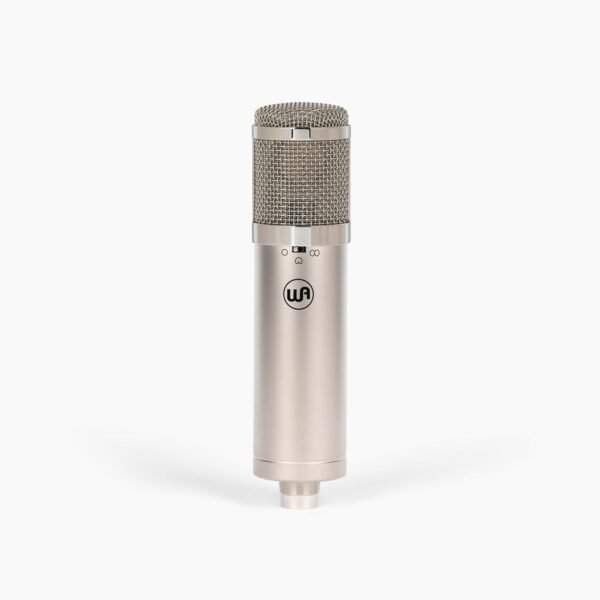
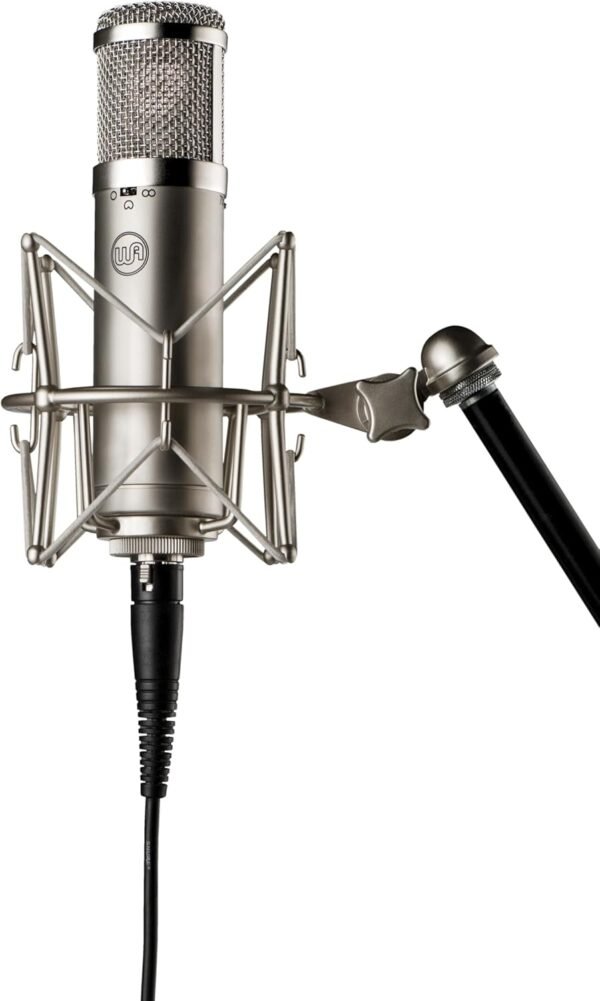
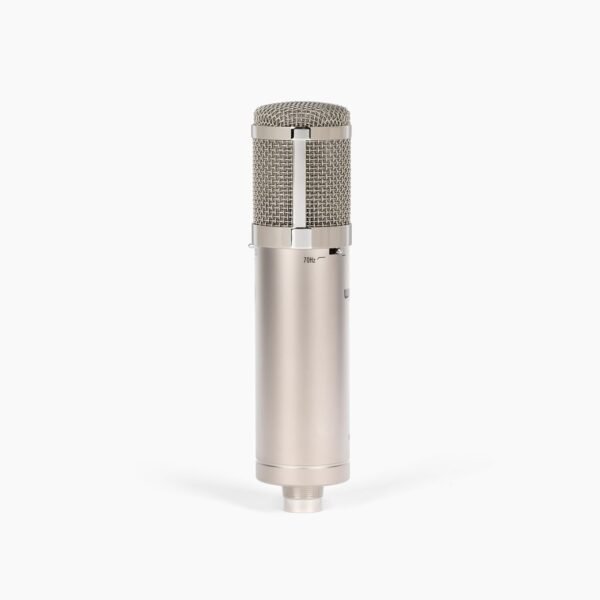
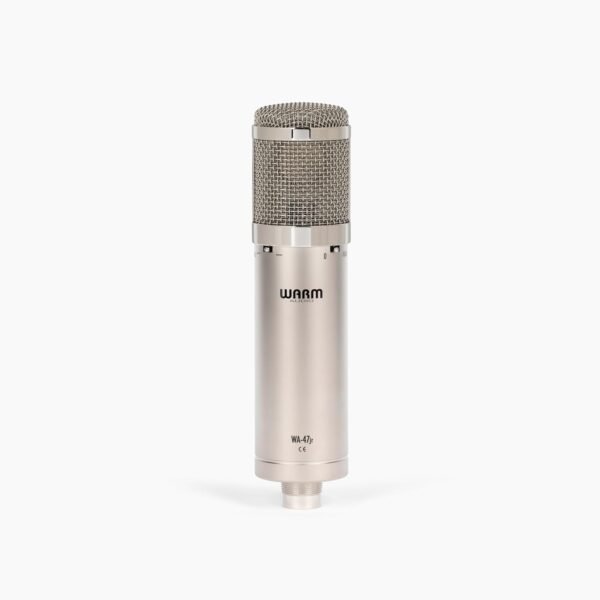
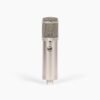
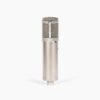
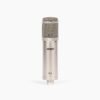
The Warm Audio WA-47Jr is a large diaphragm condenser microphone based on the circuit and voicing of a classic studio microphone from the 1940s and 1950s. Warm Audio is explicit that this is an FET transformerless interpretation rather than a tube reproduction, which places it in a different technical category from the original and from the company’s own tube models.
That distinction matters practically. A tube microphone requires a dedicated power supply, takes time to warm up, and introduces a particular kind of harmonic character. An FET transformerless design runs on standard phantom power, is quieter, and presents a cleaner signal. Warm Audio positions the WA-47Jr for professional studios, home studios, live use and broadcast, which is a broader remit than a tube microphone would sensibly cover.
The Three Polar Patterns
Switchable cardioid, omnidirectional and figure of eight is the specification that separates this from the many single-pattern condensers sold at similar prices, and each pattern has a genuine use rather than being a specification sheet entry.
Cardioid is the default for close vocal work, rejecting the room behind the microphone. Omnidirectional picks up equally in all directions, which is useful for capturing a room deliberately, for recording a group around one microphone, and because it has no proximity effect, so a singer who moves does not change the bass response. Figure of eight picks up front and back while rejecting the sides completely, which is the basis of the Blumlein and mid-side stereo techniques and is also the classic way to record two singers facing each other. Buyers who only need one pattern should consider whether a single-pattern microphone would put more of the budget into the capsule.
The Capsule
Warm Audio specifies a gold sputtered dual large diaphragm capsule on a single backplate, using 6 micron NOS Mylar film. Each element of that description does something. A dual diaphragm on a single backplate is the standard construction for a multi-pattern microphone, because switching patterns is achieved by changing the polarizing voltage on the rear diaphragm rather than by mechanical means.
Six micron film is thin, and a thinner diaphragm has less mass, responds faster and extends further at high frequencies, at the cost of being more fragile. Gold sputtering is how a non-conductive plastic film is made conductive without adding meaningful mass. NOS refers to old stock Mylar, which Warm Audio uses because the manufacturing tolerances of the original material differ from current production. These are the details that separate a considered design from a rebadged generic capsule.
What It Sounds Right On
Warm Audio names vocals, acoustic and electric guitars, acoustic and electric bass, drums, piano, strings and brass and woodwind instruments. That list is broad but it is credible for a large diaphragm condenser, because the format is genuinely versatile: it is the default choice for most studio sources that are not extremely loud.
The important limitation is the room. A condenser this sensitive hears everything, including the refrigerator, the street outside and the reflections from bare walls. In an untreated space the recording will contain all of it, and no amount of processing will fully remove it. Anyone recording speech in an ordinary room will get a cleaner result from a dynamic microphone such as the Rode Procaster. For stereo instrument recording, a matched pair of small diaphragm condensers such as the Rode NT5 matched pair is a different and often better tool.
What You Need To Use It
This is an XLR condenser microphone and it requires 48 volt phantom power from an interface, mixer or dedicated preamp. Phantom power is not exotic and almost every modern interface supplies it, but it is not optional and the listing does not mention it anywhere, which is a notable omission for a product that will be bought by beginners.
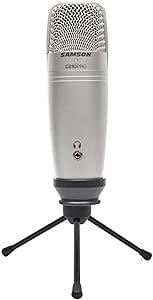
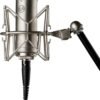
A stand and a shock mount are also necessary. The listing does not enumerate what accessories are included, so buyers should confirm before ordering rather than assuming a shock mount is in the box. A pop filter is advisable for vocal work, since unlike a broadcast dynamic there is no internal screen described. Anyone assembling a first studio should compare the fully integrated route offered by a USB condenser such as the Samson C01U Pro, which needs nothing but a cable.
Highlights
- Three switchable polar patterns, which is rare at this price and genuinely useful.
- Gold sputtered 6 micron NOS Mylar capsule with specified construction rather than a generic part.
- FET transformerless circuit running on standard phantom power with no external supply.
- Fully discrete signal path per Warm Audio.
- Broad source suitability, from vocals to strings, brass and drums.
- Nickel finish and a listed 100 ohm output impedance.
Things To Consider
The specification block is unreliable. The item weight is given as 0.01 ounces, which is impossible for a metal-bodied studio microphone. The form factor is listed as “Handheld”, which this is emphatically not; it is a stand-mounted studio condenser. The material is given as brass and the power source simply as “Electric”, with no mention anywhere that 48 volt phantom power is required. The dimensions of 10.04 by 5.91 by 11.42 inches describe the packaging.
- 48 volt phantom power is mandatory and is never mentioned in the listing.
- A condenser reveals the room, so an untreated space will be audible in every recording.
- Included accessories are not listed, so a shock mount cannot be assumed.
- No pop filter is built in, unlike a broadcast dynamic.
- The weight and form factor specifications are impossible.
- No frequency response chart or figures are published on the listing.
Who Should Buy It and Who Should Skip It
The WA-47Jr suits a home or project studio owner who records a range of sources, has at least made some effort at acoustic treatment, and will make genuine use of the three polar patterns. It is a particularly strong choice for anyone interested in stereo recording techniques, since a figure of eight pattern is the entry requirement for mid-side and Blumlein work and is otherwise hard to find at this price.
Skip it if the only application is speech in an ordinary room, where a dynamic microphone will produce a cleaner result with less effort. Skip it too if there is no interface with phantom power in the budget, since the microphone will not produce any signal without it. Podcasters looking for something that plugs straight into a computer should look at the USB options in the multipurpose microphones category, and singers needing a stage microphone should be in the vocal microphones category instead. An all-in-one alternative worth weighing is the Apogee MiC Plus.