Description
Klipsch R-101SW: a 10 inch front firing subwoofer for a first home theater
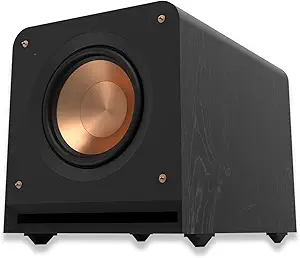
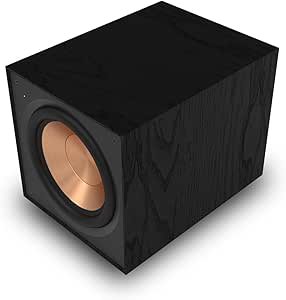
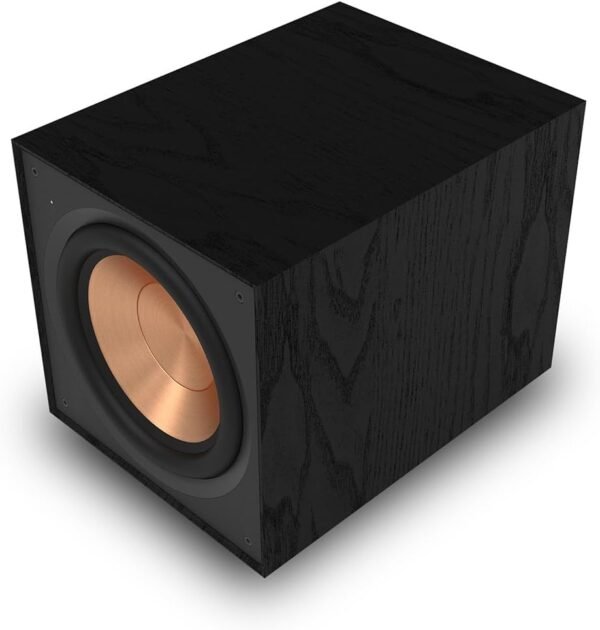
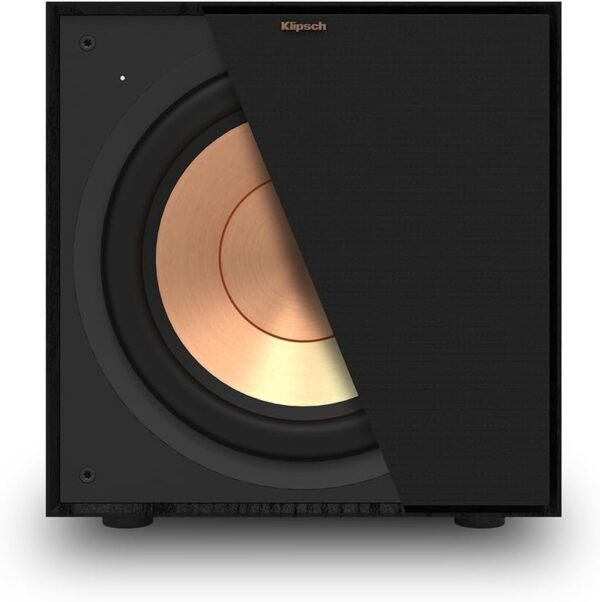
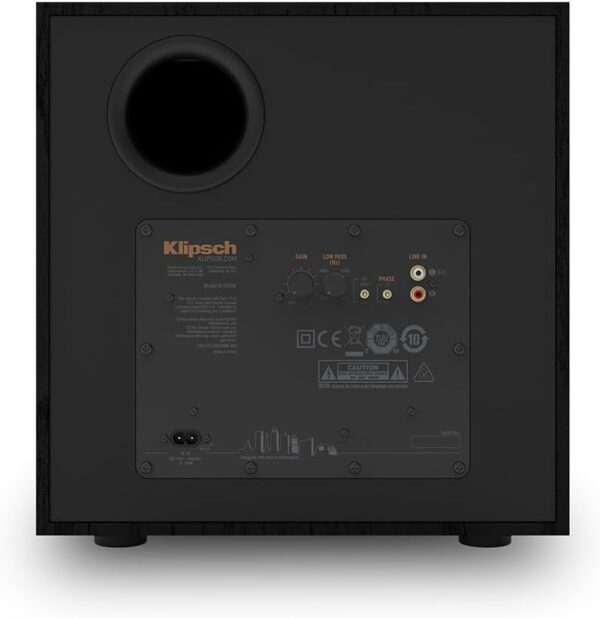
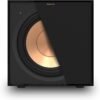
The Klipsch Reference R-101SW is a 10 inch powered subwoofer aimed at home theater use. Klipsch describes a spun copper thermoformed crystalline polymer woofer that is light in weight and intended to deliver low frequency response with minimal cone breakup, driven by an all digital amplifier. The woofer fires forward rather than downward, and Klipsch makes a point of that in its own material because a front firing driver gives more freedom over where the cabinet sits in a room.
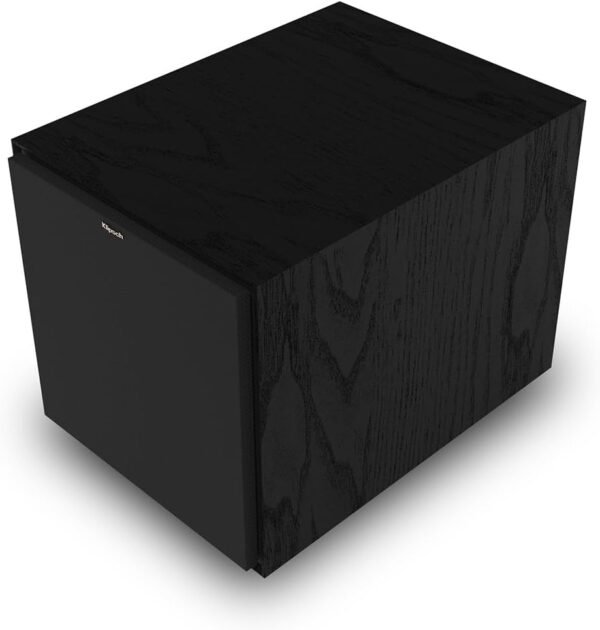
The listed cabinet measures 19.7 inches deep by 14 inches wide by 14.6 inches high and weighs 30 pounds. That is a real piece of furniture but a manageable one, and the depth is the dimension to check against a media unit or an alcove before ordering. The listing places it in a 5.1 configuration and names the recommended use as home theater, with compatible devices given as televisions, projectors, desktops and laptops.
The driver and amplifier pairing
The spun copper cone is the visual signature of the Klipsch Reference line, and the technical claim behind it is stiffness. A cone that resists flexing moves as a single unit rather than deforming at its edges, which is what Klipsch means by minimal cone breakup. In a subwoofer that matters because low frequency drivers travel much further than midrange cones do and are more prone to losing their shape at high excursion.
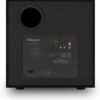
An all digital amplifier, meaning a Class D design, is now standard in subwoofers for good reason. It runs cool, wastes little power as heat, and allows a lot of output from a compact amplifier board that fits in the back panel of the enclosure. The listing does not state the amplifier power in watts, and it does not state a frequency response or a low frequency cutoff, which are the two figures most useful when comparing subwoofers. Their absence means this cabinet cannot be measured against a rival on paper from this listing alone.
A Bass Boost feature is named in the specification table. Klipsch does not define it further in the imported data, and buyers should treat it as a tone control rather than as extra extension. Anyone who wants substantially more output from a similar footprint should look at the larger Klipsch RP-1000SW in the same family, or at a sealed alternative such as the SVS SB-1000 Pro, which trades maximum output for tighter control.
Where the listing contradicts itself
The imported data for this product contains several fields that cannot be right, and they are worth naming rather than repeating. The Klipsch description text calls the R-101SW a wireless subwoofer, while the specification table lists Subwoofer Connectivity Technology as Wired. Both cannot describe the same connection. The Connectivity Protocol field then adds Bluetooth, which does not fit a subwoofer that accepts a line level input from a receiver. The safe reading is that this is a wired subwoofer and that any wireless capability requires a separate transmitter kit, but the listing does not confirm that either way, so it is a question for the seller.
Control Method is listed as Touch and Controller Type as Touchpad. Subwoofers of this type are adjusted with knobs on the back panel for gain, crossover and phase, and no touch interface appears anywhere in the description. Audio Driver Size is given as 1E plus 1 inches, which is scientific notation for 10 and matches the Woofer Diameter field, so the driver size is confirmed even though the formatting is corrupted. Vehicle Service Type is listed as Car, which belongs to automotive audio templates and has no meaning for a mains powered home subwoofer. The listing also carries two different UPC numbers in one field.
Highlights
- 10 inch spun copper woofer with a front firing orientation for flexible placement.
- All digital amplifier, which keeps the amplifier section compact and efficient.
- Cabinet listed at 19.7 by 14 by 14.6 inches and 30 pounds.
- Bass Boost feature named in the specification table.
- Positioned for 5.1 home theater use with televisions and projectors.
- Limited warranty stated in the listing.
- 4.6 star average across the ratings recorded on the listing.
Things To Consider
A 10 inch subwoofer is an entry point rather than a destination. It will add weight and impact to a television soundtrack in a small or medium room, but it cannot move the air a 12 or 15 inch driver moves, and in a large open plan space it will run out of headroom during loud passages. Buyers with a big room should size up rather than expect a boost control to compensate.
The review base is small. Seventeen ratings is not enough to establish a reliability pattern, though Klipsch as a manufacturer has a long history in this category. That is context rather than reassurance, and it is fair to say the sample is thin.
The unresolved wireless question is the most practical issue for a buyer. If a subwoofer needs to sit across the room from the receiver, a wired run has to be planned, and assuming otherwise on the strength of the word wireless in the description would be a costly mistake. Confirm before ordering.
Finally, subwoofer placement affects the result more than any specification does. The same cabinet in a corner and in the middle of a wall will produce very different bass, and no boost control corrects a room mode. Anyone building a full Klipsch system around this subwoofer will want to consider how the front stage is handled as well, whether that is floorstanders such as the Klipsch R-620F or a dedicated center like the Klipsch R-34C, since dialogue clarity and bass integration are usually solved together.
Who it suits
The R-101SW suits a first home theater in a small to medium room, a buyer already using Klipsch speakers who wants a tonal match, and anyone who needs a subwoofer that can go against a wall or in a cabinet without a downward firing driver being compromised by carpet or a shelf.
It is not the right choice for a large room, for a listener chasing the lowest octave in film soundtracks, or for anyone who needs a genuinely wireless connection without checking the details first. Those buyers should compare the larger options in the subwoofers category, and consider how the main speakers are handled by browsing the floorstanding speakers category before deciding where the budget belongs.