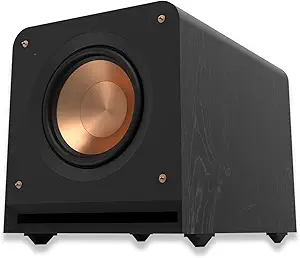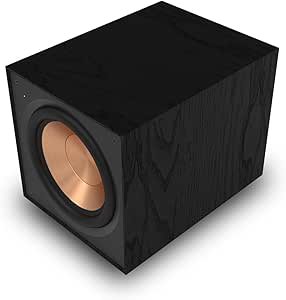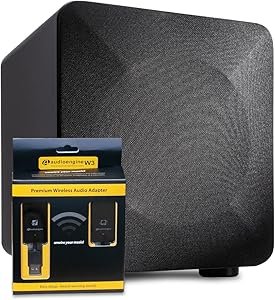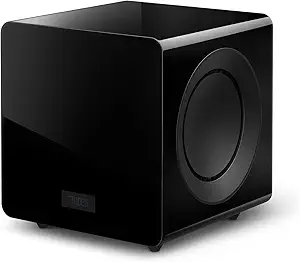
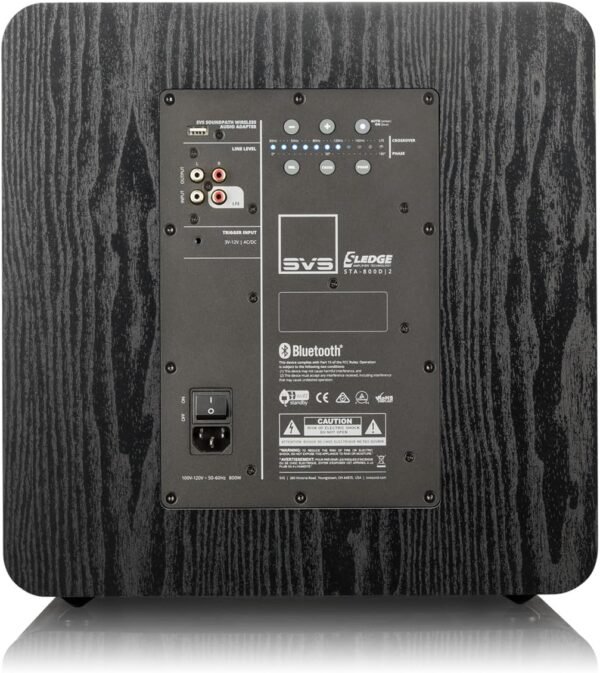
Description
What the SVS SB-3000 Is
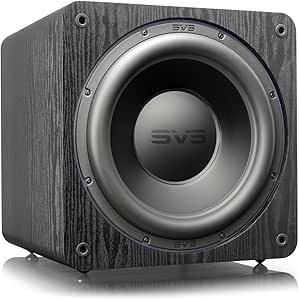
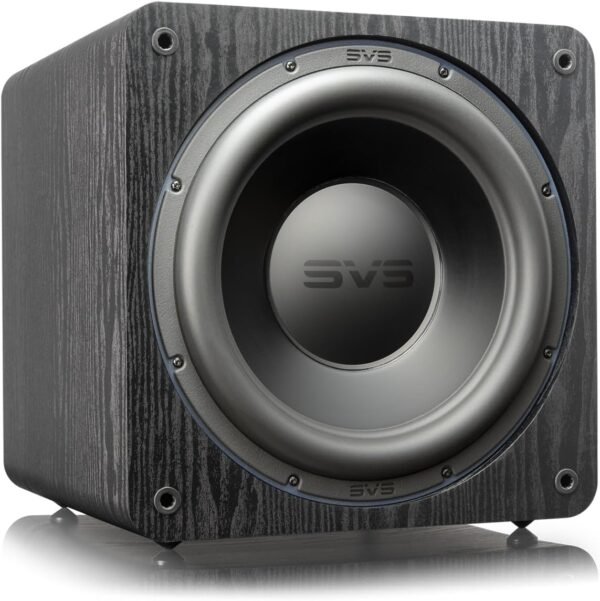
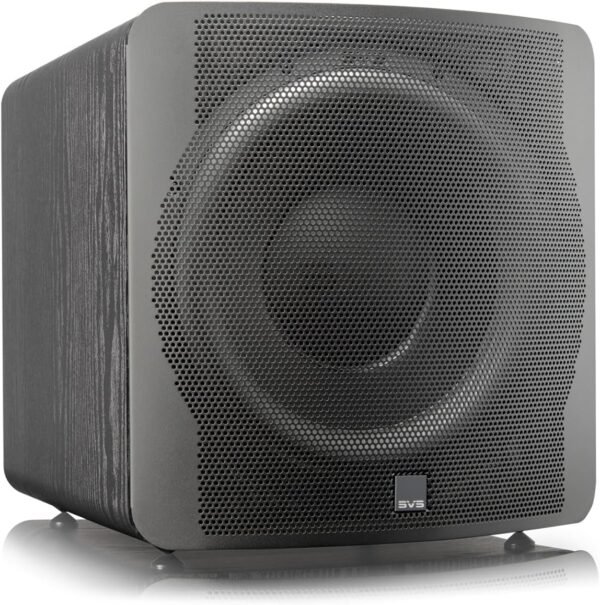
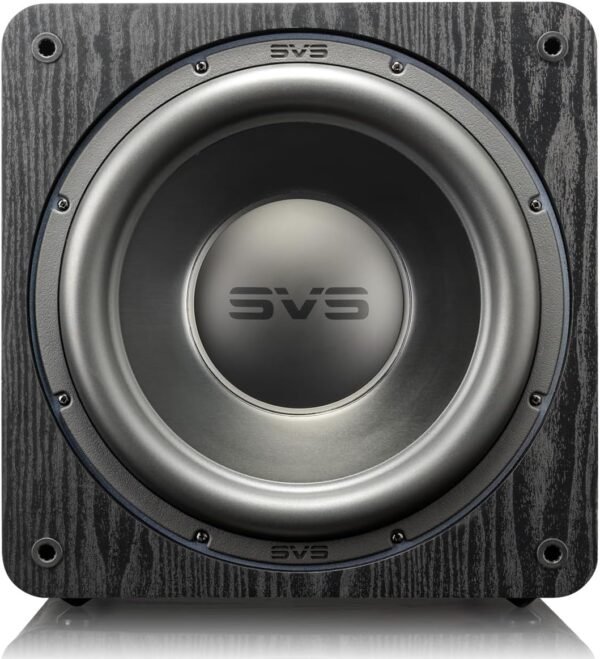
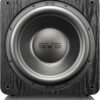
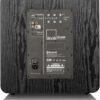
The SVS SB-3000 is a sealed subwoofer built around a 13 inch high excursion driver and a Sledge amplifier rated at 800 watts continuous and more than 2,500 watts peak, with a fully discrete MOSFET output stage. SVS gives the cabinet dimensions as 17.8 inches deep by 15.2 inches wide by 15.6 inches high and the weight as 60.5 pounds, and lists automatic equalization among the features along with app based control.
Sealed is the defining architectural choice. Without a port, the enclosed air acts as a spring behind the driver, which produces a gentler low frequency roll off and generally tighter transient behavior than a ported design of the same size. The cost is maximum output: a ported cabinet moves more air near its tuning frequency. That trade is why sealed subwoofers are more often chosen by listeners who care about music as much as film effects, and it is the same reasoning behind the smaller SVS SB-1000 Pro subwoofer in the same family. Buyers comparing across designs can browse the subwoofers category.
Driver and Amplifier
Thirteen inches is an unusual driver size. The industry standard sizes are 10, 12, and 15 inches, and SVS chose 13 specifically to fit the largest practical cone area into this cabinet rather than to match a convention. That decision is consistent with the sealed design goal, since a sealed enclosure needs more cone area or more excursion to match a ported one for output, and the listing describes the driver as high excursion for the same reason.
The amplifier ratings are quoted in both continuous and peak terms, which is the more informative way to present them. Eight hundred watts continuous is the figure that describes sustained capability, while the peak number describes brief transients such as an explosion or a kick drum hit. A discrete MOSFET output stage means the amplifier is built from individual power devices rather than an integrated module, an approach associated with better behavior under thermal stress. Owners integrating this into a system will be setting crossover and level at a receiver, and the Yamaha RX-V385 AV receiver illustrates the bass management layer that sits above a subwoofer.
Control, Equalization, and Placement
The listing lists automatic equalization and app control. Onboard processing on a subwoofer of this class typically covers the low pass filter frequency and slope, phase and polarity, parametric equalization, and a room gain compensation curve. Parametric equalization is the most valuable of those in a real room, because the dominant audible problem at low frequencies is never the subwoofer alone but the interaction between the subwoofer and the room dimensions. A single narrow cut at a room mode does more for perceived bass quality than any change of equipment.
Placement remains the other half of the equation, and it is free. Moving a subwoofer along a wall or into a different corner changes the response at the listening seat by more than any control on the amplifier. At 60.5 pounds that experimentation is a two person job, which is worth planning for rather than discovering. The cabinet is finished in what SVS calls premium black ash. Listeners with less space should consider the compact SVS 3000 Micro subwoofer, which trades output for a much smaller footprint.
Highlights
- 13 inch high excursion driver in a sealed cabinet, chosen for cone area within the enclosure size.
- Sledge amplifier rated at 800 watts continuous and more than 2,500 watts peak.
- Fully discrete MOSFET output stage rather than an integrated amplifier module.
- App based control with automatic equalization for room correction.
- Cabinet listed at 17.8 by 15.2 by 15.6 inches and 60.5 pounds, with a limited warranty.
Things To Consider
The SVS description on this listing is written almost entirely in superlatives, claiming reference performance never before available at the size or price, tonal accuracy without fault, and that the unit outperforms much larger subwoofers. This page does not repeat those claims as fact. They are comparative assertions with no measurement behind them, and a buyer cannot check any of them. The technical content of the same description, the driver size, the amplifier ratings, and the output stage design, is specific and is what this page reports.
The description also states that the cabinet measures just over 15 inches cubed, while the dimensions field gives 17.8 inches in the deepest direction. The listing therefore gives the size two different ways, and anyone planning a cabinet space should work from the larger figure.
The specification table contains multiple entries that do not describe a mains powered subwoofer. The battery life field reads 3 hours, on a product with no battery. The vehicle service type reads Car. The speaker size reads 15 inches while the woofer diameter reads 13 inches. The maximum range reads 9 meters and the Bluetooth range reads 10 meters, describing the app connection rather than anything to do with audio. The subwoofer connectivity technology reads Wired while the connectivity protocol reads Bluetooth. The material reads Metal, which does not describe a wood cabinet. The recommended uses field reads For Gaming Consoles.
The genuine limitations are size, weight, and the sealed trade. Sixty pounds in a cabinet nearly 18 inches deep is a substantial object in a living room, and a sealed alignment will not match a large ported subwoofer for maximum output in a big space. App dependence is a long term consideration as with any product where key adjustments live in a phone application.
Who Should Buy It and Who Should Not
The SB-3000 suits a listener with a medium to large room who wants a subwoofer that handles music with control as well as film with authority, and who will use the equalization tools rather than leaving everything at default. The continuous power rating and the cone area mean it has real capability, and the sealed design means it integrates with speakers more readily than a heavily ported alternative.
It is not the right choice for a small apartment, for a buyer who wants a set and forget product with no application involved, or for anyone whose system lacks a subwoofer output. Those buyers should look at smaller units, at the Klipsch R-101SW subwoofer for a more compact alternative, or at the home theater systems category if a complete package is a better fit than assembling components.