
Description
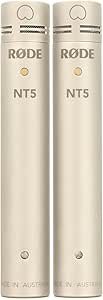
Rode NT5 Matched Pair: small diaphragm condensers sold as a stereo set
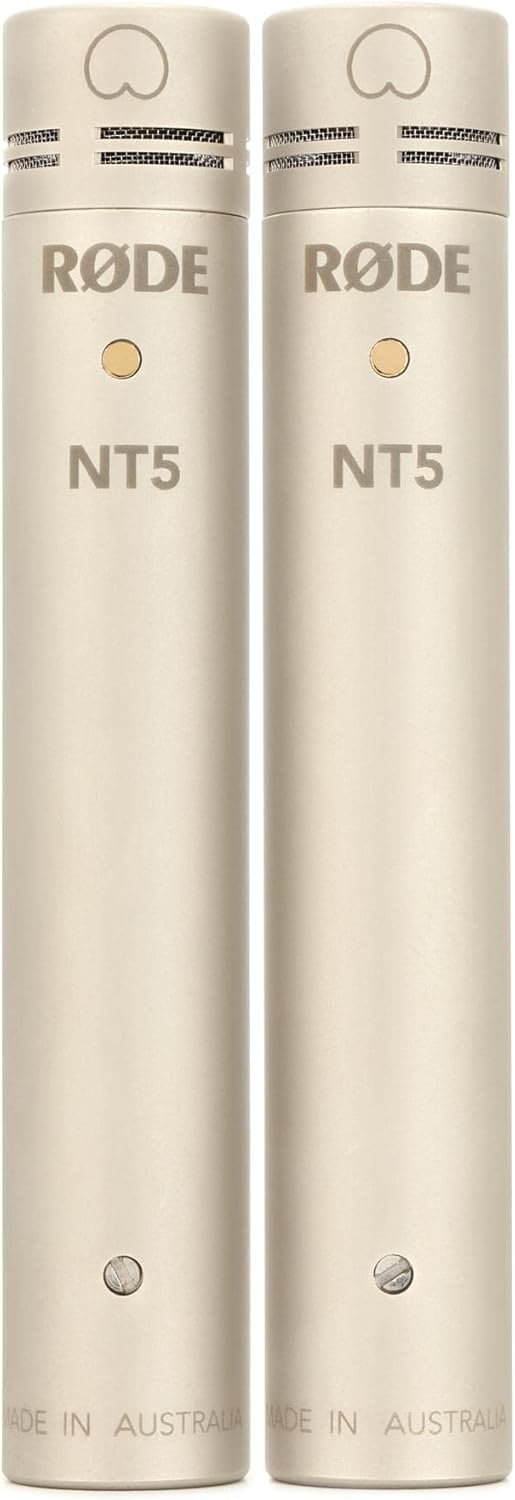
The Rode NT5 MP is a matched pair of small diaphragm condenser microphones, sold together specifically so that the two capsules behave alike. That matching is the reason to buy a pair rather than two individual microphones. In stereo recording, any difference in sensitivity or frequency response between the left and right microphone shifts the image and smears the center, so manufacturers select capsules that measure within a tight tolerance of each other and sell them as a set.
Small diaphragm condensers, often called pencil microphones for their shape, are the standard tool for acoustic instruments, drum overheads, choirs, orchestras and room ambience. Their smaller diaphragm responds faster to transients than a large diaphragm design, which is why they are the usual choice for an acoustic guitar, a hi hat or a string section rather than for a lead vocal. For close vocal work, a large diaphragm design such as the Warm Audio WA-47Jr serves better, and the two types are complements rather than competitors in a working studio.
The specifications that matter
Rode lists an impedance of 100 ohms, a signal to noise ratio of 74 dB and a self noise level of 16 dB. That self noise figure is the one to focus on. Every condenser microphone generates a small amount of noise from its own electronics, and on quiet sources such as fingerstyle guitar, a distant choir or room ambience, that noise sits underneath the recording and cannot be removed later. A 16 dB rating is low enough for quiet acoustic work, which is the intended application.
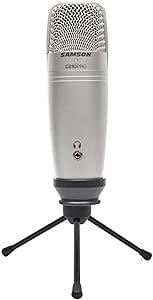
The frequency range is given as 20 Hz to 20 kHz, covering the full audible band. Note that a separate Frequency Response field in the same listing reads 2E plus 4 Hz, which is scientific notation for 20,000 and states only the upper limit; both fields describe the same specification with one of them formatted badly. Power source is listed as corded electric, which in microphone terms means 48 volt phantom power supplied by a mixer or an audio interface. These are not USB microphones and will not work plugged into a computer directly, unlike a model such as the Samson C01U Pro.
The listing gives a weight of 7.1 ounces and lists item dimensions of 17 by 6 by 13 inches. Those two figures describe different things: the dimensions are clearly the packaged case rather than a pencil microphone, which is a few inches long. Anyone estimating stand clearance from that number would be misled, and it should be read as packaging data.
Longevity and what the pair covers
The listing shows a first availability date of October 2, 2001 and marks the product as not discontinued. More than two decades of continuous production is a meaningful signal in the microphone world, where designs that work tend to stay in catalogs for a very long time and where resale values reflect that stability.
A matched pair opens up the standard stereo techniques: a spaced pair over a piano or drum kit, a coincident arrangement for a mono compatible image, or a near coincident setup for a choir. It also allows two mono sources to be recorded at once with a consistent tonal character, which matters when a session involves an acoustic guitar and a second instrument that will sit together in the mix.
Highlights
- Matched pair, selected so the two microphones behave consistently for stereo work.
- Small diaphragm condenser design suited to acoustic instruments, overheads and ambience.
- Self noise listed at 16 dB, with a 74 dB signal to noise ratio.
- Frequency range stated as 20 Hz to 20 kHz.
- Impedance of 100 ohms, matching standard preamplifier inputs.
- Light at a listed 7.1 ounces, easy to support on standard stands and clips.
- In continuous production since 2001, in a silver finish.
Things To Consider
Phantom power is a requirement, not an option. These microphones need a mixer, audio interface or preamplifier that supplies 48 volts, and buyers moving up from USB microphones will need that hardware before the pair produces any sound at all. That is an additional cost to plan for, and it is the most common surprise for a first time buyer of studio condensers.
Condenser microphones are also sensitive to their surroundings in a way dynamic microphones are not. They pick up room reflections, air conditioning, traffic and computer fans, which is a virtue when recording a room deliberately and a problem in an untreated space. Anyone recording in a normal room should expect to spend effort on placement and on reducing background noise. For loud, close sources in poor rooms, a dynamic microphone such as the Shure BETA 52A is the more forgiving tool.
The listing is also incomplete in ways that matter to a buyer. There is no stated polar pattern, no maximum sound pressure level and no sensitivity figure in millivolts per pascal. Polar pattern in particular determines how a microphone rejects sound from the sides and rear, and it is fundamental to choosing a stereo technique. The Number of Channels field reads 1, which describes a single microphone rather than the pair the product name promises, another sign that the imported data is templated rather than accurate. Confirm the pattern and the pair contents with the seller if either is in doubt.
Finally, a matched pair costs roughly twice a single microphone. Buyers who only ever record one source at a time do not need the matching and should consider a single microphone instead, putting the savings toward a better preamplifier or a USB interface such as the one built into the Apogee MiC Plus.
Who it suits
The NT5 MP suits home and project studios recording acoustic instruments, drum overheads, choirs and room ambience, and anyone who needs a dependable stereo pair with consistent character between the two channels. It is a working tool rather than a specialty item, and its long production history reflects that.
It is the wrong purchase for podcasters and streamers who want to plug a microphone into a laptop, for loud close miked sources in untreated rooms, and for anyone without phantom power available. Those buyers should look at the USB and dynamic options in the multipurpose microphones category, or at the vocal microphones category if the main source is a singer or a speaker.