



Description
What the MiC Plus Is
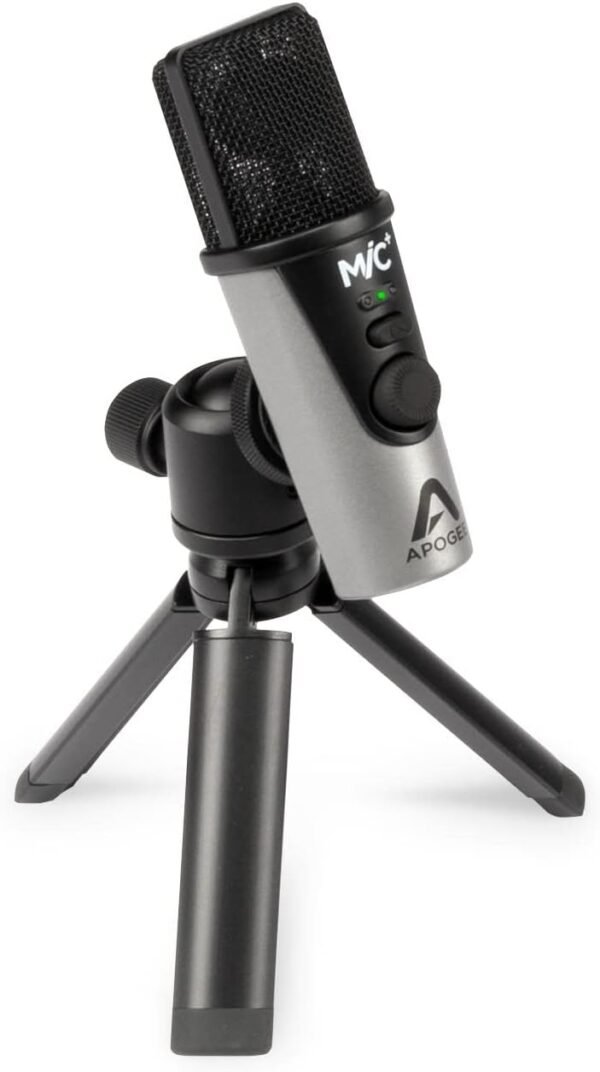
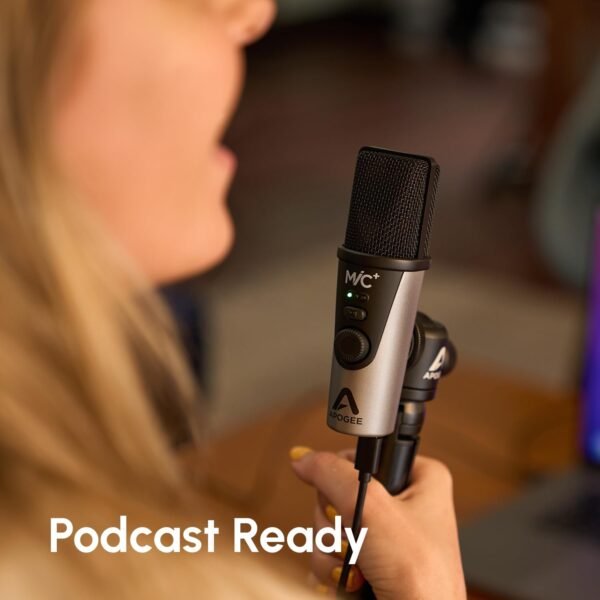
The Apogee MiC Plus is a compact cardioid condenser microphone with the entire recording chain built into its body: capsule, preamp, analog to digital converter and headphone amplifier. Apogee specifies a pure digital connection at up to 24-bit and 96 kHz, which means the signal is converted inside the microphone and travels to the computer as data rather than as an analog voltage.
That architecture is the whole argument for the product. In a conventional setup, the microphone signal passes through a cable, a preamp and a converter, each of which contributes noise and each of which can be the weak link. Doing all of it inside one enclosure eliminates those handoffs, at the cost of locking the buyer into whichever capsule and preamp Apogee chose. Buyers who would rather keep those parts separate are looking at an XLR microphone and an interface, and the multipurpose microphones category covers both approaches.
The Preamp and Gain Control
Apogee quotes 46 dB of microphone preamp gain, digitally controlled. The digital control is the detail worth understanding. On a typical USB microphone, gain is set with an analog potentiometer, which means the setting cannot be recalled exactly and cannot be adjusted from software. Digitally stepped gain can be set to a specific value, restored later, and controlled from the computer, which is genuinely useful for anyone recording a series of sessions that need to match.
Forty-six decibels is a healthy amount of gain for a condenser capsule, which produces far more output than a dynamic microphone does. That is why a condenser like this can be run cleanly from a bus-powered device while a broadcast dynamic such as the Rode Procaster would strain the same preamp. It also means the MiC Plus will pick up more of the room, which is the standard trade a condenser makes.
Monitoring and Workflow
The headphone output with a blend control is the feature that separates this from cheaper USB microphones. Blend lets the performer hear a mix of the raw microphone signal directly from the hardware and the playback coming back from the computer. Because the direct path never enters the computer, there is no round-trip latency on the voice, which is the thing that makes singing or speaking to a backing track feel wrong on a laggy setup.
Apogee also supplies First Take, a free podcast recording application that allows up to four Apogee microphones to be connected to one computer or hub. For a two or three person podcast recorded in the same room, that removes the need for a mixer entirely and gives each participant their own track. The alternative approach, a single microphone shared between speakers or a mixer feeding one input, is considerably more awkward. Buyers weighing a multi-microphone kit should also compare the FIFINE T683 kit, which bundles accessories rather than software.
Platform Support and Build
The listing specifies macOS 10.9 or later, iOS 9 or later, and Windows 10, with a USB 2.0 hardware interface and no configuration required. iOS support in particular is worth noting: a microphone that works directly with an iPad or iPhone opens up mobile recording without a laptop, which suits field interviews and remote sessions. The body is metal with a listed weight of one pound and packaged dimensions of roughly 5 by 2.1 by 7.8 inches, and it is designed to sit on a desk stand or mount on a standard thread.
Apogee’s manufacturing is listed as Mexico, and the product has been available since November 2017. It sits at number 164 in Multipurpose Condenser Microphones on Amazon, which places it as a specialist rather than a volume seller. That is consistent with its positioning: this is a considered purchase for someone who understands what an integrated converter buys them, not an impulse buy. Buyers looking for a cheaper large diaphragm USB condenser will find the Samson C01U Pro covers similar duties for considerably less.
Highlights
- Complete signal chain in one body: capsule, preamp, converter and headphone amp.
- 24-bit and 96 kHz conversion per Apogee’s stated specification.
- Digitally controlled gain with repeatable, recallable settings.
- Zero latency headphone monitoring with a blend control against playback.
- Works directly with iOS devices, not just computers.
- First Take software supporting up to four Apogee microphones on one machine.
Things To Consider
The Amazon specification block for this microphone is unusually corrupted and should be disregarded almost entirely. It lists the form factor as “Lavalier”, which the MiC Plus emphatically is not. It gives the number of channels as 2 on a mono microphone. The figure 46 dB, which Apogee’s own bullets identify as the preamp gain, has been pasted into both the signal to noise ratio field and the noise level field, where it means something completely different and would describe poor performance if taken at face value. The color is listed as “berry”.
- The capsule and preamp cannot be changed, which is the cost of the integrated design.
- A condenser hears the room, so an untreated space will show up in the recording.
- No XLR output, so it cannot be used with a mixer or a standard interface.
- Windows support is listed only for Windows 10 in the specification.
- Several specification fields are demonstrably wrong, including form factor and noise figures.
- It costs considerably more than the entry-level USB condensers it sits alongside in search results.
Who Should Buy It and Who Should Skip It
The MiC Plus makes sense for a podcaster, musician or voice-over artist who wants one object that produces a finished recording, who values repeatable gain settings, and who records on iOS as well as on a computer. It is also a sensible choice for a small podcast that wants multiple microphones on separate tracks without buying a mixer, since First Take handles that directly.
Skip it if the plan is to grow a studio, because money spent on an integrated device does not carry forward into a modular setup the way an interface does. Skip it too if the recording room is noisy or reflective, where a dynamic microphone will produce a cleaner result for less money, and if a budget USB condenser would meet the requirement, as the FIFINE K669B demonstrates at a fraction of the outlay.