Description
What the C01U Pro Is
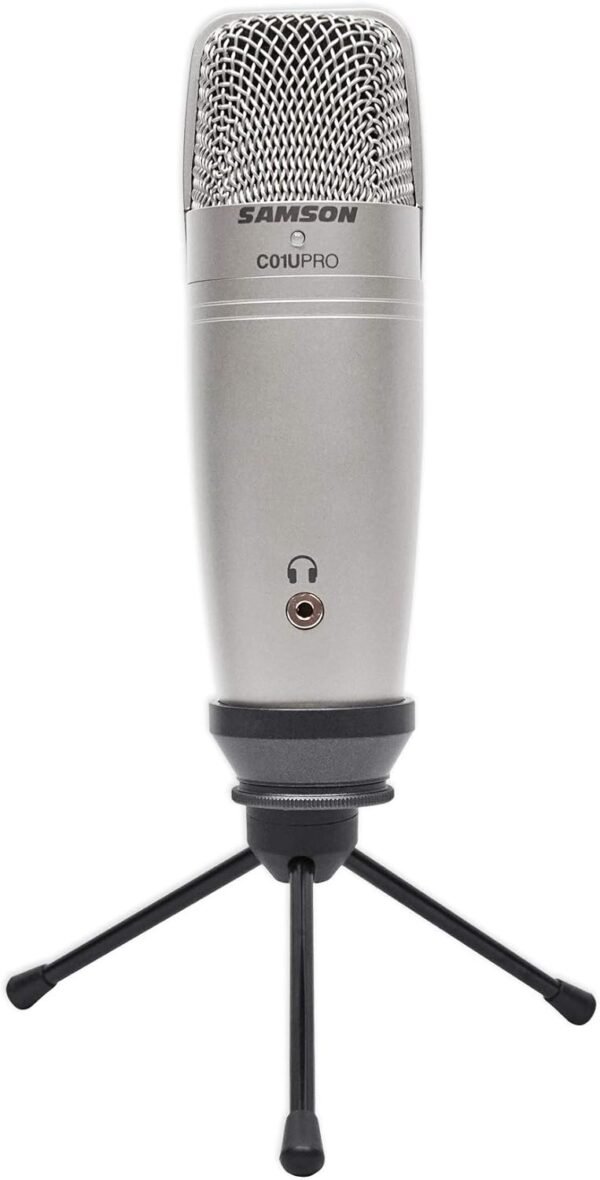
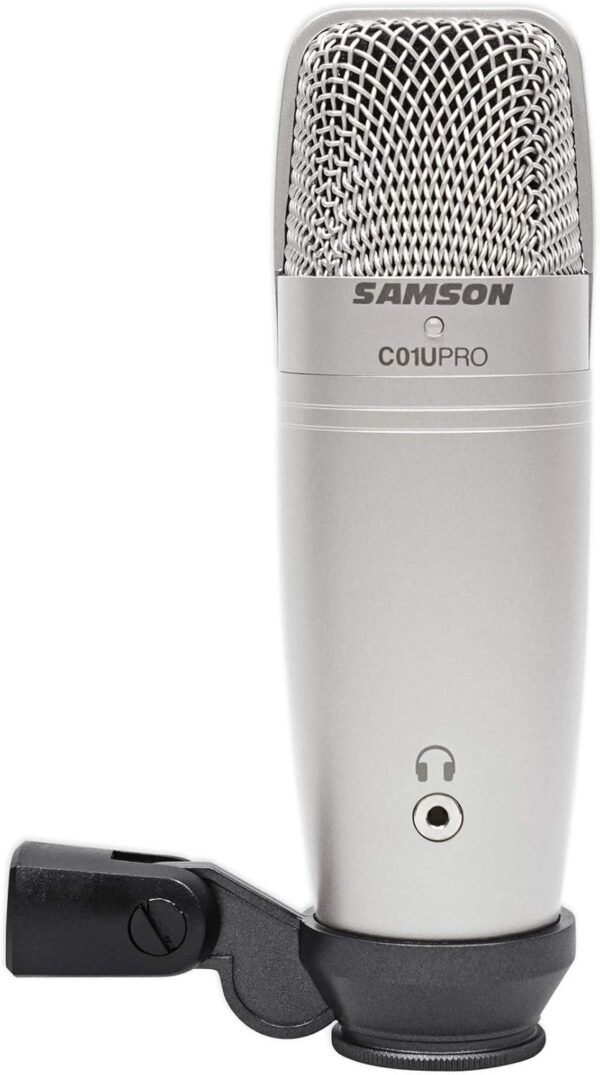
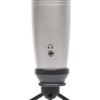
The Samson C01U Pro is a USB studio condenser microphone, and Samson claims a specific piece of history for the line: the original C01U was, in the company’s words, the world’s first professional USB studio condenser microphone. The Pro revision adds a headphone output for real-time monitoring, an improved signal to noise ratio and a peak LED indicator.
It occupies the middle of the USB condenser market: more substantial than the plastic-bodied budget microphones, less capable on paper than the current generation of 24-bit devices. Samson positions it for podcasting, voice over internet, speech-to-text applications and recording vocals and instruments, which is a broad remit for a single microphone. Buyers comparing this bracket should look at the FIFINE K669B below it and the Apogee MiC Plus above it.
The Resolution Question
The specification that most separates the C01U Pro from newer competitors is its converter: 16-bit at 44.1 or 48 kHz. Most USB microphones sold today advertise 24-bit at 48 or 96 kHz, and the difference is real but frequently overstated.
Bit depth determines dynamic range, the distance between the quietest usable signal and the loudest before clipping. Sixteen bits provides roughly 96 dB of theoretical range, which is more than sufficient for the finished audio; it is CD resolution, and no listener has ever complained that a CD lacked dynamic range. Where 24-bit helps is during recording, because it provides far more headroom for setting levels. With 16 bits the gain has to be set more carefully: too low and the noise floor becomes audible when the recording is normalized, too high and it clips. That is a workflow constraint rather than a quality ceiling, and the peak LED exists specifically to help manage it.
The Capsule and Pickup Pattern
Samson specifies a large 19 mm diaphragm that is shock-mounted inside the body, and describes the pickup pattern as supercardioid. A supercardioid is narrower at the front than a standard cardioid and rejects sound from the sides more aggressively, which is useful in an untreated room because there is less of the room in the recording.
The trade is that a supercardioid has a small rear lobe and is less forgiving of movement. A speaker who drifts off axis will hear the tone change more noticeably than they would on a cardioid. For a seated podcaster at a fixed position that is not a problem, and the tighter pattern is an advantage. Internal shock mounting of the diaphragm addresses desk vibration, which is a real issue on a microphone supplied with a tripod that sits directly on the surface being typed on.
Monitoring and What Is in the Box
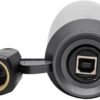
The headphone output is the most significant addition over the original C01U. Zero-latency monitoring means the microphone signal is fed to the headphones in hardware, before it travels into the computer, so the speaker hears themselves without the delay that makes talking or singing difficult on a laggy setup.
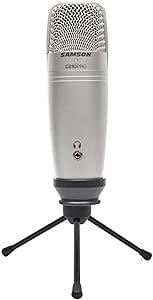
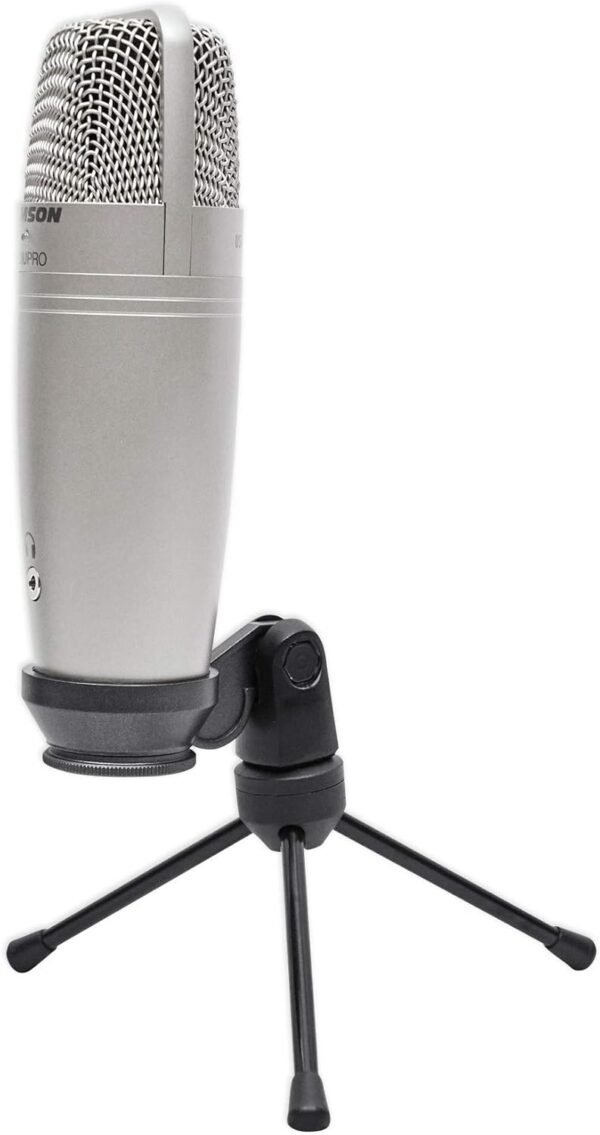
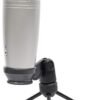
Samson includes a mini tripod stand and a swivel mount, so the microphone works on a desk immediately with nothing further to buy. The body is die-cast metal with a heavy gauge mesh grille, and the listed weight is 15.8 ounces. Samson also notes compatibility with iPads and iPhones through Apple’s camera adapters, which extends the microphone to mobile recording. A pop filter is not included and is worth adding for vocal work, since there is no internal screen described. Buyers who want XLR alongside USB should compare the Samson Q9U from the same manufacturer.
Condenser Versus Dynamic for Speech
A condenser microphone of this type is considerably more sensitive than a dynamic, which cuts both ways. It captures more detail and requires less gain, so a quiet speaker or an acoustic instrument comes through clearly. It also captures the room: the fan, the traffic, the reflections off a bare desk.
For recording music, an acoustic guitar or a singer, that sensitivity is what you want, and it is why a condenser is the default studio choice. For speech in an ordinary untreated room, a dynamic microphone will usually produce a cleaner result with less editing. Anyone whose only application is podcasting in a spare bedroom should weigh a dynamic such as the Warm Audio WA-47Jr comparison against a broadcast dynamic instead. The multipurpose microphones category and the vocal microphones category cover both routes.
Highlights
- Die-cast metal body with a heavy gauge grille rather than plastic construction.
- Headphone output with zero-latency monitoring, uncommon at this price.
- Peak LED indicator to catch clipping before it ruins a take.
- Tripod stand and swivel mount included, so it works out of the box.
- Plug and play with no driver installation on Mac or Windows.
- iOS compatible through Apple’s camera adapters.
Things To Consider
The specification block claims twice that a lithium ion battery is required, on a USB-powered microphone with no battery compartment. The frequency range is given correctly as 20 Hz to 20 kHz in one field and then as a bare “18 KHz” in another, and the two do not agree. The power source is listed as “Usb Condenser”, the audio sensitivity as 40 dB with no reference, and the UPC field contains two barcodes concatenated. The country of origin is given as USA, which sits oddly against the rest of the listing.
- 16-bit resolution requires more care with gain staging than 24-bit competitors.
- No pop filter included, and none built into the head.
- A condenser hears the room, so an untreated space will be audible.
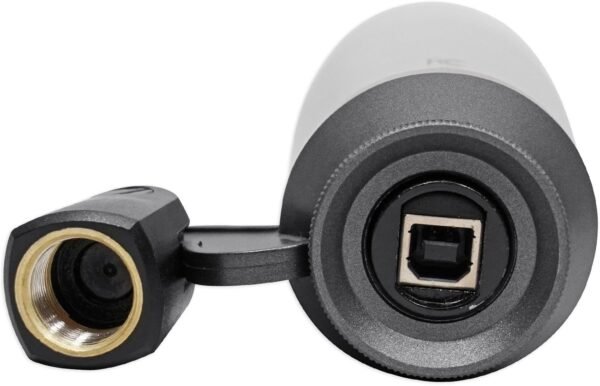
- No USB-C is described; this is a USB-B era product.
- The supplied tripod is short and sits on the desk, which transmits typing vibration.
- The frequency and battery specifications contradict themselves.
Who Should Buy It and Who Should Skip It
The C01U Pro suits a home studio owner recording vocals and acoustic instruments who wants a metal-bodied condenser with real-time monitoring and no interface to buy. The included stand and mount, the peak indicator and the headphone output together make it a complete recording solution for someone with only a computer, and the 4.5 star average across roughly 1,453 ratings over more than a decade suggests it does the job reliably.
Skip it if 24-bit recording matters to your workflow, or if the room is noisy, where a dynamic microphone is the better tool. Skip it too if you need XLR for a mixer-based setup, since this microphone offers only USB. Buyers who want the flexibility to move between both should look at a dual-output design rather than committing to a USB-only microphone at this stage.